

Red-billed Dwarf Hornbill vs African Gray Hornbill
Lophoceros camurus contro Lophoceros nasutus
Fai un quiz con Red-billed Dwarf Hornbill e African Gray Hornbill
 Red-billed Dwarf Hornbill
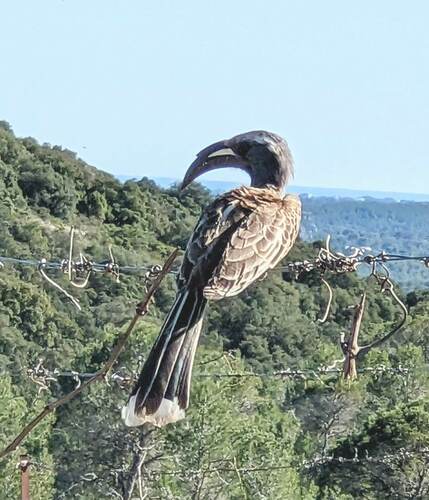 African Gray Hornbill
In breve
Il segno di campo più affidabile che separa questi due è il colore del becco: il Red-billed Dwarf Hornbill mostra un becco distintamente rosso, mentre l'African Gray Hornbill ha un becco per lo più scuro con una striscia chiara o un segno cremoso nei maschi, e una mandibola tricolore con punta rossa nelle femmine. L'African Gray Hornbill è molto più grande, con una lunga coda e un casco prominente, ed è per lo più grigio-marrone con linee bianche sulla testa e sulla schiena (quest'ultime visibili in volo). Il Red-billed Dwarf Hornbill è più piccolo e si trova in foreste pluviali dense, mentre l'African Gray Hornbill preferisce boschi aperti e savane. I giovani African Grey Hornbills hanno becche completamente scuri, il che può causare confusione, ma la loro dimensione maggiore e il piumaggio grigio-marrone rimangono distintivi.
Consigli di identificazione
- Il colore del becco è il segno più affidabile: Il Red-billed Dwarf Hornbill mostra sempre un becco rosso, mentre l'African Gray Hornbill ha un becco per lo più scuro con una striscia chiara (maschio) o un becco tricolore con punta rossa (femmina). I giovani African Grey Hornbills hanno becche completamente scuri, il che può causare confusione, quindi usa altri segni nei giovani uccelli.
- Dimensione e struttura: L'African Gray Hornbill è molto più grande e massiccio, con una lunga coda e un casco prominente sul becco (soprattutto nei maschi). Il Red-billed Dwarf Hornbill è più piccolo, più compatto e privo di un casco prominente.
- Colore del piumaggio: L'African Gray Hornbill è grigio-marrone nel complesso, con una testa più scura, piume di volo e coda, e ha linee bianche lungo la corona e lungo la schiena (quest'ultime visibili in volo). Il Red-billed Dwarf Hornbill è generalmente più scuro e privo di queste linee bianche.
- Lunghezza della coda: L'African Gray Hornbill ha una coda notevolmente lunga, che è ovvia in volo e quando è posato. Il Red-billed Dwarf Hornbill ha una coda più corta.
- Habitat: Se visto in foreste pluviali dense e umide, ci si aspetta di vedere il Red-billed Dwarf Hornbill; in boschi aperti o savane, l'African Gray Hornbill è la norma.
- Comportamento: L'African Gray Hornbill è spesso evidente, posandosi in luoghi aperti e chiamando ad alta voce. Il Red-billed Dwarf Hornbill è più riservato e rimane all'interno di una copertura forestale densa.
- Stile di volo: L'African Gray Hornbill ha un volo ondulato, tipico dei hornbills, e può mostrare la linea bianca sulla schiena in volo. Non è descritto uno stile di volo specifico per il Red-billed Dwarf Hornbill, ma la sua dimensione più piccola e la forma compatta dovrebbero essere evidenti.
- Confusione giovanile: I giovani African Grey Hornbills hanno becche completamente scuri, ma la loro dimensione, il piumaggio grigio-marrone e le linee bianche sulla testa/schiena li separano ancora dal Red-billed Dwarf Hornbill.
- Differenze sessuali: Negli African Gray Hornbill, i maschi hanno una striscia chiara sul becco altrimenti scuro, mentre le femmine hanno un becco tricolore con punta rossa. Il Red-billed Dwarf Hornbill non mostra tale variazione; il becco è sempre rosso negli adulti.
- Vocalizzazioni: Se senti un forte richiamo 'pee-o pee-o pee-o', è l'African Gray Hornbill. La voce del Red-billed Dwarf Hornbill non è descritta qui, quindi il silenzio non è diagnostico, ma il richiamo è un forte indicatore dell'African Gray Hornbill.
- Sovrapposizione dell'areale: Fai attenzione all'habitat locale: se ti trovi in una regione in cui entrambi si trovano, l'habitat è un forte indizio. In habitat misti, usa il colore del becco e la dimensione come tuoi segni principali.
- Presenza del casco: Il casco (cresta ossea sul becco) è più prominente nell'African Gray Hornbill, soprattutto nei maschi. Il Red-billed Dwarf Hornbill è privo di un casco prominente.
- Posato vs. in volo: Quando è posato, confronta il colore del becco, la dimensione e la lunghezza della coda. In volo, cerca la linea bianca sulla schiena nell'African Gray Hornbill e la massa complessiva.
- Insidie: Visioni scarse o giovani African Grey Hornbills possono essere fuorvianti a causa del colore del becco, quindi controlla sempre più caratteristiche: dimensione, struttura e habitat sono particolarmente importanti.
- Checklist per una separazione rapida: (a) Becco rosso = Red-billed Dwarf Hornbill; (b) Grande, grigio-marrone, coda lunga, linee bianche = African Gray Hornbill; (c) Habitat: foresta pluviale = Red-billed Dwarf Hornbill, savana/bosco aperto = African Gray Hornbill.
Taglia
L'African Gray Hornbill è sostanzialmente più grande, misurando 45–51 cm di lunghezza (quasi il doppio della massa corporea del Red-billed Dwarf Hornbill, che è di circa 104 g). La sua lunga coda e la massa complessiva sono evidenti anche da lontano. Il Red-billed Dwarf Hornbill è molto più piccolo e più compatto, con una coda proporzionalmente più corta e una struttura più leggera. Se visti insieme, la differenza di dimensione è sorprendente, ma fai attenzione a uccelli solitari o visioni scarse dove la dimensione può essere difficile da giudicare.
Piumaggio
Non è disponibile un modello di ali specifico per età per nessuna delle due specie, ma la colorazione complessiva è utile. L'African Gray Hornbill è grigio-marrone nel complesso, con una testa più scura, piume di volo e coda. Mostra una linea bianca lungo ciascun lato della corona e un'altra lungo la schiena, quest'ultima visibile solo in volo. Il becco è scuro con una striscia chiara o un segno cremoso nei maschi, e tricolore con una punta rossa nelle femmine; i giovani hanno un becco completamente scuro. Il Red-billed Dwarf Hornbill, al contrario, ha un becco distintamente rosso ed è generalmente più scuro e più compatto, privo delle linee bianche e dei segni chiari del becco dell'African Gray Hornbill. Il piumaggio del Red-billed Dwarf Hornbill è meno ben descritto, ma il colore del becco è sempre diagnostico negli adulti.
Comportamento
L'African Gray Hornbill spesso si posa in modo evidente in boschi aperti o savane, a volte pubblicizzandosi con forti richiami. Il suo volo è ondulato e si sposta frequentemente tra gli alberi. Il Red-billed Dwarf Hornbill è più riservato, rimanendo tipicamente all'interno di foreste pluviali dense e meno probabile da vedere in aree aperte. Il suo comportamento è più ritirato, rendendolo più difficile da individuare tranne che in habitat forestali adatti.
Habitat
Il Red-billed Dwarf Hornbill è ristretto alla foresta pluviale tropicale africana, dove si mantiene all'interno di foreste dense e umide. L'African Gray Hornbill, d'altra parte, è diffuso in tutta l'Africa sub-sahariana e preferisce boschi aperti e savane, entrando raramente in foreste pluviali dense. Se vedi un hornbill in un paese aperto e secco, è quasi certamente un African Gray Hornbill; in foreste dense e umide, è più probabile che si tratti di un Red-billed Dwarf Hornbill.
Voce
L'African Gray Hornbill è molto vocale, emettendo un distintivo richiamo 'pee-o pee-o pee-o', che spesso si sente prima di vedere l'uccello. Non è disponibile una descrizione vocale per il Red-billed Dwarf Hornbill in queste note, quindi la voce è solo diagnostica per l'African Gray Hornbill.
Red-billed Dwarf Hornbill · African Gray Hornbill · I miei uccelli difficili