

Ruddy-breasted Seedeater vs Morelet's Seedeater
Sporophila minuta contro Sporophila morelleti
Fai un quiz con Ruddy-breasted Seedeater e Morelet's Seedeater
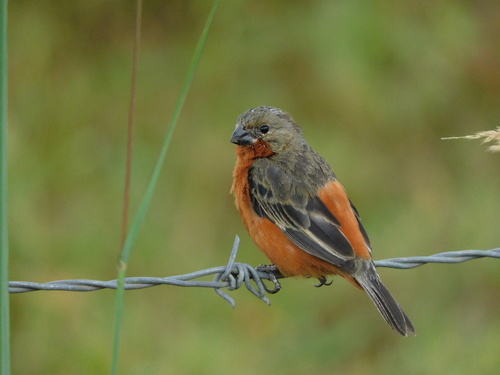 Ruddy-breasted Seedeater
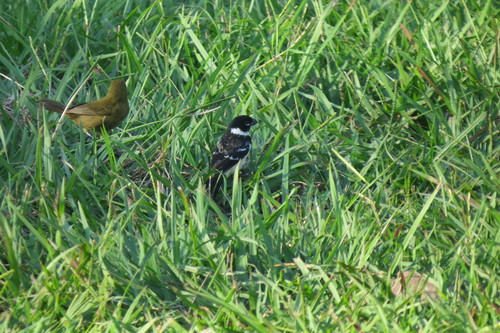 Morelet's Seedeater
In breve
Il segno distintivo più affidabile tra il Ruddy-breasted Seedeater e il Morelet's Seedeater è il modello della testa e delle parti inferiori del maschio: i maschi di Ruddy-breasted hanno una testa grigia media e parti inferiori rugginose ricche, mentre i maschi di Morelet's mostrano una corona e una nuca nerastre con un contrastante crescente bianco sotto l'occhio e parti inferiori color crema o nerastre. In volo o posati, cerca la base bianca delle primarie sull'ala piegata del Ruddy-breasted (un rettangolo bianco), rispetto alle barre alari bianche e alle basi primarie bianche nei maschi di Morelet's. Le femmine sono più difficili da distinguere, ma il Ruddy-breasted è di un marrone caldo color crema nel complesso, mentre il Morelet's è più grigio oliva o marrone oliva. Entrambi sono piccoli seedeater con becco spesso, ma il Ruddy-breasted è visibilmente più piccolo e compatto. Gli uccelli immaturi e femminili sono una comune fonte di confusione; prestare attenzione al modello dell'ala e al colore delle parti inferiori è fondamentale.
Consigli di identificazione
- Modello della testa del maschio adulto: i maschi di Ruddy-breasted hanno una testa grigia media con una piccola macchia bianca dietro il becco; i maschi di Morelet's hanno una corona, una nuca e lati della testa nerastre con un sorprendente crescente bianco sotto l'occhio. Questo è il modo più veloce per separare i maschi adulti.
- Parti inferiori del maschio adulto: i maschi di Ruddy-breasted sono ricchi di ruggine sotto, mentre i maschi di Morelet's sono bianchi color crema o nerastri (a seconda della sottospecie), spesso con una gola bianca e una banda scura sul petto (nominate morelleti).
- Modello dell'ala nei maschi adulti: sugli uccelli posati, il Ruddy-breasted mostra un rettangolo bianco alla base delle primarie (ala piegata), mentre i maschi di Morelet's hanno due barre alari bianche color crema e bianco alla base della maggior parte delle primarie (ma non formando un singolo rettangolo).
- Parti superiori delle femmine e degli immaturi: le femmine di Ruddy-breasted sono di un marrone caldo color crema sopra; le femmine di Morelet's sono più grigio oliva o marrone oliva. Questa differenza è sottile e meglio giudicata in buona luce.
- Parti inferiori delle femmine e degli immaturi: le femmine di Ruddy-breasted sono marroni color crema sotto, più chiare sulla gola e sull'addome; le femmine di Morelet's sono più chiare color crema o bianche sotto, a volte con una leggera sfumatura oliva.
- Barre alari nelle femmine: le femmine di Morelet's hanno barre alari sottili e chiare; le femmine di Ruddy-breasted non hanno barre alari evidenti, con ali di un marrone color crema leggermente più scuro.
- Colore del becco: i maschi di entrambe le specie hanno becchi nerastri; le femmine di Ruddy-breasted hanno un becco scuro a forma di corno, mentre le femmine di Morelet's hanno una mascella superiore marrone e una mandibola chiara. Questo è sottile e non sempre visibile.
- Modello della coda: i maschi di Ruddy-breasted hanno una coda per lo più nerastra con bordi oliva; i maschi di Morelet's hanno una coda nera con punte grigie sottili. Le femmine sono meno distintive nel modello della coda.
- Dimensioni e struttura: il Ruddy-breasted è più piccolo e più compatto, con una coda leggermente più corta. Il Morelet's è più lungo e più robusto, ma questo è meglio giudicato con esperienza o visioni affiancate.
- Variazione delle sottospecie: i maschi di Ruddy-breasted di S. m. parva sono più blu-grigi sopra; S. m. centralis sono più marroni. I maschi nominati di Morelet's hanno una banda nera più ampia sul petto, mentre S. m. sharpei ha meno nero e un crescente bianco più piccolo. Conosci le forme locali.
- Habitat e distribuzione: dove entrambe si trovano, l'habitat non è un forte separatore, ma il Morelet's è l'unica opzione in Texas e nel nord del Messico. Il Ruddy-breasted è più probabile a sud e a est verso il Sud America.
- Comportamento: entrambe le specie si comportano in modo simile, quindi non fare affidamento su jizz o stile di alimentazione.
- Viste in volo: cerca la base primaria bianca (rettangolo) nei maschi di Ruddy-breasted e le barre alari/basi primarie bianche in Morelet's. Le femmine in volo sono molto simili; concentrati su dimensioni e tonalità delle parti inferiori.
- Trappole con gli immaturi: i giovani maschi possono assomigliare alle femmine ma possono mostrare parzialmente il colore della testa o delle parti inferiori maschili. Controlla per toni grigi o nerastri che emergono sulla testa o sulla gola.
- Quando hai dubbi: se non riesci a vedere bene il modello della testa o il colore delle parti inferiori, prova a giudicare le dimensioni complessive, il modello dell'ala e il calore delle parti inferiori. Le fotografie possono aiutare con le differenze sottili nel pannello dell'ala e nel modello della coda.
Taglia
Il Ruddy-breasted Seedeater è nettamente più piccolo, misurando 8.6–9.6 cm di lunghezza e pesando 7–9 g, rendendolo uno dei più piccoli Sporophila. Il Morelet's Seedeater è più grande, con una lunghezza di circa 11 cm e un peso medio di 8.7 g. Sul campo, il Ruddy-breasted appare spesso più compatto e delicato, mentre il Morelet's sembra leggermente più robusto e con una coda più lunga. La dimensione e la forma del becco sono simili—corto, spesso e arrotondato—ma la differenza nella dimensione complessiva del corpo può essere evidente con un confronto diretto o esperienza.
Piumaggio
I piumaggi giovanili e femminili sono i più difficili. Per i maschi adulti, il Ruddy-breasted mostra una testa grigia media, una piccola macchia bianca dietro il becco, parti inferiori rugginose e un rettangolo bianco alla base delle primarie (visibile sull'ala piegata). I maschi di Morelet's hanno una corona, una nuca e lati della testa nerastre, un crescente bianco sotto l'occhio e parti inferiori color crema o nerastre a seconda della sottospecie. Le loro ali hanno due barre alari bianche color crema e bianco alla base della maggior parte delle primarie (ma non formando un singolo rettangolo come nel Ruddy-breasted). Le femmine di Ruddy-breasted sono di un marrone caldo color crema sopra e sotto, con ali e coda leggermente più scure, mentre le femmine di Morelet's sono grigio oliva o marrone oliva con parti inferiori più chiare e barre alari più sottili. In entrambe le specie, il becco è scuro nei maschi e più chiaro nelle femmine, ma questo è sottile. Gli uccelli immaturi assomigliano alle femmine ma possono mostrare caratteristiche maschili deboli mentre mutano.
Comportamento
Entrambe le specie sono tipici seedeater, spesso visti bassi nell'erba, in campi infestati o ai margini cespugliosi. Si posano eretti e si nutrono di semi, a volte in gruppi sciolti. Non si notano forti differenze comportamentali nelle fonti, e entrambe possono essere attive e veloci. Il volo è diretto e basso, con brevi scatti tra i posatoi. Non esiste un jizz unico o uno stile di foraggiamento che le separi in modo affidabile.
Habitat
Le distribuzioni si sovrappongono in America Centrale e nel sud del Messico, ma il Morelet's si estende a nord fino al Texas, mentre il Ruddy-breasted è più diffuso nel nord del Sud America. Entrambi preferiscono terreni aperti con erbe alte, campi infestati e margini cespugliosi. L'habitat non è un forte separatore dove le loro distribuzioni si sovrappongono, ma il Morelet's potrebbe essere più probabile in siti leggermente più secchi o disturbati al bordo settentrionale della sua distribuzione.
Ruddy-breasted Seedeater · Morelet's Seedeater · I miei uccelli difficili