
Motmot

Ruddy-breasted Seedeater vs Morelet's Seedeater

Sporophila minuta versus Sporophila morelleti

Play a quiz with Ruddy-breasted Seedeater and Morelet's Seedeater
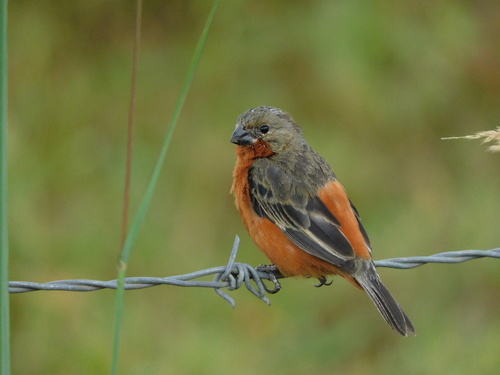
Ruddy-breasted Seedeater (Sporophila minuta) Ruddy-breasted Seedeater
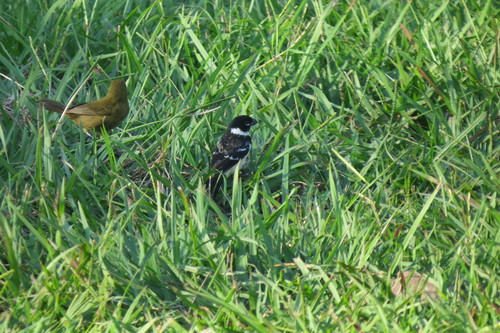
Morelet's Seedeater (Sporophila morelleti) Morelet's Seedeater

Media

Loading…

In short

The most reliable field mark between Ruddy-breasted Seedeater and Morelet's Seedeater is the male's head and underpart pattern: Ruddy-breasted males have a medium gray head and rich rufous underparts, while Morelet's males show a blackish crown and nape with a contrasting white crescent below the eye and buffy or blackish underparts. In flight or perched, look for the white base to the primaries on the folded wing of Ruddy-breasted (a white rectangle), versus the white wing bars and white primary bases in Morelet's males. Females are trickier, but Ruddy-breasted is warmer buffy brown overall, while Morelet's is more olive-gray to brownish olive. Both are small, thick-billed seedeaters, but Ruddy-breasted is noticeably smaller and more compact. Immature and female birds are a common source of confusion; careful attention to wing pattern and underpart color is key.

Identification tips

  1. Adult male head pattern: Ruddy-breasted males have a medium gray head with a tiny white spot behind the bill; Morelet's males have a blackish crown, nape, and sides of the head with a striking white crescent below the eye. This is the quickest way to separate adult males.
  2. Adult male underparts: Ruddy-breasted males are rich rufous below, while Morelet's males are buffy white or blackish (depending on subspecies), often with a white throat and a dark band across the breast (nominate morelleti).
  3. Wing pattern in adult males: On perched birds, Ruddy-breasted shows a white rectangle at the base of the primaries (folded wing), while Morelet's males have two buffy white wing bars and white at the base of most primaries (but not forming a single rectangle).
  4. Female and immature upperparts: Ruddy-breasted females are warm buffy brown above; Morelet's females are more grayish olive to brownish olive. This difference is subtle and best judged in good light.
  5. Female and immature underparts: Ruddy-breasted females are buffy brown below, paler on the throat and belly; Morelet's are paler buff or whitish below, sometimes with a slight olive wash.
  6. Wing bars in females: Morelet's females have thin, pale wing bars; Ruddy-breasted females lack obvious wing bars, with wings just a slightly darker buffy brown.
  7. Bill color: Males of both species have blackish bills; females of Ruddy-breasted have a dark horn bill, while Morelet's females have a brown maxilla and pale mandible. This is subtle and not always visible.
  8. Tail pattern: Ruddy-breasted males have a mostly blackish tail with olive edges; Morelet's males have a black tail with thin gray tips. Females are less distinctive in tail pattern.
  9. Size and structure: Ruddy-breasted is smaller and more compact, with a slightly shorter tail. Morelet's is longer and bulkier, but this is best judged with experience or side-by-side views.
  10. Subspecies variation: Ruddy-breasted males of S. m. parva are more blue-gray above; S. m. centralis are browner. Morelet's nominate males have a broader black band across the breast, while S. m. sharpei has less black and a smaller white crescent. Know your local forms.
  11. Habitat and range: Where both occur, habitat is not a strong separator, but Morelet's is the only option in Texas and northernmost Mexico. Ruddy-breasted is more likely south and east into South America.
  12. Behavior: Both species behave similarly, so do not rely on jizz or feeding style.
  13. Flight views: Look for the white primary base (rectangle) in Ruddy-breasted males and the wing bars/white primary bases in Morelet's. Females in flight are very similar; focus on size and underpart tone.
  14. Pitfalls with immatures: Young males may resemble females but can show partial male head or underpart color. Check for subtle gray or blackish tones emerging on the head or throat.
  15. When in doubt: If you cannot see the head pattern or underpart color well, try to judge overall size, wing pattern, and underpart warmth. Photographs can help with subtle differences in wing panel and tail pattern.

Size

Ruddy-breasted Seedeater is distinctly smaller, measuring 8.6–9.6 cm in length and weighing 7–9 g, making it one of the tiniest Sporophila. Morelet's Seedeater is larger at about 11 cm and averages 8.7 g. In the field, Ruddy-breasted often appears more compact and delicate, while Morelet's looks slightly bulkier and longer-tailed. Bill size and shape are similar—short, thick, and rounded—but the difference in overall body size can be noticeable with direct comparison or experience.

Plumage

Juvenile and female plumages are the most challenging. For adult males, Ruddy-breasted shows a medium gray head, small white spot behind the bill, rufous underparts, and a white rectangle at the base of the primaries (visible on the folded wing). Morelet's males have a blackish crown, nape, and sides of the head, a white crescent below the eye, and either buffy or blackish underparts depending on subspecies. Their wings have two buffy white wing bars and white at the base of most primaries (but not forming a single rectangle as in Ruddy-breasted). Females of Ruddy-breasted are warm buffy brown above and below, with slightly darker wings and tail, while Morelet's females are grayish olive to brownish olive with paler underparts and thinner wing bars. In both species, the bill is dark in males and paler in females, but this is subtle. Immature birds resemble females but may show faint male features as they molt.

Behaviour

Both species are typical seedeaters, often seen low in grass, weedy fields, or shrubby edges. They perch upright and feed on seeds, sometimes in loose flocks. No strong behavioral differences are noted in the sources, and both can be active and quick-moving. Flight is direct and low, with short bursts between perches. No unique jizz or foraging style reliably separates them.

Habitat

Ranges overlap in Central America and southern Mexico, but Morelet's extends north to Texas, while Ruddy-breasted is more widespread into northern South America. Both favor open country with tall grasses, weedy fields, and shrubby edges. Habitat is not a strong separator where their ranges overlap, but Morelet's may be more likely in slightly drier or more disturbed sites at the northern edge of its range.

Submit a better description

Use the same sections as the comparison. Your text is published immediately.

The most reliable field mark between Ruddy-breasted Seedeater and Morelet's Seedeater is the male's head and underpart pattern: Ruddy-breasted males have a medium gray head and rich rufous underparts, while Morelet's males show a blackish crown and nape with a contrasting white crescent below the eye and buffy or blackish underparts. In flight or perched, look for the white base to the primaries on the folded wing of Ruddy-breasted (a white rectangle), versus the white wing bars and white primary bases in Morelet's males. Females are trickier, but Ruddy-breasted is warmer buffy brown overall, while Morelet's is more olive-gray to brownish olive. Both are small, thick-billed seedeaters, but Ruddy-breasted is noticeably smaller and more compact. Immature and female birds are a common source of confusion; careful attention to wing pattern and underpart color is key.

  1. Adult male head pattern: Ruddy-breasted males have a medium gray head with a tiny white spot behind the bill; Morelet's males have a blackish crown, nape, and sides of the head with a striking white crescent below the eye. This is the quickest way to separate adult males.
  2. Adult male underparts: Ruddy-breasted males are rich rufous below, while Morelet's males are buffy white or blackish (depending on subspecies), often with a white throat and a dark band across the breast (nominate morelleti).
  3. Wing pattern in adult males: On perched birds, Ruddy-breasted shows a white rectangle at the base of the primaries (folded wing), while Morelet's males have two buffy white wing bars and white at the base of most primaries (but not forming a single rectangle).
  4. Female and immature upperparts: Ruddy-breasted females are warm buffy brown above; Morelet's females are more grayish olive to brownish olive. This difference is subtle and best judged in good light.
  5. Female and immature underparts: Ruddy-breasted females are buffy brown below, paler on the throat and belly; Morelet's are paler buff or whitish below, sometimes with a slight olive wash.
  6. Wing bars in females: Morelet's females have thin, pale wing bars; Ruddy-breasted females lack obvious wing bars, with wings just a slightly darker buffy brown.
  7. Bill color: Males of both species have blackish bills; females of Ruddy-breasted have a dark horn bill, while Morelet's females have a brown maxilla and pale mandible. This is subtle and not always visible.
  8. Tail pattern: Ruddy-breasted males have a mostly blackish tail with olive edges; Morelet's males have a black tail with thin gray tips. Females are less distinctive in tail pattern.
  9. Size and structure: Ruddy-breasted is smaller and more compact, with a slightly shorter tail. Morelet's is longer and bulkier, but this is best judged with experience or side-by-side views.
  10. Subspecies variation: Ruddy-breasted males of S. m. parva are more blue-gray above; S. m. centralis are browner. Morelet's nominate males have a broader black band across the breast, while S. m. sharpei has less black and a smaller white crescent. Know your local forms.
  11. Habitat and range: Where both occur, habitat is not a strong separator, but Morelet's is the only option in Texas and northernmost Mexico. Ruddy-breasted is more likely south and east into South America.
  12. Behavior: Both species behave similarly, so do not rely on jizz or feeding style.
  13. Flight views: Look for the white primary base (rectangle) in Ruddy-breasted males and the wing bars/white primary bases in Morelet's. Females in flight are very similar; focus on size and underpart tone.
  14. Pitfalls with immatures: Young males may resemble females but can show partial male head or underpart color. Check for subtle gray or blackish tones emerging on the head or throat.
  15. When in doubt: If you cannot see the head pattern or underpart color well, try to judge overall size, wing pattern, and underpart warmth. Photographs can help with subtle differences in wing panel and tail pattern.

Ruddy-breasted Seedeater is distinctly smaller, measuring 8.6–9.6 cm in length and weighing 7–9 g, making it one of the tiniest Sporophila. Morelet's Seedeater is larger at about 11 cm and averages 8.7 g. In the field, Ruddy-breasted often appears more compact and delicate, while Morelet's looks slightly bulkier and longer-tailed. Bill size and shape are similar—short, thick, and rounded—but the difference in overall body size can be noticeable with direct comparison or experience.

Juvenile and female plumages are the most challenging. For adult males, Ruddy-breasted shows a medium gray head, small white spot behind the bill, rufous underparts, and a white rectangle at the base of the primaries (visible on the folded wing). Morelet's males have a blackish crown, nape, and sides of the head, a white crescent below the eye, and either buffy or blackish underparts depending on subspecies. Their wings have two buffy white wing bars and white at the base of most primaries (but not forming a single rectangle as in Ruddy-breasted). Females of Ruddy-breasted are warm buffy brown above and below, with slightly darker wings and tail, while Morelet's females are grayish olive to brownish olive with paler underparts and thinner wing bars. In both species, the bill is dark in males and paler in females, but this is subtle. Immature birds resemble females but may show faint male features as they molt.

Both species are typical seedeaters, often seen low in grass, weedy fields, or shrubby edges. They perch upright and feed on seeds, sometimes in loose flocks. No strong behavioral differences are noted in the sources, and both can be active and quick-moving. Flight is direct and low, with short bursts between perches. No unique jizz or foraging style reliably separates them.

Ranges overlap in Central America and southern Mexico, but Morelet's extends north to Texas, while Ruddy-breasted is more widespread into northern South America. Both favor open country with tall grasses, weedy fields, and shrubby edges. Habitat is not a strong separator where their ranges overlap, but Morelet's may be more likely in slightly drier or more disturbed sites at the northern edge of its range.

Discard your changes?

You have unsaved edits. If you leave now, those changes will be lost.

Ruddy-breasted Seedeater · Morelet's Seedeater · My Tricky Birds