

Rufous-tailed Hummingbird vs Blue-chested Hummingbird
Amazilia tzacatl contro Polyerata amabilis
Fai un quiz con Rufous-tailed Hummingbird e Blue-chested Hummingbird
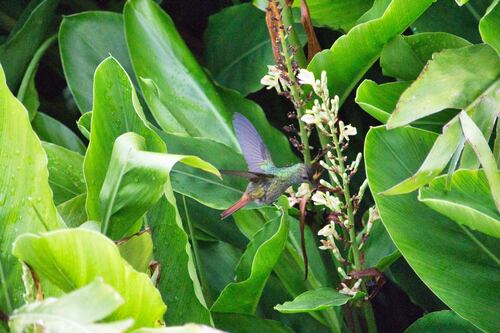 Rufous-tailed Hummingbird
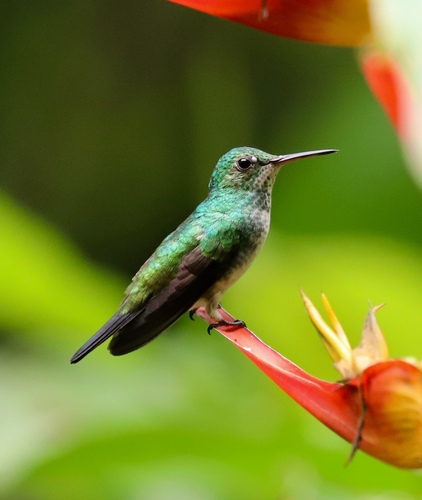 Blue-chested Hummingbird
In breve
Il segno di campo più affidabile per separare il Rufous-tailed Hummingbird dal Blue-chested Hummingbird è la coda: il Rufous-tailed mostra sempre una coda per lo più rufous (marrone castagna) con solo limitato verde alle punte e alle membrane esterne, mentre il Blue-chested Hummingbird ha una coda molto più scura e priva di rufous esteso. In tutte le livree, il Rufous-tailed mostra anche più rufous sulle copritrici della coda superiore e inferiore, e le sue parti inferiori sono più chiare con un ventre grigio o bianco, mentre il Blue-chested ha un sottocoda più uniforme di tonalità verdognole o bluastre. I giovani Rufous-tailed Hummingbirds possono mostrare una sfumatura cannella sul petto inferiore e sul dorso, che il Blue-chested non ha mai. Anche il colore e la struttura del becco differiscono sottilmente. Questi segni sono visibili sia quando sono posati che in volo, ma il colore della coda è il separatore più consistente in tutte le età.
Consigli di identificazione
- Il colore della coda è il segno di campo migliore: Il Rufous-tailed Hummingbird mostra sempre una coda per lo più rufous (marrone castagna), visibile sia quando è posato che in volo. La coda del Blue-chested Hummingbird è molto più scura, priva di rufous esteso.
- Copritrici della coda superiore e inferiore: Il Rufous-tailed ha copritrici della coda superiore e inferiore di colore marrone castagna; il Blue-chested non lo ha. Controlla questi segni rufous quando l'uccello apre la coda o cambia posizione.
- Parti inferiori di giovani/immaturi: I giovani Rufous-tailed Hummingbirds mostrano una sfumatura cannella sul petto inferiore e sui lati, e piume del dorso/rimpo con punte cannella. I giovani Blue-chested sono più uniformi sotto e privi di tonalità cannella.
- Colore del ventre: Gli adulti Rufous-tailed hanno un petto inferiore grigio e un ventre bianco, in contrasto con il petto superiore verde. Il Blue-chested è più uniforme sotto, con tonalità verdognole o bluastre che si estendono attraverso le parti inferiori.
- Schema della gola: I maschi Rufous-tailed hanno gole verdi con sottili scalloping bianchi; le femmine mostrano scalloping più pronunciato. Le gole del Blue-chested sono più uniformi e prive di questo scalloping.
- Colore del becco: Il Rufous-tailed ha un becco bicolore (base rossa, punta nera), soprattutto evidente da vicino. Il becco del Blue-chested è solitamente più scuro nel complesso, a volte appare completamente scuro.
- Contesto dell'habitat: In aree aperte, giardini e presso i mangiatoie, il Rufous-tailed è più probabile. Negli interni delle foreste umide o in foreste ex degradate, il Blue-chested è più probabile, anche se si sovrappongono ai margini.
- Comportamento presso i mangiatoie: Il Rufous-tailed è notevolmente aggressivo e dominante presso i mangiatoie, spesso inseguendo altri colibrì. Il Blue-chested è meno aggressivo.
- Postura posata: Il Rufous-tailed spesso si posa in modo evidente in aperto, con la coda leggermente aperta o inclinata, mostrando il colore rufous. Il Blue-chested è più probabile che si posi in copertura più densa.
- Vocalizzazioni: Se senti un duro 'tchik-tchik' o un 'chirr-rr-rr-rr-rr' che rattling, è probabile che sia un Rufous-tailed. Le vocalizzazioni del Blue-chested sono meno conosciute e non distintive sul campo.
- Differenze sessuali: Le femmine di Rufous-tailed sono più chiare sotto con scalloping della gola più pronunciato; le femmine di Blue-chested sono più uniformi.
- Variazione delle sottospecie: Il Rufous-tailed mostra alcune variazioni geografiche nel colore del becco e nel modello della coda, ma mantiene sempre la coda rufous come segno chiave. Il Blue-chested non si avvicina a questa colorazione in nessuna sottospecie.
- Visioni in volo: Anche in rapide visioni in volo, la coda rufous del Rufous-tailed Hummingbird lampeggia distintamente, mentre la coda del Blue-chested rimane scura.
- Trappole: Non fare affidamento sulla colorazione verde complessiva o sulla dimensione, poiché entrambe le specie sono simili in questi aspetti. Concentrati sul colore della coda e delle parti inferiori.
- Quando i segni falliscono: In scarsa luce, la coda rufous del Rufous-tailed può apparire più scura, ma non sarà mai così uniformemente scura come quella del Blue-chested. Cerca qualsiasi accenno di rufous nella coda o nella regione della coda inferiore per confermare il Rufous-tailed.
Taglia
Il Rufous-tailed Hummingbird è un colibrì di dimensioni medie, lungo 9–11 cm e circa 5 g di peso [wikipedia]. Il Blue-chested Hummingbird è simile in dimensioni, ma le note disponibili non specificano misure precise per un confronto diretto. Sul campo, la dimensione da sola non è un separatore affidabile tra queste due specie, poiché entrambe rientrano nella stessa classe di dimensioni generali e si sovrappongono ampiamente.
Piumaggio
- Giovani/immaturi: I giovani Rufous-tailed Hummingbird hanno una distintiva sfumatura cannella sul petto inferiore e sui lati, e le piume del dorso e del rimpo sono punteggiati di cannella. Questo è assente nei giovani Blue-chested Hummingbird, che sono più uniformi sotto e privi di tonalità cannella.
- Coda: A tutte le età, il Rufous-tailed Hummingbird mostra una coda per lo più marrone castagna (rufous) con solo limitato verde bronzo sulle membrane esterne e alle punte. Il Blue-chested Hummingbird ha una coda molto più scura, priva di rufous esteso; la sua coda è più uniformemente scura o verde-nera.
- Parti inferiori: I maschi adulti del Rufous-tailed Hummingbird hanno una gola verde e un petto superiore, un petto inferiore grigio, un ventre bianco e copritrici della coda di colore castagna. Le femmine sono più chiare sotto con scalloping della gola più pronunciato. Il Blue-chested Hummingbird è più uniforme sotto, con tonalità verdognole o bluastre che si estendono attraverso le parti inferiori e privo del ventre grigio chiaro/bianco e delle copritrici della coda rufous.
- Copritrici della coda superiore/inferiore: Il Rufous-tailed mostra copritrici della coda superiore e inferiore di colore marrone castagna; il Blue-chested non lo fa.
- Becco: Il Rufous-tailed ha un becco bicolore (base rossa, punta nera); il becco del Blue-chested è solitamente più scuro nel complesso.
Comportamento
Il Rufous-tailed Hummingbird è noto per essere aggressivo presso i mangiatoie e a volte nidifica in colonie sparse. Frequenta aree aperte, giardini e margini forestali, spesso posandosi in modo evidente. Il Blue-chested Hummingbird è meno aggressivo e più associato a foreste più dense e umide e boschi degradati. Entrambe le specie si librano e si nutrono in modo tipico dei colibrì, ma il Rufous-tailed è più probabile che venga visto in habitat aperti, disturbati o modificati dall'uomo.
Habitat
Il Rufous-tailed Hummingbird preferisce habitat aperti e non forestali come radure, giardini, margini forestali e giovani crescita secondaria. È comune presso i mangiatoie e in aree disturbate. Il Blue-chested Hummingbird è più legato a foreste umide tropicali o subtropicali e a foreste ex degradate. Sebbene gli areali si sovrappongano in America Centrale e nel nord dell'America del Sud, il Rufous-tailed è più probabile in habitat aperti o ai margini, mentre il Blue-chested è più probabile negli interni delle foreste umide o ai margini.
Voce
Il Rufous-tailed Hummingbird emette un canto vario, alto, sottile e squillante e richiami duri e schioccanti 'tchik-tchik', a volte ripetuti insistentemente, così come chips secchi e duri e note rattling 'chirr-rr-rr-rr-rr'. Non ci sono note dettagliate sulle vocalizzazioni del Blue-chested Hummingbird nelle fonti fornite, quindi la voce non è un separatore affidabile a meno che non si sentano i richiami distintivi del Rufous-tailed.
Rufous-tailed Hummingbird · Blue-chested Hummingbird · I miei uccelli difficili