

Rufous Woodpecker vs Buff-necked Woodpecker
Micropternus brachyurus contro Meiglyptes tukki
Fai un quiz con Rufous Woodpecker e Buff-necked Woodpecker
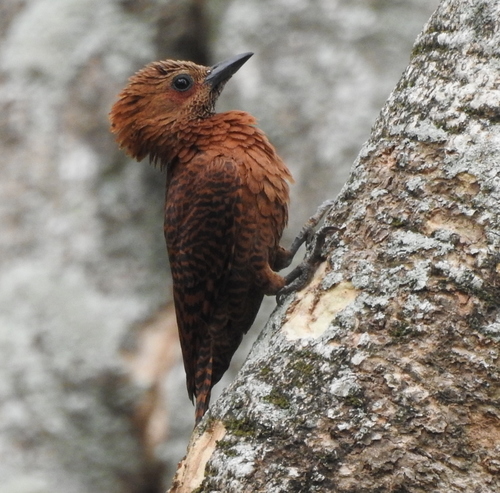 Rufous Woodpecker
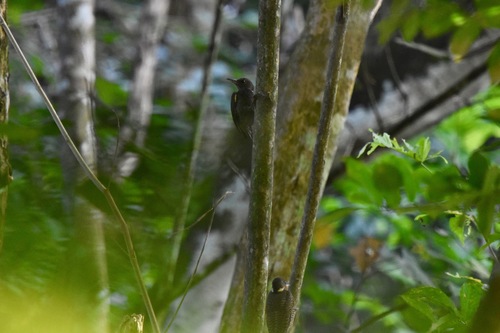 Buff-necked Woodpecker
In breve
Il segno di campo più affidabile tra il Picchio ruggine e il Picchio dal collo buffo è il tono generale del piumaggio e il motivo della testa/collo: il Picchio ruggine è di un uniforme marrone ruggine scuro con una testa più chiara e senza striscia chiara sul collo, mentre il Picchio dal collo buffo è marrone scuro con una striscia sporca-crema contrastante sul collo. Sul campo, il Picchio ruggine appare più uniforme e 'nerastro' con sottili barre nere, mentre il Picchio dal collo buffo mostra una distintiva striscia chiara sul collo e barre più chiare sulle ali. La forma del becco e la lunghezza della coda differiscono anche: il Ruggine ha un becco corto e una coda corta, il Buffo ha un becco più lungo e appuntito e una coda più lunga. Le differenze di sesso e età sono sottili, ma il giovane Ruggine può mostrare alcune striature sulla gola. Entrambe le specie possono essere trovate in habitat forestali simili nelle pianure del sud-est asiatico, quindi è essenziale prestare attenzione a questi dettagli strutturali e di piumaggio.
Consigli di identificazione
- Striscia chiara sul collo (solo Buffo): Cerca una striscia sporca-crema o chiara sul lato del collo nel Picchio dal collo buffo; il Picchio ruggine non mostra mai questo, indipendentemente dall'età o dal sesso.
- Tono di colore generale: Il Picchio ruggine è di un uniforme marrone ruggine scuro con una testa più chiara e sottili barre nere; il Buffo è marrone scuro, non ruggine, e il contrasto con la striscia chiara sul collo è notevole.
- Barre sulle ali e sulla coda: Entrambe le specie hanno ali e code barrate, ma le barre del Ruggine sono più sottili e uniformi, mentre il Buffo mostra barre più chiare e contrastanti.
- Motivo della testa e del viso: Il Picchio ruggine ha un collo, copritesta e lore non marcati; il Buffo ha la striscia chiara sul collo e un aspetto generalmente più decorato attorno alla testa/collo.
- Forma del becco: Il Ruggine ha un becco corto, leggermente curvato e nero; il becco del Buffo è più lungo, più appuntito e anche curvato lungo il culmine. Questo è meglio visibile di profilo o in vista ravvicinata.
- Lunghezza della coda: Il Picchio dal collo buffo ha una coda visibilmente più lunga rispetto al Ruggine, che è a coda corta e compatta. Questa differenza è sottile ma può essere vista quando è posato o in volo.
- Cresta: Il Picchio ruggine ha una cresta debole ed erettile; il Buffo non ha affatto una cresta nucale. La cresta è raramente evidente ma può aiutare in viste ravvicinate.
- Differenze sessuali: Il maschio del Picchio ruggine può mostrare piume con punte rosse sotto l'occhio e nella regione malare; le femmine e i giovani non hanno queste. Il Buffo non mostra questa caratteristica.
- Striature giovanili sulla gola (solo Ruggine): Il giovane Picchio ruggine può mostrare alcune striature sulla gola, ma questo è sottile e non sempre presente. I giovani del Buffo non sono descritti, ma la striscia chiara sul collo dovrebbe essere visibile fin dalla giovane età.
- Aspetto 'sporcato' (Ruggine): Il Picchio ruggine può apparire sporco o appiccicoso, specialmente quando nidifica, a causa delle secrezioni delle formiche. Questo è unico per il Ruggine e può essere un indizio in viste ravvicinate.
- Comportamento di foraggiamento: Il Ruggine è spesso visto su o vicino ai nidi di formiche arboree, a volte con formiche o detriti sul suo piumaggio. Il Buffo è meno legato alle formiche.
- Tolleranza all'habitat: Il Ruggine può essere trovato in habitat più disturbati o aperti, comprese le piantagioni, mentre il Buffo è più ristretto a foreste intatte.
- Voce: Se udito, i richiami nasali acuti del Ruggine e il suo drumming distintivo possono confermare l'identificazione; la voce del Buffo non è descritta qui.
- Volo e aspetto: Il Ruggine appare compatto e a coda corta in volo; il Buffo sembra avere una coda più lunga e più snella.
- Trappole: In scarsa illuminazione, la striscia chiara sul collo del Buffo può essere trascurata, facendolo apparire più uniforme e potenzialmente confondendolo con il Ruggine. Cerca sempre di confermare la presenza o l'assenza della striscia sul collo e controlla le proporzioni del becco e della coda.
Taglia
Il Picchio ruggine è lungo circa 25 cm e appare di dimensioni medie per un picchio, con una coda corta e una struttura compatta. Il Picchio dal collo buffo è leggermente più piccolo e leggero (massa media 53g, lunghezza dell'ala 101mm), ma ha una coda visibilmente più lunga e un becco più snello e appuntito. Sul campo, la coda e il becco più lunghi del Buffo possono farlo apparire più allungato e meno compatto rispetto al Ruggine. Queste differenze sono sottili e meglio utilizzate in combinazione con il piumaggio e il motivo della testa.
Piumaggio
- Uccelli giovanili/immaturi: Il giovane Picchio ruggine può mostrare alcune striature sulla gola (a volte anche in alcune sottospecie da adulti), ma altrimenti assomiglia agli adulti in una colorazione generale marrone ruggine scuro con barre nere su ali e coda. Il giovane Picchio dal collo buffo non è specificamente descritto, ma si prevede che la chiave striscia chiara sul collo sia presente fin dalla giovane età.
- Adulti: Il Picchio ruggine è complessivamente marrone ruggine scuro, con barre nere su ali e coda, una testa più chiara e collo e copritesta non marcati. I maschi hanno punte di piume rosse sottili sul viso, assenti nelle femmine e nei giovani. Il Picchio dal collo buffo è marrone scuro con barre chiare sulle ali e una distintiva striscia sporca-crema sul collo. Non ha una cresta nucale (a differenza di alcuni parenti), e il becco è più lungo e più appuntito. La striscia chiara sul collo è il segno di campo più evidente in tutti i piumaggi. Entrambe le specie hanno un certo grado di barre sulle ali, ma il contrasto e il motivo differiscono: le barre del Ruggine sono più sottili e più uniformi, quelle del Buffo sono più chiare e più contrastanti.
Comportamento
Il Picchio ruggine è spesso visto foraggiare in coppie, specialmente su nidi di formiche arboree, tronchi caduti o cumuli di termiti, ed è famoso per nidificare all'interno dei nidi di formiche. Il comportamento di foraggiamento del Picchio dal collo buffo è meno dettagliato nelle note, ma è anche un picchio forestale che probabilmente foraggia su tronchi e rami. Il Ruggine può apparire più 'sporcato' o disordinato a causa della sua associazione con i nidi di formiche, a volte con piumaggio appiccicoso o dall'aspetto sporco. Entrambe le specie sono probabilmente viste nei livelli medi e inferiori della foresta, ma l'associazione ravvicinata del Ruggine con i nidi di formiche è distintiva.
Habitat
Entrambe le specie si trovano nelle foreste di pianura e collinari del sud-est asiatico, comprese le foreste di cespugli, sempreverdi e decidue. Il Picchio ruggine è notevolmente adattabile, persiste anche in habitat disturbati come le piantagioni di palma da olio, e si estende fino a 3000 m in alcune aree. Il Picchio dal collo buffo è anche una specie forestale ma non è descritto come tollerante a una gamma così ampia di habitat. Nelle aree in cui entrambe si trovano, l'habitat da solo non è un separatore affidabile, ma il Ruggine può essere trovato in siti più aperti o disturbati.
Voce
Il Picchio ruggine ha un richiamo acuto e nasale a tre note (keenk-keenk-keenk), un lungo wicka e una serie di note wick-wick, oltre a un drumming distintivo che inizia rapidamente e rallenta. Nessuna vocalizzazione è descritta per il Picchio dal collo buffo nelle note, quindi la voce non è un separatore affidabile a meno che non siano riconosciuti i richiami o il drumming del Ruggine.
Rufous Woodpecker · Buff-necked Woodpecker · I miei uccelli difficili