
Rusty-tailed Flycatcher vs Blue-fronted Redstart
Ficedula ruficauda contro Phoenicurus frontalis
Fai un quiz con Rusty-tailed Flycatcher e Blue-fronted Redstart
 Rusty-tailed Flycatcher
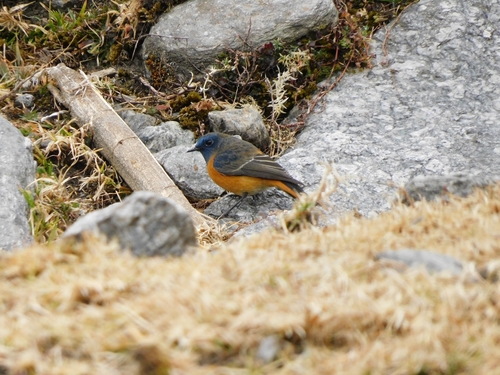 Blue-fronted Redstart
In breve
Il segno distintivo più affidabile tra il Rusty-tailed Flycatcher e il Blue-fronted Redstart è la presenza di una forte colorazione blu sulla testa e sul petto nei maschi adulti di Blue-fronted Redstart, che è completamente assente nel Rusty-tailed Flycatcher. Il Rusty-tailed Flycatcher è un piccolo e semplice flycatcher con una coda rugginosa, mentre il Blue-fronted Redstart è un uccello più grande e colorato con un frontale blu sorprendente (nei maschi) e parti inferiori arancioni. Le femmine e gli immaturi di Blue-fronted Redstart sono più opachi ma mostrano comunque una colorazione più ricca e una struttura diversa rispetto al Rusty-tailed Flycatcher uniformemente marrone. Entrambe le specie possono sovrapporsi nell'Himalaya in inverno, ma la loro struttura, il colore della coda e, soprattutto, la presenza o l'assenza di blu sono fondamentali per la separazione.
Consigli di identificazione
- Blue coloration: Il maschio adulto di Blue-fronted Redstart mostra un blu profondo sulla testa, sulla gola e sul petto—mai presente nel Rusty-tailed Flycatcher. Questo è il segno più decisivo nei maschi adulti.
- Orange underparts: Il Blue-fronted Redstart (entrambi i sessi, ma soprattutto i maschi) ha parti inferiori arancioni ricche; il Rusty-tailed Flycatcher è pallido e privo di qualsiasi arancione o rugginoso sulle parti inferiori.
- Tail color and pattern: Entrambe le specie hanno code rugginose, ma la coda del Blue-fronted Redstart è più luminosa e spesso mostra un'area centrale scura, mentre la coda del Rusty-tailed Flycatcher è più uniformemente rugginosa o rugginosa con meno contrasto.
- Overall coloration: Il Rusty-tailed Flycatcher è semplicemente marrone-oliva sopra e pallido sotto, con poco contrasto. Le femmine e gli immaturi di Blue-fronted Redstart sono più marroni ma comunque più caldi e colorati rispetto al Rusty-tailed Flycatcher, specialmente sulla coda e sui fianchi.
- Size and structure: Il Blue-fronted Redstart è notevolmente più grande e massiccio, con una coda più lunga e una postura più eretta e robusta. Il Rusty-tailed Flycatcher è più piccolo, più delicato e compatto.
- Bill shape: Entrambi hanno becchi tipici dei flycatcher, ma quello del Blue-fronted Redstart è leggermente più pesante e più largo alla base, anche se questo è sottile e meglio utilizzato in un confronto diretto.
- Perching behavior: Il Blue-fronted Redstart spesso si posa su rocce o terreno aperto ed è più propenso a fanned o tremare la sua coda. Il Rusty-tailed Flycatcher preferisce posatoi sugli alberi o nei cespugli ed è meno evidente nei suoi movimenti.
- Habitat context: Negli Himalaya, il Blue-fronted Redstart è più probabile che si trovi in aree aperte, rocciose o cespugliose, mentre il Rusty-tailed Flycatcher preferisce i margini boschivi e una vegetazione più densa.
- Sex and age confusion: Le femmine e gli immaturi di Blue-fronted Redstart mancano di blu ma sono comunque più caldi e ricchi di tonalità rispetto a qualsiasi Rusty-tailed Flycatcher. Se vedi del blu, non è un Rusty-tailed Flycatcher.
- Seasonal overlap: Entrambi possono verificarsi insieme in inverno nei piedi dell'Himalaya—non fare affidamento solo sull'areale per la separazione in questa regione e stagione.
- No wing panels: Nessuna delle due specie ha barre o pannelli distintivi sulle ali in nessuna età, quindi non utilizzare questa caratteristica per la separazione.
- Tail flicking: Entrambe le specie possono muovere le loro code, ma il Blue-fronted Redstart è più propenso a fanned e tremare, specialmente quando è agitato o in mostra.
- Plumage consistency: Il Rusty-tailed Flycatcher mostra poca variazione tra sessi o età; il Blue-fronted Redstart è sessualmente dimorfico, con i maschi che sono molto più luminosi.
- Direct comparison: Se visti insieme, le differenze di dimensioni, colore e comportamento sono sorprendenti—il Blue-fronted Redstart è più grande, più colorato e più audace; il Rusty-tailed Flycatcher è più piccolo, più semplice e più ritirato.
- Voice: Non diagnostico con le informazioni disponibili—non fare affidamento su richiami o canti per la separazione basata sulle fonti attuali.
Taglia
Il Rusty-tailed Flycatcher è più piccolo e leggero (massa corporea ~13.3 g) rispetto al Blue-fronted Redstart, che è generalmente un uccello notevolmente più grande e massiccio (massa esatta non fornita, ma i redstart sono tipicamente più pesanti e più lunghi dei piccoli flycatcher Ficedula). Sul campo, il Blue-fronted Redstart apparirà più robusto, con una coda più lunga e una postura più eretta, mentre il Rusty-tailed Flycatcher è compatto e delicato.
Piumaggio
Il maschio adulto di Blue-fronted Redstart è inconfondibile con la sua testa, gola e petto blu profondo, in contrasto con le parti inferiori arancioni brillanti e una coda rugginosa. Le femmine e gli immaturi sono più opachi, con parti superiori marroni e parti inferiori più chiare, ma mostrano comunque tonalità più calde e una coda più contrastante rispetto al Rusty-tailed Flycatcher. Il Rusty-tailed Flycatcher di tutte le età è semplicemente marrone-oliva sopra, pallido sotto, e ha una coda rugginosa o rugginosa distintiva che contrasta con il dorso ma manca di blu o arancione. Entrambi i sessi e tutte le età del Rusty-tailed Flycatcher sono simili, quindi la determinazione del sesso in base al piumaggio non è possibile. In volo, il Blue-fronted Redstart mostra una coda rugginosa brillante con piume centrali scure, mentre la coda del Rusty-tailed Flycatcher è più uniformemente rugginosa. Nessun pannello distintivo delle ali o modelli delle ali superiori sono descritti per nessuna delle due specie nelle fonti, quindi la separazione si basa sul colore complessivo e sul modello della coda.
Comportamento
Il Rusty-tailed Flycatcher si posa tipicamente eretto su rami esposti, facendo brevi voli per catturare insetti, e spesso muove la sua coda. Anche il Blue-fronted Redstart si posa eretto ma è più probabile che venga visto su rocce o rami bassi in aree aperte, spesso fanned e tremando la sua coda. I redstart sono generalmente più audaci e più evidenti nei loro movimenti, mentre il Rusty-tailed Flycatcher è più ritirato e meno appariscente.
Habitat
Il Rusty-tailed Flycatcher si trova nel subcontinente indiano settentrionale e in Asia centrale, preferendo foreste aperte, margini boschivi e gole boscose, specialmente durante la migrazione e l'inverno. Il Blue-fronted Redstart nidifica a quote più elevate negli Himalaya e nella Cina centrale, in foreste temperate, e trascorre l'inverno nei piedi meridionali dell'Himalaya e nel nord dell'Indocina. In inverno, entrambi possono verificarsi in habitat simili nei piedi dell'Himalaya, ma il Blue-fronted Redstart preferisce aree più aperte, rocciose o cespugliose, mentre il Rusty-tailed Flycatcher si attiene ai margini boschivi e a una copertura più densa.
Rusty-tailed Flycatcher · Blue-fronted Redstart · I miei uccelli difficili