
Roodstaartvliegenvanger vs Himalayaroodstaart
Ficedula ruficauda versus Phoenicurus frontalis
Speel een quiz met Roodstaartvliegenvanger en Himalayaroodstaart
 Roodstaartvliegenvanger
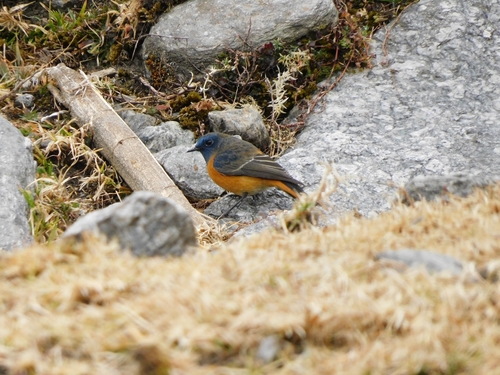 Himalayaroodstaart
Kort gezegd
Het meest betrouwbare veldkenmerk tussen Roodstaartvliegenvanger en Himalayaroodstaart is de aanwezigheid van sterke blauwe kleur op het hoofd en de borst bij volwassen mannelijke Himalayaroodstaart, wat volledig afwezig is bij Roodstaartvliegenvanger. Roodstaartvliegenvanger is een kleine, eenvoudige vliegenvanger met een roestkleurige staart, terwijl Himalayaroodstaart een grotere, kleurrijkere vogel is met een opvallende blauwe voorkant (bij mannetjes) en oranje onderdelen. Vrouwtjes en onvolwassen Himalayaroodstaarten zijn doffer, maar tonen nog steeds rijkere kleuren en een andere structuur in vergelijking met de uniform bruinachtige Roodstaartvliegenvanger. Beide soorten kunnen in de Himalaya in de winter overlappen, maar hun structuur, staartkleur en vooral de aanwezigheid of afwezigheid van blauw zijn cruciaal voor scheiding.
Herkenningstips
- Blauwe kleur: Volwassen mannelijke Himalayaroodstaart toont diep blauw op het hoofd, de keel en de borst—nooit aanwezig bij Roodstaartvliegenvanger. Dit is het enige beslissende kenmerk bij volwassen mannetjes.
- Oranje onderdelen: Himalayaroodstaart (beide geslachten, maar vooral mannetjes) heeft rijke oranje onderdelen; Roodstaartvliegenvanger is bleek en mist enige oranje of roestkleur op de onderdelen.
- Staartkleur en patroon: Beide soorten hebben roestkleurige staarten, maar de staart van Himalayaroodstaart is helderder en toont vaak een donkere centrale zone, terwijl de staart van Roodstaartvliegenvanger meer uniform roestkleurig of roestachtig is met minder contrast.
- Algemene kleur: Roodstaartvliegenvanger is eenvoudig bruinachtig-olijf boven en bleek onder, met weinig contrast. Vrouwelijke en onvolwassen Himalayaroodstaarten zijn bruiner maar nog steeds warmer en kleurrijker dan Roodstaartvliegenvanger, vooral op de staart en flanken.
- Grootte en structuur: Himalayaroodstaart is merkbaar groter en robuuster, met een langere staart en een meer rechtopstaande, robuuste houding. Roodstaartvliegenvanger is kleiner, delicater en compacter.
- Snavelvorm: Beide hebben typische vliegenvanger-snavels, maar de snavel van Himalayaroodstaart is iets zwaarder en breder aan de basis, hoewel dit subtiel is en het beste kan worden gebruikt in directe vergelijking.
- Zitgedrag: Himalayaroodstaart zit vaak op rotsen of open grond en is waarschijnlijker om zijn staart te fannen of te trillen. Roodstaartvliegenvanger geeft de voorkeur aan zitplaatsen in bomen of struiken en is minder opvallend in zijn bewegingen.
- Habitatcontext: In de Himalaya is Himalayaroodstaart waarschijnlijker in open, rotsachtige of struikachtige gebieden, terwijl Roodstaartvliegenvanger de voorkeur geeft aan bosranden en dichtere vegetatie.
- Verwarring tussen geslacht en leeftijd: Vrouwelijke en onvolwassen Himalayaroodstaarten missen het blauw maar zijn nog steeds warmer en rijker van toon dan enige Roodstaartvliegenvanger. Als je blauw ziet, is het geen Roodstaartvliegenvanger.
- Seizoensoverlap: Beide kunnen samen voorkomen in de winter in de Himalaya-voeten—verlaat je niet alleen op het bereik voor scheiding in deze regio en seizoen.
- Geen vleugelpanelen: Geen van beide soorten heeft onderscheidende vleugelstrepen of panelen in enige leeftijd, dus gebruik deze eigenschap niet voor scheiding.
- Staartflikkeren: Beide soorten kunnen hun staarten flikkeren, maar Himalayaroodstaart is waarschijnlijker om deze te fannen en te trillen, vooral wanneer hij opgewonden of aan het tonen is.
- Plumage consistentie: Roodstaartvliegenvanger vertoont weinig variatie tussen geslachten of leeftijden; Himalayaroodstaart is seksueel dimorf, met mannetjes die veel helderder zijn.
- Directe vergelijking: Als ze samen worden gezien, zijn de verschillen in grootte, kleur en gedrag opvallend—Himalayaroodstaart is groter, kleurrijker en dapperder; Roodstaartvliegenvanger is kleiner, eenvoudiger en meer terughoudend.
- Stem: Niet diagnostisch met beschikbare informatie—verlaat je niet op roepen of zang voor scheiding op basis van huidige bronnen.
Grootte
Roodstaartvliegenvanger is kleiner en lichter (lichaamsgewicht ~13,3 g) dan Himalayaroodstaart, die over het algemeen een merkbaar grotere en robuustere vogel is (exact gewicht niet gegeven, maar roodstaarten zijn doorgaans zwaarder en langer dan kleine Ficedula-vliegenvangers). In het veld zal Himalayaroodstaart robuuster lijken, met een langere staart en een meer rechtopstaande houding, terwijl Roodstaartvliegenvanger compact en delicaat is.
Verenkleed
Volwassen mannelijke Himalayaroodstaart is onmiskenbaar met zijn diepe blauwe hoofd, keel en borst, in contrast met heldere oranje onderdelen en een roestkleurige staart. Vrouwtjes en onvolwassen vogels zijn doffer, met bruinachtige bovenkanten en blekere onderdelen, maar tonen nog steeds warmere tinten en een meer contrasterende staart dan Roodstaartvliegenvanger. Roodstaartvliegenvanger van alle leeftijden is eenvoudig bruinachtig-olijf boven, bleek onder, en heeft een onderscheidende roestkleurige of roestachtige staart die contrasteert met de rug maar geen blauw of oranje mist. Beide geslachten en alle leeftijden van Roodstaartvliegenvanger zijn vergelijkbaar, dus geslacht bepalen op basis van het verenkleed is niet mogelijk. In de vlucht toont Himalayaroodstaart een heldere roestkleurige staart met donkere centrale veren, terwijl de staart van Roodstaartvliegenvanger meer uniform roestkleurig is. Geen onderscheidende vleugelpanelen of bovenvleugelpatronen zijn beschreven voor beide soorten in de bronnen, dus scheiding is afhankelijk van de algemene kleur en het staartpatroon.
Gedrag
Roodstaartvliegenvanger zit typisch rechtop op blootgestelde takken, maakt korte sprongetjes om insecten te vangen, en flikkert vaak met zijn staart. Himalayaroodstaart zit ook rechtop maar is waarschijnlijker te zien op rotsen of lage takken in open gebieden, vaak met zijn staart fanning en trillen. Roodstaarten zijn over het algemeen dapperder en opvallender in hun bewegingen, terwijl Roodstaartvliegenvanger meer terughoudend en minder opzichtig is.
Habitat
Roodstaartvliegenvanger wordt aangetroffen in het noordelijke Indiase subcontinent en Centraal-Azië, met voorkeur voor open bossen, bosranden en beboste ravijnen, vooral tijdens migratie en winter. Himalayaroodstaart broedt op hogere hoogtes in de Himalaya en centraal China, in gematigde bossen, en overwintert in de zuidelijke Himalaya-voeten en noordelijk Indochina. In de winter kunnen beide in vergelijkbare habitats in de Himalaya-voeten voorkomen, maar Himalayaroodstaart geeft de voorkeur aan meer open, rotsachtige of struikachtige gebieden, terwijl Roodstaartvliegenvanger zich vasthoudt aan bosranden en dichtere dekking.
Roodstaartvliegenvanger · Himalayaroodstaart · Mijn lastige vogels