
Voltolino vs Schiribilla grigiata
Porzana porzana contro Zapornia pusilla
Fai un quiz con Voltolino e Schiribilla grigiata
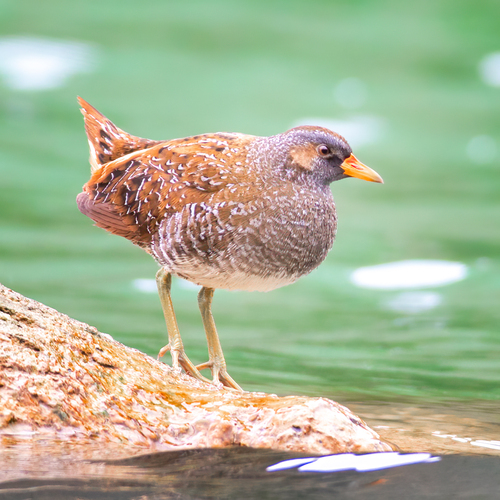 Voltolino
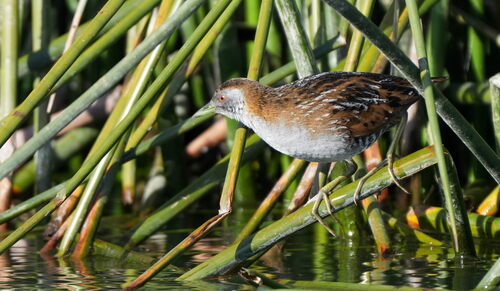 Schiribilla grigiata
In breve
Il segno distintivo più affidabile per separare il Voltolino dalla Schiribilla grigiata è il becco: il Voltolino presenta un becco giallo con una base rossa distintiva, mentre la Schiribilla grigiata ha un becco giallo o verde privo di rosso. Inoltre, il Voltolino è notevolmente più grande e pesante, con una corporatura più robusta. Gli adulti e gli immaturi differiscono nel motivo delle fianchi e delle parti inferiori: il Voltolino ha macchie bianche audaci sui fianchi e un petto blu-grigio (adulto) o marrone (immaturo), mentre la Schiribilla grigiata mostra barre bianche e nere sui fianchi e sull'area sottocoda, e un petto blu-grigio più chiaro. Entrambe le specie possono apparire simili in visioni sfocate, ma un attento esame del colore del becco, delle dimensioni e del motivo dei fianchi risolverà solitamente la confusione, specialmente in visioni binoculare.
Consigli di identificazione
- Colore del becco: Il Voltolino ha un becco giallo con una chiara base rossa (tutte le età), mentre la Schiribilla grigiata ha un becco giallo o verde senza rosso alla base. Questo è spesso visibile anche in scarsa illuminazione ed è la caratteristica singola più affidabile.
- Dimensioni e struttura: Il Voltolino è molto più grande e pesante (80 g contro 35 g), con un aspetto più robusto e massiccio. La Schiribilla grigiata è decisamente minuta e delicata. Usa questo quando hai un senso di scala o vedi entrambe le specie nella stessa area.
- Motivo dei fianchi (adulti e immaturi): Il Voltolino mostra macchie bianche audaci sui fianchi, in contrasto con le barre scure e il petto blu-grigio o marrone. La Schiribilla grigiata ha barre bianche e nere sui fianchi e sull'area sottocoda, senza macchie bianche. Questo è un segno chiave a tutte le età tranne che per i pulcini.
- Petto e parti inferiori (adulti): Gli adulti del Voltolino hanno un petto blu-grigio, mentre gli adulti della Schiribilla grigiata hanno un petto e una gola blu-grigio più chiari, che appaiono spesso più leggeri e meno contrastanti.
- Petto e parti inferiori (immaturi): L'immaturo Voltolino manca del blu-grigio, mostrando marrone invece, ma ha ancora macchie bianche sui fianchi. L'immaturo della Schiribilla grigiata è più opaco degli adulti ma mantiene ampie barre bianche e nere sulle parti inferiori.
- Motivo dell'area sottocoda: Il Voltolino ha un'area sottocoda color crema, mentre la Schiribilla grigiata mostra barre bianche e nere qui. Questo può essere visto quando l'uccello muove la coda o in volo.
- Colore delle gambe: Entrambi hanno gambe verdastre o verde oliva con dita lunghe; questo non è affidabile per la diagnosi.
- Parte superiore: Il Voltolino ha principalmente parti superiori marroni; la Schiribilla grigiata ha parti superiori ocra-marroni con alcune strisce nere e bianche. Questo è sottile e non sempre affidabile.
- Striscia coronale: Non è diagnostica tra questi due (la striscia coronale è usata per separare il Voltolino dalla Sora).
- Piumaggio dei pulcini: I pulcini di entrambe le specie sono neri e indistinguibili a questa età.
- Comportamento: Entrambe le specie sono riservate, ma la Schiribilla grigiata è soprattutto elusiva durante la stagione di nidificazione, spesso rilevata dalla voce piuttosto che dalla vista.
- Habitat: Entrambe si trovano in paludi e letti di giunco; l'habitat non è un separatore affidabile.
- Voce: La Schiribilla grigiata emette un richiamo stridulo durante la stagione di nidificazione; il richiamo del Voltolino non è descritto qui, quindi la voce non è un segno primario per la separazione.
- Contesto: Se vedi un crake molto piccolo e delicato con un becco giallo o verde semplice e barre bianche e nere sui fianchi e sull'area sottocoda, è la Schiribilla grigiata. Se l'uccello è più grande, con un becco giallo con una base rossa e macchie bianche audaci sui fianchi, è il Voltolino.
- Fallback: Quando hai dei dubbi, dai priorità al colore del becco (base rossa = Voltolino), dimensioni (molto più piccolo = Schiribilla grigiata) e motivo dei fianchi/sottocoda (macchie = Voltolino, barre = Schiribilla grigiata).
Taglia
Il Voltolino è sostanzialmente più grande e pesante della Schiribilla grigiata. Il Voltolino misura 19–22,5 cm di lunghezza e pesa circa 80 g, mentre la Schiribilla grigiata è molto più piccola, misurando 15–18 cm e pesando solo circa 35 g [wikidata]. Questa differenza è spesso evidente in un confronto diretto o con esperienza, poiché il Voltolino appare più massiccio e robusto, mentre la Schiribilla grigiata è visibilmente più delicata e minuta nella struttura.
Piumaggio
I piumaggi giovanili e immaturi sono simili in entrambe le specie, ma con differenze chiave: gli immaturi del Voltolino mancano del petto blu-grigio degli adulti, mostrando invece marrone, ma hanno ancora macchie bianche sui fianchi. Gli immaturi della Schiribilla grigiata sono più opachi degli adulti ma mostrano ampie barre bianche e nere sulle parti inferiori e sui fianchi. Negli adulti, il Voltolino ha parti superiori marroni, petto blu-grigio e macchie bianche audaci sui fianchi, mentre la Schiribilla grigiata ha parti superiori ocra-marroni con alcune strisce nere e bianche, un petto e una gola blu-grigio più chiari, e barre bianche e nere su entrambi i fianchi e sull'area sottocoda. L'area sottocoda del Voltolino è color crema, mentre quella della Schiribilla grigiata è a barre bianche e nere. I pulcini di entrambe le specie sono neri e indistinguibili a quell'età.
Comportamento
Entrambe le specie sono riservate, spesso setacciando nel fango o in acque poco profonde e raccogliendo cibo per vista. Non ci sono forti differenze comportamentali nella ricerca di cibo, ma la Schiribilla grigiata è nota per essere particolarmente elusiva durante la stagione di nidificazione, più spesso udita che vista. Il Voltolino può essere leggermente più probabile da vedere all'aperto, ma entrambi sono meglio rilevati da un attento esame dei bordi paludosi.
Habitat
Entrambe le specie abitano paludi e letti di giunco, spesso in ambienti umidi simili. Non c'è una forte separazione dell'habitat nelle note, anche se l'abbondanza locale può differire per regione [ebird]. Entrambi sono associati a vegetazione emergente densa e acque poco profonde.
Voce
La Schiribilla grigiata è descritta come rumorosa durante la stagione di nidificazione, emettendo un richiamo stridulo che ricorda una rana edibile o un germano reale. Nessuna descrizione vocale è fornita per il Voltolino nelle note, quindi la voce non è affidabile per la diagnosi tra questi due con le informazioni fornite.