

Sulphur-bellied Flycatcher vs Piratic Flycatcher
Myiodynastes luteiventris contro Legatus leucophaius
Fai un quiz con Sulphur-bellied Flycatcher e Piratic Flycatcher
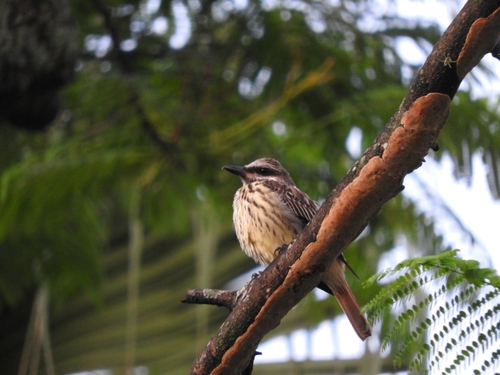 Sulphur-bellied Flycatcher
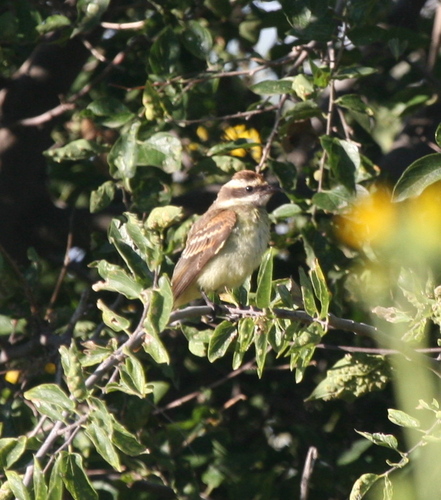 Piratic Flycatcher
In breve
I giovani Sulphur-bellied Flycatchers mostrano forti bordi cannella-buff sulle copritrici delle ali e sulle secondarie, mentre i giovani Piratic Flycatchers hanno ampi bordi cannella sulle copritrici ma mancano dei forti sottocoda gialli e delle striature del Sulphur-bellied. Gli adulti di entrambe le specie sono striati sotto, ma il Sulphur-bellied è molto più grande, con un ventre giallo zolfo striato in modo audace e una coda ruggine, mentre il Piratic è più piccolo, con un lavaggio giallo più opaco sotto e una coda scura. Anche la forma del becco e la struttura generale differiscono: il Sulphur-bellied è più robusto e ha un becco più lungo, mentre il Piratic è compatto con un becco corto e tozzo. Concentrati sul colore del sottocoda e sulle striature, sul colore della coda e sulla forma del becco per la separazione più affidabile.
Consigli di identificazione
- Juvenile wing pattern: Il giovane Sulphur-bellied mostra forti bordi cannella-buff sulle copritrici delle ali e sulle secondarie; i giovani Piratic hanno ampi bordi cannella ma mostrano anche bordi ruggine sulla coda e sottocoda più chiari e meno striati. Usa questo nella tarda estate e all'inizio dell'autunno.
- Underpart color and streaking: L'adulto Sulphur-bellied ha sottocoda giallo zolfo brillante con striature nere audaci e grossolane sul petto e sui fianchi; il Piratic è di un giallo più chiaro sotto, con striature brune o olivastre che sono di solito più fini e meno estese.
- Throat pattern: La gola del Sulphur-bellied è bianca con striature scure; la gola del Piratic è bianca semplice e non striata. Questo è un segno chiave a distanza ravvicinata.
- Tail color: Il Sulphur-bellied ha una coda per lo più cannella-ruggine con striature scure; la coda del Piratic è marrone scuro o marrone nerastro, a volte con bordi più chiari ma mai ruggine nel complesso.
- Bill shape: Il Sulphur-bellied ha un becco lungo, forte e leggermente ricurvo; il becco del Piratic è corto, largo e tozzo. La forma del becco è spesso ovvia di profilo.
- Crown and supercilium: Entrambe le specie possono mostrare una macchia di corona gialla parzialmente nascosta da adulte, ma il supercilium del Sulphur-bellied è grigio chiaro e più prominente, mentre quello del Piratic è bianco opaco e si avvolge sotto la corona.
- Facial pattern: Il Sulphur-bellied mostra una forte maschera scura attraverso le lore e le copritrici auricolari; il Piratic ha lore e copritrici auricolari scure ma una maschera meno definita, con guance bianche e un viso complessivamente più opaco.
- Upperparts: Le parti superiori del Sulphur-bellied sono di un verde oliva chiaro con una sfumatura buffa e striate; quelle del Piratic sono di un marrone grigiastro scuro o marrone oliva con bordi chiari ma meno contrasto.
- Size and structure: Il Sulphur-bellied è molto più grande e robusto, con una coda più lunga e una postura più eretta; il Piratic è compatto e più piccolo nel complesso.
- Juvenile crown: Il giovane Sulphur-bellied manca della macchia di corona gialla ed è più buffo sopra; il giovane Piratic ha punte cannella chiare sulle piume della corona e un supercilium buffo.
- Tail edges in juveniles: Il giovane Piratic mostra bordi ruggine sulle piume della coda, un segno sottile ma a volte visibile.
- Leg and iris color: Entrambi hanno zampe scure e iridi marroni; non utile per la separazione.
- Seasonal context: In Messico e America Centrale, il Piratic è assente o raro da fine settembre a gennaio; il Sulphur-bellied è migratorio ma si sovrappone nel tempo. Controlla l'abbondanza locale su eBird se non sei sicuro.
- Habitat context: Il Sulphur-bellied preferisce foreste riparie e montane, il Piratic è più generalista e si trova in una gamma più ampia di habitat boschivi.
- Vocalizations: Non descritte nelle note; non fare affidamento sulla voce per la separazione basata sulle informazioni attuali.
Taglia
Il Sulphur-bellied Flycatcher è quasi due volte più pesante (47 g contro 23 g) e visibilmente più lungo (circa 20 cm contro 14,5–17 cm) rispetto al Piratic Flycatcher. Sul campo, il Sulphur-bellied appare grande, robusto e con una coda lunga, mentre il Piratic è nettamente più piccolo, più compatto e con un becco corto. Questa differenza di dimensioni è spesso ovvia se entrambi sono visti nella stessa area, ma può essere fuorviante se visti da soli o a distanza.
Piumaggio
I giovani Sulphur-bellied Flycatchers hanno poca o nessuna macchia di corona gialla, una forte sfumatura marrone-buffa sulle parti superiori e bordi cannella-buff sulle copritrici delle ali e sulle secondarie. I giovani Piratic Flycatchers mancano di qualsiasi giallo sulla corona, hanno punte cannella chiare sulle piume della corona, un supercilium buffo, ampi bordi cannella sulle copritrici delle ali, bordi ruggine sulla coda e sottocoda più chiari con poche o nessuna striatura. Negli adulti, il Sulphur-bellied mostra una corona anteriore grigia chiara, una maschera scura audace, una coda ruggine con striature scure e sottocoda giallo zolfo brillante con pesanti striature nere sul petto e sui fianchi. Gli adulti Piratic hanno una corona nerastra con una macchia gialla parzialmente nascosta, un ampio supercilium bianco opaco, parti superiori marrone grigiastro scuro con bordi chiari, una coda marrone scura e sottocoda giallo chiaro con striature brune o olivastre sul petto e sui fianchi, ma queste striature sono tipicamente meno audaci rispetto al Sulphur-bellied. La gola del Sulphur-bellied è striata, mentre quella del Piratic è bianca semplice. La coda del Sulphur-bellied è per lo più cannella-ruggine, in contrasto con la coda scura del Piratic.
Comportamento
Entrambe le specie sono moschettieri arboricoli, spesso posandosi a livelli medi o superiori negli alberi. Il Sulphur-bellied tende ad apparire più robusto e eretto, spesso lanciandosi da posatoi prominenti. Il Piratic Flycatcher è più compatto e può apparire più furtivo, a volte associandosi a stormi misti. Entrambi si lanciano per gli insetti e possono raccogliere frutta, ma le differenze nel comportamento sono sottili e non fortemente diagnostiche sul campo.
Habitat
Il Sulphur-bellied Flycatcher si trova tipicamente dall'Arizona meridionale fino alla Bolivia, preferendo i margini forestali, i boschi ripari e le aree semiaperte con grandi alberi. Il Piratic Flycatcher ha un'area di distribuzione più ampia, presente dal Messico attraverso la maggior parte del Sud America (eccetto il Cile), ed è anche trovato in una varietà di habitat boschivi, comprese le seconde crescita, le piantagioni e i margini forestali. Entrambi possono sovrapporsi nell'America Centrale e settentrionale del Sud America, ma il Sulphur-bellied è più legato agli habitat ripari e montani, mentre il Piratic è più generalista.
Sulphur-bellied Flycatcher · Piratic Flycatcher · I miei uccelli difficili