

Violet Cuckoo vs Plaintive Cuckoo
Chrysococcyx xanthorhynchus contro Cacomantis merulinus
Fai un quiz con Violet Cuckoo e Plaintive Cuckoo
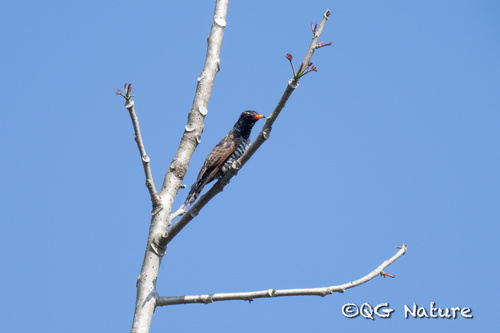 Violet Cuckoo
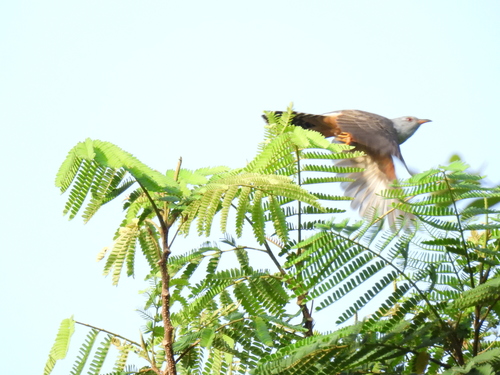 Plaintive Cuckoo
In breve
The most reliable field mark is the adult male Violet Cuckoo’s dazzling, iridescent violet upperparts and throat, which are never matched by Plaintive Cuckoo. For females and juveniles, focus on the Violet Cuckoo’s strong barring and greenish-bronze tones versus the Plaintive Cuckoo’s more uniform rufous or grey-brown and less contrasty underparts. In flight or perched, Violet Cuckoo shows a shorter, more compact jizz, while Plaintive Cuckoo is longer-tailed and slimmer. Juvenile Violet Cuckoos have a striking mix of rufous, greenish-bronze, and barred upperparts, while juvenile Plaintive Cuckoos are paler with streaked, not barred, crowns and throats. Both species can be secretive, but their structure and plumage differences are reliable in most views.
Consigli di identificazione
- Adult male Violet Cuckoo is unmistakable: Look for glossy, iridescent violet head, upperparts, and throat, plus a red eye-ring. Plaintive Cuckoo never shows this color.
- Juvenile upperparts: Violet Cuckoo juveniles have a bright rufous crown and a mix of rufous and greenish-bronze barring above, with a barred brown and rufous tail. Plaintive Cuckoo juveniles are paler, with streaked (not barred) crowns and throats and less contrast overall.
- Female hepatic morph: Plaintive Cuckoo females in hepatic morph are reddish-brown above with dark bars and a pale supercilium. Violet Cuckoo females are greenish-bronze above with a dark brown crown and white facial markings.
- Tail pattern: Violet Cuckoo males have a blackish tail with a white tip and barred outer feathers; females have greenish central tail feathers and rufous, green-barred outers. Plaintive Cuckoo has a tail with white tips (male) or dark bars along the whole length (female hepatic morph).
- Underparts: Violet Cuckoo males have a white belly with bold black, green, or violet bars; females have whitish underparts with bronze-green bars and rufous wash. Plaintive Cuckoo males are orange below with a grey upper breast; hepatic females are paler with faint barring.
- Facial markings: Violet Cuckoo females have white markings around the eyes and sometimes on the forehead; Plaintive Cuckoo females have a pale supercilium but lack the strong white facial marks.
- Structure and jizz: Violet Cuckoo is more compact and shorter-tailed; Plaintive Cuckoo is longer-tailed and slimmer, especially obvious in flight or when perched upright.
- Bill color: Plaintive Cuckoo has a black upper mandible and yellow lower mandible; Violet Cuckoo’s bill color is not specified but is not noted as diagnostic.
- Leg color: Plaintive Cuckoo has yellow legs and feet; Violet Cuckoo’s leg color is not described as distinctive.
- Habitat context: Plaintive Cuckoo is more likely in open habitats, gardens, and farmland; Violet Cuckoo prefers forested areas.
- Behavior: Violet Cuckoo is more active and often seen creeping or flycatching; Plaintive Cuckoo is more secretive and still.
- Voice: Plaintive Cuckoo is much more likely to be heard giving plaintive, whistling calls; Violet Cuckoo’s vocalizations are not described in detail here.
- Red eye-ring: Only adult male Violet Cuckoo shows a red eye-ring; Plaintive Cuckoo has a red eye but not a ring.
- Pitfalls: Juvenile and female cuckoos are often confused; focus on barring vs. streaking, greenish-bronze vs. rufous/grey-brown tones, and tail pattern. Always consider age and sex before relying on a single mark.
- When in doubt: If the bird is in dense forest and shows metallic tones or strong barring, lean Violet Cuckoo. In open country with a more uniform, rufous or grey-brown bird, suspect Plaintive Cuckoo.
Taglia
Plaintive Cuckoo is slightly larger, measuring about 21–24 cm in length, and appears longer-tailed and slimmer overall. Violet Cuckoo is more compact, with a shorter tail and a chunkier impression. While both are small cuckoos, the difference is subtle and best judged when both are seen in similar postures. Mass and wingspan are not provided, but the jizz difference is often apparent in the field.
Piumaggio
-
Juveniles: Violet Cuckoo juveniles have a bright rufous crown, barred rufous and greenish-bronze upperparts, and a barred brown and rufous tail. Their underparts are white with brown barring. Plaintive Cuckoo juveniles are paler, resembling hepatic females, with dark streaks (not bars) on the crown and throat and less contrast overall.
-
Adult males: Violet Cuckoo males are unmistakable with glossy violet head, upperparts, and throat, a white belly with bold black, green, or violet bars, and a red eye-ring. Plaintive Cuckoo males are grey-brown above, orange below, with a grey head, throat, and upper breast, and white-tipped tail feathers.
-
Adult females: Violet Cuckoo females are greenish-bronze above with a dark brown crown, white facial markings, and a tail with greenish central feathers and rufous, green-barred outers. Plaintive Cuckoo females are either similar to males or in a hepatic morph: reddish-brown above with dark bars, paler underparts with faint barring, and a pale supercilium. Their tail is barred dark throughout. Violet Cuckoo females show more contrast and metallic tones, while Plaintive Cuckoo females are warmer and more uniform.
Comportamento
Violet Cuckoo is often seen actively creeping along branches or flycatching, showing a more animated, restless demeanor. Plaintive Cuckoo is usually solitary, secretive, and harder to see, often remaining still and relying on camouflage. Both are brood parasites, but their host choices differ (Violet Cuckoo targets sunbirds and spiderhunters; Plaintive Cuckoo targets cisticolas, prinias, and tailorbirds). Both are sometimes mobbed by small birds. Foraging style and movement can be a subtle clue if seen well.
Habitat
Plaintive Cuckoo is more versatile, found in forest edge, open woodland, scrub, grassland, farmland, parks, and gardens. Violet Cuckoo is less often found in open country and is more closely associated with forested habitats. If you encounter a small cuckoo in a garden or open scrub, Plaintive is more likely; in dense forest, Violet is favored.
Voce
Plaintive Cuckoo is vocal, with distinctive plaintive, whistling calls: ascending three-note phrases and long series of descending notes. Violet Cuckoo is also vocal in the breeding season but the notes do not describe its calls in detail. If you hear a repeated, clear, plaintive whistle, suspect Plaintive Cuckoo.