

Yellow-bellied Eremomela vs Green-backed Camaroptera
Eremomela icteropygialis contro Camaroptera brachyura
Fai un quiz con Yellow-bellied Eremomela e Green-backed Camaroptera
 Yellow-bellied Eremomela
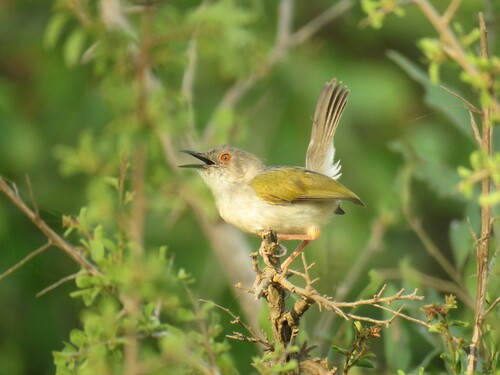 Green-backed Camaroptera
In breve
Il segno distintivo più affidabile per separare il Yellow-bellied Eremomela dal Green-backed Camaroptera è il colore delle parti inferiori: l'eremomela mostra un ventre distintamente giallo (anche se la tonalità varia a seconda della sottospecie e dell'età), mentre il camaroptera ha parti inferiori grigio-biancastre. Entrambi sono piccoli e attivi warbler della famiglia Cisticolidae, ma l'eremomela è più grigio sopra con un supercilio chiaro, mentre il camaroptera ha il dorso verde e manca di un forte motivo facciale. I giovani di entrambi sono più opachi sotto, ma l'eremomela mantiene un po' di giallo. Entrambe le specie sono simili in dimensioni, ma il camaroptera è leggermente più pesante e con una coda più lunga. Sul campo, cerca il ventre giallo limone più brillante dell'eremomela e la testa grigia contrastante, rispetto all'aspetto complessivo verde e bianco del camaroptera e alla sua preferenza per coperture dense e basse.
Consigli di identificazione
- Colore delle parti inferiori: Il segno distintivo migliore è il colore del ventre—il Yellow-bellied Eremomela mostra un ventre distintamente giallo (limone) negli adulti, mentre il Green-backed Camaroptera è grigio-biancastro sotto. Questo vale per la maggior parte delle sottospecie e delle età, anche se i giovani eremomela sono di un giallo più opaco.
- Parti superiori: L'eremomela è grigia sopra, diventando più oliva sulle ali e sulla coda; il camaroptera ha il dorso verde e le ali olive in tutto. Cerca il tono verde complessivo nel camaroptera rispetto all'aspetto più grigio e contrastante dell'eremomela.
- Motivo facciale: L'eremomela ha un sottile supercilio grigio chiaro e una striscia nerastra attraverso l'occhio, conferendole un volto più marcato. Il camaroptera manca di un forte supercilio o striscia oculare e appare più semplice nel volto.
- Gola e petto: Alcune sottospecie di eremomela (soprattutto nell'Africa meridionale occidentale) hanno una gola e un petto grigio-biancastri, il che può ridurre l'impressione di giallo, ma il ventre giallo è di solito ancora visibile. Il camaroptera è costantemente grigio-biancastro sotto, a volte con una leggera sfumatura giallastra nei giovani.
- Colore del becco: L'eremomela ha un becco nerastro; il colore del becco del camaroptera non è descritto, quindi questo non è un separatore affidabile.
- Coda: Il camaroptera è descritto come con coda corta, ma questa è sottile e non sempre ovvia sul campo.
- Dimensioni: Entrambi sono piccoli, ma il camaroptera è leggermente più pesante e lungo (11,5 cm contro 10 cm), anche se questo è raramente utile senza un confronto diretto.
- Comportamento: Il camaroptera è molto più schivo, rimanendo basso in coperture dense e raramente uscendo allo scoperto. L'eremomela è più probabile che venga vista mentre cerca attivamente cibo in situazioni più aperte o più in alto nei cespugli.
- Habitat: Se l'uccello è profondo in un sottobosco aggrovigliato, è più probabile che sia un camaroptera; se è in un bosco aperto o in un cespuglio, è più probabile che sia un eremomela, ma ci sono sovrapposizioni.
- Confusione giovanile: Entrambe le specie sono più opache da giovani, ma i giovani eremomela mantengono un po' di giallo sulle parti inferiori, mentre i giovani camaroptera sono di un giallo più pallido sul petto ma per lo più grigio-biancastro sotto.
- Motivo di volo/ala: Non sono descritti segni distintivi di ali o volo per nessuna delle due specie, quindi non fare affidamento sul motivo dell'ala superiore in volo.
- Voce: L'eremomela emette un richiamo acuto e ripetuto "tchee-tchee-tchuut"; il richiamo del camaroptera non è descritto qui, quindi usa la voce con cautela a meno che tu non conosca il richiamo belante del camaroptera.
- Sessi: Entrambe le specie sono sessualmente monomorfiche—maschi e femmine si somigliano.
- Trappole: Fai attenzione alle sottospecie di eremomela con gole e petti più chiari, che possono apparire meno gialli sotto, e ai giovani camaroptera con una leggera sfumatura giallastra sul petto. Controlla sempre l'impressione complessiva di giallo rispetto a grigio-biancastro sulle parti inferiori.
- Contesto: Usa una combinazione di colore delle parti inferiori, motivo del volto e comportamento per l'identificazione più affidabile, specialmente quando il piumaggio è opaco o la vista è breve.
Taglia
Entrambe le specie sono warbler molto piccoli, ma il Green-backed Camaroptera è marginalmente più pesante (10 g contro circa 9 g per l'eremomela) e leggermente più lungo (11,5 cm per il camaroptera, 10 cm per l'eremomela). Il camaroptera è anche descritto come con coda corta, ma la differenza è sottile sul campo. La dimensione da sola non è un separatore affidabile, ma il camaroptera può apparire un po' più compatto e con un corpo più pesante, specialmente quando visto fianco a fianco.
Piumaggio
- Piumaggio giovanile/immaturo: Entrambe le specie hanno parti inferiori più opache da giovani, ma i giovani Yellow-bellied Eremomela mostrano ancora un po' di giallo sotto, mentre i giovani camaroptera sono di un giallo più pallido sul petto ma per lo più grigio-biancastro sotto.
- Adulti: Gli adulti di eremomela hanno parti superiori grigie (più scure e più olive su ali e coda), un sottile supercilio grigio chiaro, una striscia oculare nerastra e un ventre giallo limone. La gola e il petto possono essere grigi in alcune sottospecie, soprattutto nell'Africa meridionale occidentale. Gli adulti di camaroptera hanno parti superiori verdi, ali olive e parti inferiori grigio-biancastre, senza forti marcature facciali. I sessi sono simili in entrambe le specie.
- Motivo di volo/ala: Non sono descritti segni distintivi specifici per età sulle ali o sul volo per nessuna delle due specie; la separazione si basa sul colore complessivo e sul motivo del volto.
Comportamento
Il Green-backed Camaroptera è tipicamente molto schivo, rimanendo basso in coperture dense e raramente avventurandosi allo scoperto. Spesso lega insieme le foglie per costruire il suo nido in basso nei cespugli. Il Yellow-bellied Eremomela, pur essendo attivo e simile a un warbler, non è descritto come particolarmente schivo e può essere visto più facilmente in situazioni aperte o più in alto nei cespugli. Entrambi sono insettivori e attivi, ma la tendenza del camaroptera a rimanere nascosto è un indizio comportamentale.
Habitat
Entrambe le specie abitano una gamma di habitat cespugliosi e boschivi nell'Africa subsahariana, ma il Green-backed Camaroptera è particolarmente associato a coperture dense e basse, spesso in cespugli o vegetazione aggrovigliata. Il Yellow-bellied Eremomela è meno strettamente legato a sottoboschi densi e può essere trovato in boschi aperti o in terreni cespugliosi. L'habitat da solo non è diagnostico ma può fornire un contesto di supporto.
Voce
Il Yellow-bellied Eremomela emette un richiamo acuto e ripetuto "tchee-tchee-tchuut". Non è fornita alcuna descrizione vocale specifica per il Green-backed Camaroptera nelle note, ma è noto come il "camaroptera belante," suggerendo un richiamo diverso, possibilmente più nasale o belante. Se senti un tchee-tchee-tchuut acuto e ripetuto, è più probabile che sia un eremomela; il richiamo del camaroptera non è descritto qui, quindi usa cautela.
Yellow-bellied Eremomela · Green-backed Camaroptera · I miei uccelli difficili