

yellow-bellied eremomela vs green-backed camaroptera
Eremomela icteropygialis versus Camaroptera brachyura
Jogue um quiz com yellow-bellied eremomela e green-backed camaroptera
 yellow-bellied eremomela
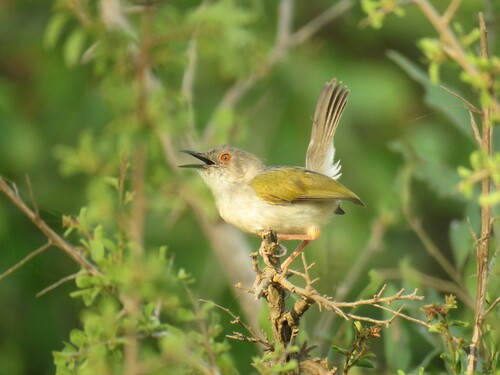 green-backed camaroptera
Em resumo
A marca de campo mais confiável para separar o yellow-bellied eremomela do green-backed camaroptera é a cor das partes inferiores: o eremomela apresenta uma barriga distintamente amarela (embora o tom varie por subespécie e idade), enquanto o camaroptera tem partes inferiores cinza-esbranquiçadas. Ambos são pequenos e ativos, pertencentes à família Cisticolidae, mas o eremomela é mais cinza na parte superior com um supercílios pálido, enquanto o camaroptera é verde nas costas e não possui um padrão facial forte. Os juvenis de ambos são mais apagados na parte inferior, mas o eremomela retém algum amarelo. Ambas as espécies são semelhantes em tamanho, mas o camaroptera é ligeiramente mais pesado e tem cauda mais longa. No campo, procure pela barriga amarela mais brilhante do eremomela e pela cabeça cinza contrastante, em comparação com a aparência geral verde e branca do camaroptera e sua preferência por cobertura densa e baixa.
Dicas de identificação
- Cor das partes inferiores: A melhor marca de campo é a cor da barriga—o yellow-bellied eremomela apresenta uma barriga distintamente amarela (limão) em adultos, enquanto o green-backed camaroptera é cinza-esbranquiçado na parte inferior. Isso se aplica à maioria das subespécies e idades, embora os juvenis de eremomela sejam amarelos mais apagados.
- Partes superiores: O eremomela é cinza na parte superior, tornando-se mais oliva nas asas e na cauda; o camaroptera é verde nas costas e tem asas oliva em toda parte. Procure o tom verde geral no camaroptera em comparação com a aparência mais cinza e contrastante do eremomela.
- Padrão facial: O eremomela tem um supercílios pálido e fino e uma faixa escura através do olho, dando-lhe um rosto mais marcado. O camaroptera não possui um supercílios forte ou faixa ocular e parece mais simples no rosto.
- Garganta e peito: Algumas subespécies de eremomela (especialmente no oeste da África do Sul) têm uma garganta e peito esbranquiçados, o que pode reduzir a impressão amarela, mas a barriga amarela geralmente ainda é visível. O camaroptera é consistentemente cinza-esbranquiçado na parte inferior, às vezes com uma leve coloração amarelada em juvenis.
- Cor do bico: O eremomela tem um bico escuro; a cor do bico do camaroptera não é descrita, então isso não é um separador confiável.
- Cauda: O camaroptera é descrito como de cauda curta, mas isso é sutil e nem sempre óbvio no campo.
- Tamanho: Ambos são pequenos, mas o camaroptera é ligeiramente mais pesado e longo (11,5 cm vs. 10 cm), embora isso raramente seja útil sem comparação direta.
- Comportamento: O camaroptera é muito mais furtivo, permanecendo baixo em cobertura densa e raramente saindo para o aberto. O eremomela é mais propenso a ser visto forrageando ativamente em situações mais abertas ou mais alto em arbustos.
- Habitat: Se o pássaro estiver profundamente em vegetação emaranhada, o camaroptera é mais provável; se estiver em floresta aberta ou arbustos, o eremomela é mais provável, mas há sobreposição.
- Confusão juvenil: Ambas as espécies são mais apagadas como juvenis, mas os juvenis de eremomela retêm algum amarelo nas partes inferiores, enquanto os juvenis de camaroptera são amarelos mais pálidos no peito, mas geralmente muito menos saturados, tendendo para o cinza-esbranquiçado.
- Padrão de voo/asas: Nenhuma marca distintiva de asas ou voo é descrita para qualquer uma das espécies, então não confie no padrão da asa superior em voo.
- Voz: O eremomela emite um chamado agudo e repetido "tchee-tchee-tchuut"; o chamado do camaroptera não é descrito aqui, então use a voz com cautela, a menos que você conheça o chamado bleating do camaroptera.
- Sexos: Ambas as espécies são sexualmente monomórficas—machos e fêmeas se parecem.
- Armadilhas: Cuidado com subespécies de eremomela com gargantas e peitos mais claros, que podem parecer menos amarelos na parte inferior, e com juvenis de camaroptera com uma leve tonalidade amarelada no peito. Sempre verifique a impressão geral amarela vs. cinza-esbranquiçada nas partes inferiores.
- Contexto: Use uma combinação de cor das partes inferiores, padrão facial e comportamento para a identificação mais confiável, especialmente quando a plumagem está apagada ou a visão é breve.
Tamanho
Ambas as espécies são pequenos warblers, mas o green-backed camaroptera é marginalmente mais pesado (10 g vs. cerca de 9 g para o eremomela) e ligeiramente mais longo (11,5 cm para o camaroptera, 10 cm para o eremomela). O camaroptera também é descrito como de cauda curta, mas a diferença é sutil no campo. O tamanho sozinho não é um separador confiável, mas o camaroptera pode parecer um pouco mais compacto e de corpo mais pesado, especialmente quando visto lado a lado.
Plumagem
- Plumagem juvenil/imatura: Ambas as espécies têm partes inferiores mais apagadas como juvenis, mas os juvenis de yellow-bellied eremomela ainda mostram algum amarelo na parte inferior, enquanto os juvenis de camaroptera são amarelos mais pálidos no peito, mas geralmente muito menos saturados, tendendo para o cinza-esbranquiçado.
- Adultos: Os adultos de eremomela têm partes superiores cinzas (mais escuras e mais olivas nas asas e cauda), um supercílios pálido e fino, uma faixa ocular escura e uma barriga amarela limão. A garganta e o peito podem ser esbranquiçados em algumas subespécies, especialmente no oeste da África do Sul. Os adultos de camaroptera têm partes superiores verdes, asas olivas e partes inferiores cinza-esbranquiçadas, sem marcas faciais fortes. Os sexos são semelhantes em ambas as espécies.
- Padrão de voo/asas: Nenhuma marca de asas ou voo específica para idade é descrita para qualquer uma das espécies; a separação depende da coloração geral e do padrão facial.
Comportamento
O green-backed camaroptera é tipicamente muito furtivo, permanecendo baixo em cobertura densa e raramente aventurando-se para o aberto. Ele frequentemente amarra folhas juntas para construir seu ninho baixo em arbustos. O yellow-bellied eremomela, embora também ativo e semelhante a um warbler, não é descrito como particularmente furtivo e pode ser visto mais facilmente em situações abertas ou mais alto em arbustos. Ambos são insetívoros e ativos, mas a tendência do camaroptera de permanecer escondido é uma pista comportamental.
Habitat
Ambas as espécies habitam uma variedade de habitats arbustivos e florestais na África subsaariana, mas o green-backed camaroptera está especialmente associado a coberturas densas e baixas, frequentemente em matas ou vegetação emaranhada. O yellow-bellied eremomela está menos estritamente ligado à vegetação densa e pode ser encontrado em florestas abertas ou áreas de arbustos. O habitat sozinho não é diagnóstico, mas pode fornecer contexto de apoio.
Voz
O yellow-bellied eremomela emite um chamado agudo e repetido "tchee-tchee-tchuut". Nenhuma descrição vocal específica é fornecida para o green-backed camaroptera nas notas, mas é conhecido como o "camaroptera bleating," sugerindo um chamado diferente, possivelmente mais nasal ou bleating. Se você ouvir um tchee-tchee-tchuut agudo e repetido, é mais provável que seja o eremomela; o chamado do camaroptera não é descrito aqui, então use cautela.
yellow-bellied eremomela · green-backed camaroptera · Minhas aves difíceis