

ハイタカジュウイチ 対 フィリピンジュウイチ
Hierococcyx varius 対 Hierococcyx pectoralis
ハイタカジュウイチとフィリピンジュウイチのクイズ
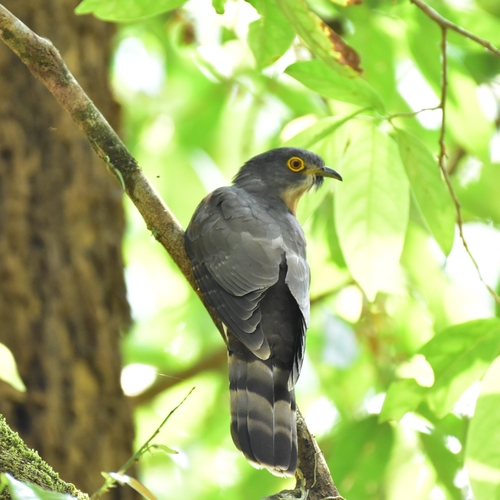 ハイタカジュウイチ
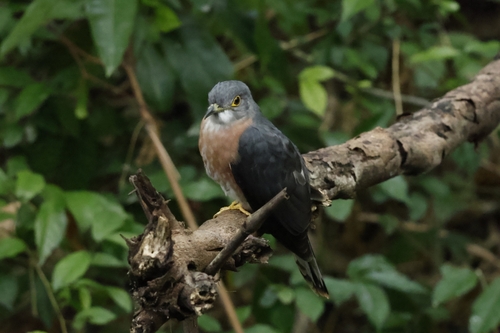 フィリピンジュウイチ
要点
The most reliable way to separate Common Hawk-Cuckoo from Philippine Hawk-Cuckoo is by size and underpart coloration: Common is notably larger and has brown cross-barring below, while Philippine is smaller with a pale rufous wash on the breast and upper belly. Both have a yellow eye-ring and similar hawk-like jizz, but the underpart pattern and tail details are key, especially in immatures. Juveniles differ in their belly and breast markings: Common shows brown chevrons and streaks, Philippine has rufous barring above and brown streaks below. Voice and range are also useful if seen or heard in the field.
識別のコツ
- Size: Common Hawk-Cuckoo is noticeably larger (34 cm) than Philippine (29 cm); use this when you have a good sense of scale or direct comparison.
- Underpart Pattern (Adult): Common has whitish underparts with brown cross-bars; Philippine shows a pale rufous wash on the breast and upper belly with otherwise white underparts.
- Tail Pattern: Philippine has a distinctive tail with 3–4 black and buff bars, a broad black band near the tip, and a pale rufous tip. Common's tail is broadly barred but lacks the rufous tip and strong subterminal band.
- Juvenile/Immature Markings: Immature Common Hawk-Cuckoo shows brown chevrons on the belly and a streaked breast, sometimes with a pale chin. Immature Philippine has rufous barring above and brown streaks below, with a warmer, more rufous tone overall.
- Eye-ring: Both have a yellow eye-ring; this is not useful for separation.
- Leg and Bill Color: Philippine has yellow legs and feet and a bill that is black and olive; these are subtle and may not be visible in the field.
- Flight Style: Both species have a hawk-like flap-and-glide flight, but Common is more likely to shake its tail after landing.
- Voice: If heard, Common gives a repeated three-note "brain-fever" call, while Philippine gives a high-pitched series of 5–7 notes, repeated and accelerating.
- Range: Only Common occurs in the Indian subcontinent; only Philippine in the Philippines. Use range as a primary filter.
- Habitat: Both prefer wooded areas, but context within their respective ranges is more important than habitat for separation.
- Sex Differences: Both species are sexually monomorphic in plumage; do not rely on sex for ID.
- Confusion with Hawks: Both mimic sparrowhawks (especially shikra); check for yellow eye-ring and cuckoo structure to avoid raptor confusion.
- Alarm Response: Both may trigger alarm calls from small birds due to hawk mimicry; not a separator.
- Pitfalls: Immature Common can resemble immature shikra due to streaked breast; always check for barring and tail pattern. Philippine immatures are warmer and more rufous.
- Season: Both species are resident, but Common's calls are most frequent before the monsoon (March–June); Philippine's call can be heard year-round.
大きさ
Common Hawk-Cuckoo is distinctly larger, about 34 cm in length (roughly pigeon-sized), while Philippine Hawk-Cuckoo is smaller at about 29 cm. This size difference is often apparent in direct comparison or with experience. Both are medium-sized cuckoos, but Common appears bulkier and longer-tailed. Sexes are similar in both species, though male Common Hawk-Cuckoos may be slightly larger than females.
羽色
- Adults:
- Common Hawk-Cuckoo: Ashy grey above, whitish below with brown cross-bars; tail broadly barred; yellow eye-ring; sexes alike.
- Philippine Hawk-Cuckoo: Dark-grey above, white below with a pale rufous (warm buff) wash on breast and upper belly; tail with 3–4 black and buff bars, a broad black subterminal band, and a pale rufous tip; yellow eye-ring; yellow legs and feet; bill black and olive.
- Immatures/Juveniles:
- Common Hawk-Cuckoo: Breast streaked, large brown chevrons on belly, pale chin; resembles immature shikra in streaking.
- Philippine Hawk-Cuckoo: Rufous barring above, brown streaks below; overall warmer and more rufous-toned than Common.
- Tail:
- Common: Broadly barred, but less contrasty than Philippine; lacks the distinct pale rufous tip.
- Philippine: Black and buff bars, broad black band near tip, and pale rufous tip—this tail pattern is a strong field mark.
- Eye-ring:
- Both: Bare yellow ring around the eye, not diagnostic between these two.
行動
Both species show hawk-like flight with flap-and-glide patterns and often perch upright, mimicking sparrowhawks. Common Hawk-Cuckoo is noted for shaking its tail from side to side after landing, which may help in separation if observed. Both are brood parasites, but this is not a field mark. Alarm responses from small birds may occur for both due to their hawk mimicry.
生息環境
Common Hawk-Cuckoo is resident in the Indian subcontinent, often found in wooded areas, gardens, and near human habitation. Philippine Hawk-Cuckoo is endemic to the Philippines and occupies forested habitats. Range is a strong separator: if you are outside the Philippines, you are almost certainly seeing Common Hawk-Cuckoo; within the Philippines, only Philippine Hawk-Cuckoo occurs.
声
Common Hawk-Cuckoo gives a loud, repeated three-note call ("brain-fever"), rising in pitch and ending abruptly, heard throughout the day and often at night. Females give a series of grating notes. Philippine Hawk-Cuckoo has a high-pitched call of five to seven notes, lasting about 1.5 seconds, repeated up to 10 times, getting louder and faster. Vocal differences are clear if the bird is calling, but both can be loud and persistent.
ハイタカジュウイチ · フィリピンジュウイチ · 苦手な鳥