

Indische sperwerkoekoek vs Filipijnse sperwerkoekoek
Hierococcyx varius versus Hierococcyx pectoralis
Speel een quiz met Indische sperwerkoekoek en Filipijnse sperwerkoekoek
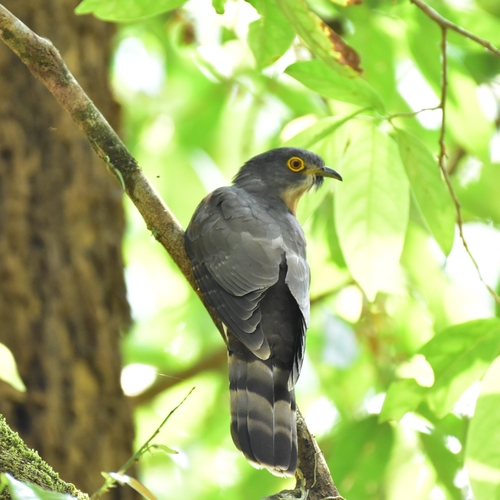 Indische sperwerkoekoek
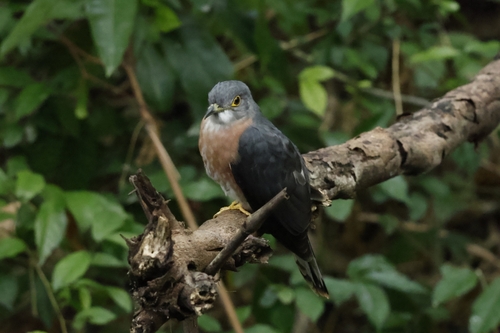 Filipijnse sperwerkoekoek
Kort gezegd
De meest betrouwbare manier om de Indische sperwerkoekoek van de Filipijnse sperwerkoekoek te scheiden, is op basis van grootte en kleur van de onderzijde: de Indische is merkbaar groter en heeft bruine dwarsstrepen onder, terwijl de Filipijnse kleiner is met een bleke roestkleurige waas op de borst en bovenbuik. Beide hebben een gele oogring en een vergelijkbare havikachtige uitstraling, maar het patroon van de onderzijde en details van de staart zijn cruciaal, vooral bij onvolwassen vogels. Juvenielen verschillen in hun buik- en borstmarkeringen: de Indische toont bruine chevrons en strepen, de Filipijnse heeft roestkleurige strepen boven en bruine strepen onder. Stem en verspreiding zijn ook nuttig als ze in het veld worden gezien of gehoord.
Herkenningstips
- Grootte: De Indische sperwerkoekoek is merkbaar groter (34 cm) dan de Filipijnse (29 cm); gebruik dit wanneer je een goed gevoel voor schaal of directe vergelijking hebt.
- Patroon van de Onderzijde (Volwassen): De Indische heeft witachtige onderzijde met bruine dwarsstrepen; de Filipijnse toont een bleke roestkleurige waas op de borst en bovenbuik met verder witte onderzijde.
- Staartpatroon: De Filipijnse heeft een kenmerkende staart met 3–4 zwarte en buffkleurige strepen, een brede zwarte band nabij de punt, en een bleke roestkleurige punt. De staart van de Indische is breed gestreept maar mist de roestkleurige punt en sterke subterminal band.
- Juveniele/Onvolwassen Markeringen: Onvolwassen Indische sperwerkoekoek toont bruine chevrons op de buik en een gestreepte borst, soms met een bleke kin. Onvolwassen Filipijnse heeft roestkleurige strepen boven en bruine strepen onder, met een warmere, meer roestkleurige toon in het algemeen.
- Oogring: Beide hebben een gele oogring; dit is niet nuttig voor scheiding.
- Kleur van Poten en Snavel: De Filipijnse heeft gele poten en voeten en een snavel die zwart en olijfgroen is; deze zijn subtiel en mogelijk niet zichtbaar in het veld.
- Vliegstijl: Beide soorten hebben een havikachtige flap-en-glijd vliegstijl, maar de Indische is waarschijnlijker om zijn staart te schudden na het landen.
- Stem: Als gehoord, geeft de Indische een herhaalde drie-noten "brain-fever" roep, terwijl de Filipijnse een hoogfrequente reeks van 5–7 noten geeft, herhaald en versnellend.
- Verspreiding: Alleen de Indische komt voor op het Indische subcontinent; alleen de Filipijnse op de Filipijnen. Gebruik verspreiding als een primaire filter.
- Habitat: Beide geven de voorkeur aan bosrijke gebieden, maar de context binnen hun respectieve verspreidingsgebieden is belangrijker dan habitat voor scheiding.
- Geslachtsverschillen: Beide soorten zijn seksueel monomorf in verenkleed; vertrouw niet op geslacht voor identificatie.
- Verwarring met Haviken: Beide imiteren sperwerhakken (vooral shikra); controleer op gele oogring en koekoekstructuur om verwarring met roofvogels te voorkomen.
- Alarmreactie: Beide kunnen alarmroepen van kleine vogels triggeren vanwege havikimitatie; dit is geen scheider.
- Valstrikken: Onvolwassen Indische kan lijken op onvolwassen shikra vanwege de gestreepte borst; controleer altijd op strepen en staartpatroon. Filipijnse onvolwassen vogels zijn warmer en meer roestkleurig.
- Seizoen: Beide soorten zijn resident, maar de roepen van de Indische zijn het meest frequent vóór de moesson (maart-juni); de roep van de Filipijnse kan het hele jaar door worden gehoord.
Grootte
De Indische sperwerkoekoek is duidelijk groter, ongeveer 34 cm in lengte (ongeveer duifgrootte), terwijl de Filipijnse sperwerkoekoek kleiner is met ongeveer 29 cm. Dit formaatverschil is vaak duidelijk in directe vergelijking of met ervaring. Beide zijn middelgrote koekoeken, maar de Indische lijkt robuuster en heeft een langere staart. De geslachten zijn vergelijkbaar in beide soorten, hoewel mannelijke Indische sperwerkoekoeken iets groter kunnen zijn dan vrouwelijke.
Verenkleed
- Volwassenen:
- Indische sperwerkoekoek: Asgrijs boven, witachtig onder met bruine dwarsstrepen; staart breed gestreept; gele oogring; geslachten gelijk.
- Filipijnse sperwerkoekoek: Donkergrijs boven, wit onder met een bleke roestkleurige (warme buff) waas op borst en bovenbuik; staart met 3–4 zwarte en buffkleurige strepen, een brede zwarte subterminal band, en een bleke roestkleurige punt; gele oogring; gele poten en voeten; snavel zwart en olijfgroen.
- Onvolwassen/Juvenielen:
- Indische sperwerkoekoek: Borst gestreept, grote bruine chevrons op de buik, bleke kin; lijkt op onvolwassen shikra in strepen.
- Filipijnse sperwerkoekoek: Roestkleurige strepen boven, bruine strepen onder; over het algemeen warmer en meer roestkleurig dan de Indische.
- Staart:
- Indische: Breed gestreept, maar minder contrasterend dan de Filipijnse; mist de duidelijke bleke roestkleurige punt.
- Filipijnse: Zwarte en buffkleurige strepen, brede zwarte band nabij de punt, en bleke roestkleurige punt—dit staartpatroon is een sterk veldkenmerk.
- Oogring:
- Beide: Kale gele ring rond het oog, niet diagnostisch tussen deze twee.
Gedrag
Beide soorten vertonen havikachtige vlucht met flap-en-glijdpatronen en zitten vaak rechtop, imiterend sperwerhakken. De Indische sperwerkoekoek staat bekend om het schudden van zijn staart van links naar rechts na het landen, wat kan helpen bij scheiding als het wordt waargenomen. Beide zijn broedparasieten, maar dit is geen veldkenmerk. Alarmreacties van kleine vogels kunnen optreden voor beide vanwege hun havikimitatie.
Habitat
De Indische sperwerkoekoek is resident op het Indische subcontinent, vaak te vinden in bosrijke gebieden, tuinen en nabij menselijke bewoning. De Filipijnse sperwerkoekoek is endemisch op de Filipijnen en bezet bosrijke habitats. Verspreiding is een sterke scheider: als je buiten de Filipijnen bent, zie je bijna zeker de Indische sperwerkoekoek; binnen de Filipijnen komt alleen de Filipijnse sperwerkoekoek voor.
Geluid
De Indische sperwerkoekoek geeft een luide, herhaalde drie-noten roep ("brain-fever"), die in toonhoogte stijgt en abrupt eindigt, gehoord gedurende de dag en vaak 's nachts. Vrouwtjes geven een reeks schurende noten. De Filipijnse sperwerkoekoek heeft een hoogfrequente roep van vijf tot zeven noten, die ongeveer 1,5 seconden duurt, tot 10 keer herhaald, steeds luider en sneller. Vocalisatieverschillen zijn duidelijk als de vogel roept, maar beide kunnen luid en aanhoudend zijn.
Indische sperwerkoekoek · Filipijnse sperwerkoekoek · Mijn lastige vogels