
Motmot

ハイタカ 対 オオタカ

Accipiter nisus 対 Astur gentilis

ハイタカとオオタカのクイズ
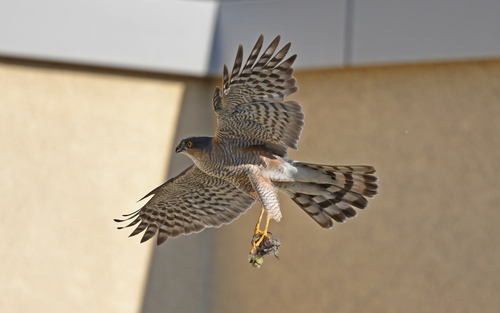
ハイタカ (Accipiter nisus) ハイタカ
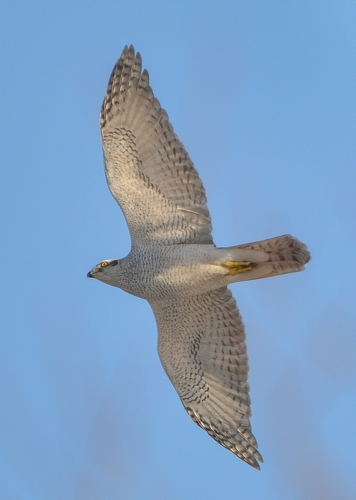
オオタカ (Astur gentilis) オオタカ

メディア

読み込み中…

要点

ユーラシアハイタカとユーラシアオオタカを区別する最も信頼できるフィールドマークは、全体的なサイズと構造です:オオタカのオスでさえ、ハイタカのメスよりもずっとがっしりしており、翼は長く、より尖っていて、体格も重いです。幼鳥の羽毛は混乱を招くことがありますが、成鳥のオオタカはハイタカのオスのような錆色のオレンジの斑点を決して示さず、常に大胆な白い眉斑を持っています。飛行中、オオタカはより深く、遅い翼の羽ばたきを持ち、安定して滑空することができますが、ハイタカはよりひらひらとした飛び方をし、長時間滑空することは稀です。もし小さく、細身のアキシピターが急速な羽ばたきとオレンジの斑点のある腹部を持っているのを見たら、それはハイタカです;大きく、力強い鳥で白い眉斑と広い灰色の斑点のある腹部を持っているのはオオタカです。

識別のコツ

  1. サイズと体格: オオタカはハイタカよりもはるかに大きく、重いです—これは両方が同じエリアで見られる場合や、スケールのために馴染みのある鳥と一緒に見られるときに使用してください。オオタカはほぼタカのサイズに見えることがあります;ハイタカはハトのサイズです。
  2. 飛行中の翼の形: オオタカの翼は長く、広く、より尖っています;ハイタカの翼は短く、より丸く、箱型です。これは特に滑空する鳥において顕著です。
  3. 飛行スタイル: ハイタカは急速でひらひらした羽ばたきを持ち、長時間滑空することは稀です;オオタカの羽ばたきは遅く、深く、長時間安定して滑空することができます。
  4. 尾の形: ハイタカの尾は長く、四角い先端を持っています;オオタカの尾も長いですが、特に広げたときには先端がより丸く見えます。
  5. 白い眉斑: 成鳥と幼鳥のオオタカは常に大胆な白い眉斑を示します;ハイタカはすべての年齢でこの特徴を欠いています。
  6. 腹部の斑点: 成鳥のオスのハイタカは、下に細かいオレンジ(錆色)の斑点を持っています;オオタカはオレンジの斑点を決して示さず—成鳥は灰色の斑点、幼鳥は茶色の縞模様です。
  7. 幼鳥の腹部: 幼鳥のオオタカは淡い背景に広い暗いシナモン色の縞模様を持っています;幼鳥のハイタカはより粗い斑点や斑点があり、縞模様ではなく、しばしば暖かい茶色です。
  8. 上面の色: 成鳥のオスのハイタカは上面が青灰色です;オオタカ(両性)は青灰色または茶色がかった灰色ですが、決してハイタカのオスほど細かく色付けされていません。
  9. 頭と首: オオタカは太い首と大きな頭を持ち、凶暴な表情をしています;ハイタカは小さく、丸い頭と細い首を持っています。
  10. 足と爪: オオタカの足と爪は太く、より頑丈です;ハイタカの足はより細く、より繊細で、特にオスではそうです。
  11. 目の色: 両方とも成鳥ではオレンジの目を持つことがありますが、幼鳥のオオタカとハイタカは両方とも黄色の目から始まります;これは単独では診断的ではありませんが、他の特徴と組み合わせることで役立つことがあります。
  12. 生息地の文脈: 都市部や郊外では、ハイタカの方がはるかに可能性が高いです;オオタカは大きな森林から離れて見られることは稀です。
  13. 止まり姿勢: オオタカは直立して止まり、威圧的に見えます;ハイタカはより細身で、頑丈さが欠けて見えます。
  14. 羽毛の変異性: オオタカは羽毛においてより多くの変異を示します(特にアジアでは)、しかし常に白い眉斑を持ち、オレンジの斑点が欠けています。
  15. 直接比較: 両方を一緒に見ることができれば、オオタカはハイタカを圧倒します—これは可能であれば究極のチェックです。

大きさ

ユーラシアオオタカはユーラシアハイタカよりも劇的に大きく、重いです:平均体重はオオタカが約926g、ハイタカが220gです。最小のオオタカのオスでさえ、最大のハイタカのメスよりもがっしりしています。オオタカは太い首、大きな頭、力強い足と爪を持つ、はるかに頑丈なフレームを持っています。ハイタカは明らかにより細身で、足はより細く、小さく、丸い頭を持っています。フィールドでは、サイズだけでは距離や孤立した鳥のために誤解を招くことがありますが、直接比較や両方の経験があれば違いは明らかです。

羽色

幼鳥の羽毛は主な落とし穴です:両種は上面が茶色で、下面が縞模様または斑点模様ですが、幼鳥のオオタカは白から淡い背景に変動するがしばしば広い暗いシナモン色の縞模様を示し、常に3〜5本の暗いバンドのある縞模様の尾を持っています。幼鳥のハイタカは上面が暖かい茶色で、錆色の縁取りがあり、下面は粗く斑点模様または茶色の斑点があり、オオタカの大胆で暗い縞模様が欠けています。重要なのは、成鳥のオスのハイタカは青灰色の上面と細かいオレンジの斑点を持っているのに対し、成鳥のオオタカ(両性)は青灰色または茶色がかった灰色の上面を持ち、灰色または白い下面は暗い線で斑点が付いています—オレンジは決してありません。成鳥のオオタカは常に明確な白い眉斑を示し、ハイタカにはこの特徴が欠けています。目の色も役立つことがあります:両方の成鳥はオレンジの目を持つことがありますが、幼鳥のオオタカは淡い黄色の目を持ち、幼鳥のハイタカも淡い黄色ですが、より明るい傾向があります。オオタカの羽毛は全体的により変動性が高く、特にアジアの亜種ではそうですが、白い眉斑とオレンジの斑点が欠けていることは一貫しています。

行動

飛行中、ハイタカは急速でひらひらした「フラップ・フラップ・グライド」スタイルを持ち、速く浅い羽ばたきと四角い尾を持っています。オオタカも「フラップ・フラップ・グライド」を使用しますが、より深く、遅く、より強力な羽ばたきを持ち、特に移動中は長時間滑空する傾向があります。止まっていると、オオタカはより直立して威圧的に見え、頑丈な体格と大きな頭を持っていますが、ハイタカはより細身で繊細に見えます。オオタカは高く滑空しているか、開けた場所を長距離飛行しているのが見られることが多いですが、ハイタカは通常、カバーを通って急速にダッシュして狩りをします。

生息環境

両種は森林の猛禽類ですが、オオタカは成熟した森林の広い区域を好み、より秘密主義的で、しばしば森の奥深くに留まります。ハイタカはより適応性があり、しばしば小さな林、公園、庭、さらには都市部でも見られます。もし都市や小さな森林でアキシピターを見たら、ハイタカの方がはるかに可能性が高いです;オオタカはそのような開けたまたは都市の生息地では稀にしか見られません。

より良い説明を送る

比較と同じ項目を使ってください。文章はすぐに公開されます。

The most reliable field mark to separate Eurasian Sparrowhawk from Eurasian Goshawk is overall size and structure: even a male Goshawk is much bulkier, with longer, more pointed wings and a heavier build than a female Sparrowhawk, their closest overlap. Juvenile plumage can be confusing, but adult Goshawks never show the rusty-orange barring of male Sparrowhawks, and always have a bold white supercilium (eyebrow). In flight, Goshawks have deeper, slower wingbeats and can soar steadily, while Sparrowhawks are more fluttery and rarely soar for long. If you see a small, slim Accipiter with rapid wingbeats and orange-barred underparts, it's a Sparrowhawk; a large, powerful bird with a white eyebrow and broad, grey-barred underparts is a Goshawk.

  1. Size and bulk: Goshawk is much larger and heavier than Sparrowhawk—use this when both are seen in the same area or with familiar birds for scale. A Goshawk can appear almost buzzard-sized; Sparrowhawk is pigeon-sized.
  2. Wing shape in flight: Goshawk's wings are longer, broader, and more pointed; Sparrowhawk's are shorter, more rounded, and boxy. This is especially evident in soaring birds.
  3. Flight style: Sparrowhawk has rapid, fluttery wingbeats and rarely soars for long; Goshawk's wingbeats are slower, deeper, and it can soar steadily for extended periods.
  4. Tail shape: Sparrowhawk's tail is long and square-tipped; Goshawk's is also long but appears more rounded at the tip, especially when spread.
  5. White supercilium (eyebrow): Adult and juvenile Goshawks always show a bold white eyebrow; Sparrowhawks lack this feature at all ages.
  6. Underpart barring: Adult male Sparrowhawks have fine, orange (rusty) barring below; Goshawks never show orange barring—adults are grey-barred, juveniles are streaked brown.
  7. Juvenile underparts: Juvenile Goshawks have broad, dark brown streaks on a pale background; juvenile Sparrowhawks are more coarsely barred or spotted, not streaked, and often warmer brown.
  8. Upperparts color: Adult male Sparrowhawks are blue-grey above; Goshawks (both sexes) are blue-grey or brownish-grey, but never as finely colored as male Sparrowhawk.
  9. Head and neck: Goshawks have a thick neck and large head with a fierce expression; Sparrowhawks have a smaller, rounder head and slimmer neck.
  10. Legs and feet: Goshawk's legs and toes are thicker and more robust; Sparrowhawk's are finer and more delicate, especially in males.
  11. Eye color: Both can have orange eyes as adults, but juvenile Goshawks and Sparrowhawks both start with yellow eyes; this is not diagnostic on its own but can help in combination with other features.
  12. Habitat context: In urban or suburban areas, Sparrowhawk is much more likely; Goshawk is rarely seen away from large forests.
  13. Perched posture: Goshawk perches upright and looks imposing; Sparrowhawk appears slimmer and less robust.
  14. Plumage variability: Goshawk shows more variation in plumage (especially in Asia), but always has the white eyebrow and lacks orange barring.
  15. Direct comparison: If you see both together, the Goshawk will dwarf the Sparrowhawk—this is the ultimate check if possible.

Eurasian Goshawk is dramatically larger and heavier than Eurasian Sparrowhawk: average body mass is about 926 g for Goshawk versus 220 g for Sparrowhawk. Even the smallest male Goshawk is bulkier than the largest female Sparrowhawk. Goshawks have a much more robust frame, with a thick neck, large head, and powerful legs and feet. Sparrowhawks are noticeably more slender, with finer legs and a smaller, rounder head. In the field, size alone can be deceptive due to distance or lone birds, but direct comparison or experience with both makes the difference obvious.

Juvenile plumage is the main pitfall: both species are brown above and streaked or barred below, but juvenile Goshawks show variable but often broad, dark cinnamon-brown streaking on a white to buffy background, and always have a barred tail with 3–5 dark bands. Juvenile Sparrowhawks are warm brown above with rusty fringes, and their underparts are coarsely barred or spotted brown, lacking the bold, dark streaks of Goshawk. Critically, adult male Sparrowhawks have blue-grey upperparts and fine orange barring below, while adult Goshawks (of both sexes) are blue-grey or brownish-grey above with grey or white underparts barred with dark lines—never orange. Adult Goshawks always show a distinct white supercilium, which is absent in Sparrowhawk. Eye color can help: adults of both can have orange eyes, but juvenile Goshawks have pale yellow eyes, while juvenile Sparrowhawks also have pale yellow but tend to be brighter. Goshawk plumage is more variable overall, especially in Asian subspecies, but the white eyebrow and lack of orange barring are consistent.

In flight, Sparrowhawks have a rapid, fluttery 'flap-flap-glide' style, with quick, shallow wingbeats and a square-ended tail. Goshawks also use a 'flap-flap-glide' but with deeper, slower, more powerful wingbeats and a tendency to soar for longer periods, especially in migration. Perched, Goshawks appear more upright and imposing, with a heavy build and large head, while Sparrowhawks look slimmer and more delicate. Goshawks are more likely to be seen soaring high or making long flights over open areas, while Sparrowhawks usually hunt with rapid dashes through cover.

Both species are woodland raptors, but Goshawks prefer larger tracts of mature forest and are more secretive, often staying deep within woods. Sparrowhawks are more adaptable, frequently seen in smaller woodlots, parks, gardens, and even urban areas. If you see an Accipiter in a city or small woodland, Sparrowhawk is far more likely; Goshawk is rarely seen in such open or urban habitats.

変更を破棄しますか?

保存していない編集があります。今離れると失われます。

ハイタカ · オオタカ · 苦手な鳥