
Motmot

ダイサギ 対 チュウサギ

Ardea alba 対 Ardea intermedia

ダイサギとチュウサギのクイズ

ダイサギ (Ardea alba) ダイサギ
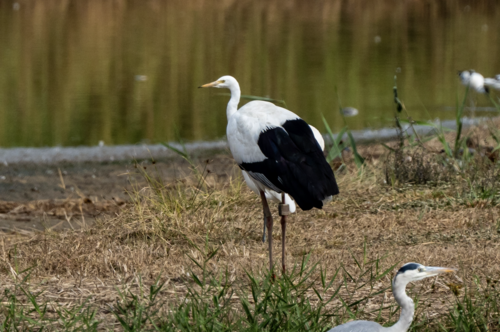
チュウサギ (Ardea intermedia) チュウサギ

メディア

読み込み中…

要点

ダイサギとチュウサギを区別する最も信頼できるフィールドマークは、口の開口線の長さです:ダイサギでは、口の開口線が目の後ろまで伸びていますが、チュウサギでは目の下またはすぐ後ろで終わります。サイズも強い手がかりです—ダイサギははるかに大きく、ずんぐりした体形で、首とくちばしが長いです。両種はすべての年齢で真っ白ですが、構造的な違いや繁殖期の微妙なくちばしや脚の色の変化が役立ちます。飛行中、両者は首を引っ込めますが、ダイサギのプロポーションは明らかにサギのように見え、細長いです。最も一貫した区別をするために、くちばしの形、頭のプロファイル、特に口の開口線の組み合わせを使用してください。

識別のコツ

  1. 口の開口線: ダイサギでは、口の開口(くちばしの根元の裸の皮膚)が目の後ろまで伸びています;チュウサギでは、目の下またはすぐ後ろで終わります。これはすべての年齢と季節で最も信頼できるマークです—近くからの視点や写真を使って確認してください。
  2. サイズと体重: ダイサギははるかに大きく、重く、首とくちばしが長いです。両者を一緒に見ると、違いが際立ちます。一人でいる場合は、近くの鳥や生息地の特徴と比較してスケールを確認してください。
  3. くちばしの形と長さ: ダイサギは、頭の平らな部分にほぼ一致する長くて細いくちばしを持っています。チュウサギのくちばしは短く、太く、頭はわずかにドーム状のプロファイルを持っています。これは微妙ですが、経験があれば役立ちます。
  4. 首の長さと姿勢: ダイサギの首は長く、しばしば中央に目立つ曲がりを形成し、体よりも長いです。チュウサギの首は体長より少し短く、伸ばすとまっすぐに見えます。
  5. 繁殖期のくちばしの色: ダイサギのくちばしは暗くなることがあり(時には曇った色)、下肢はより明るくなることがあります。チュウサギのくちばしは赤みがかるか黒くなることがあり(特にアジアの鳥)、上肢は鈍い黄色やピンクを示すことがあります。これらのマークは変動し、地域によって異なりますが、繁殖中の鳥を確認する価値があります。
  6. 羽毛の配置: 繁殖羽毛では、ダイサギは背中に長い装飾的な羽毛を示します;チュウサギは胸と背中に緩い糸状の羽毛を持っています。これは微妙で、近くで見るのが最適です。
  7. 脚の色: 両者は繁殖期以外は暗い脚を持っていますが、一部のチュウサギの亜種では、繁殖期に上肢に色が現れることがあります(黄色やピンク)。ダイサギの脚は通常黒ですが、繁殖中に明るくなることがあります。
  8. 頭のプロファイル: ダイサギのくちばしと頭はより整列しており、平らな頂部を持っています;チュウサギの頭はわずかにドーム状で、くちばしの根元は太く見えます。
  9. 飛行シルエット: 両者は首を引っ込めて飛びますが、ダイサギは翼が長く、全体的に細長く見えます。特に幼鳥や未熟な飛行パターンの違いは記述されていません。
  10. 行動の姿勢: ダイサギは横に傾いた「片目」の狩りの姿勢を取ることがあります;チュウサギは通常、首を前に伸ばして直立して獲物を追います。
  11. 生息地の文脈: アメリカにいる場合、大きな真っ白なエグレットはほぼ確実にダイサギです。アジアでは、両種が一緒に生息する可能性があるため、注意深く確認してください。
  12. 他のエグレットとの関連: チュウサギはLittle EgretsやCattle Egretsと一緒に見られる可能性が高く、サイズも近いです。ダイサギは混合群れの中でより大きく目立ちます。
  13. 幼鳥/未熟な羽毛: どちらの種にも特定の年齢に特有の上翼や飛行マークは記述されていません;幼鳥は非繁殖の成鳥に似ています。
  14. 鳴き声: 区別には役立ちません;両者は一般的に静かで、ダイサギの鳴き声は診断的ではありません。
  15. 性差: 両種は性別において単形であり—オスとメスはすべての年齢で似ています。

大きさ

ダイサギは明らかに大きく、80–104 cmの長さ、翼幅131–170 cm、質量は約1,000 gです。チュウサギは目立って小さく、56–72 cmの長さ、翼幅105–115 cm、約400 gです。フィールドでは、両者が一緒に見られるとこのサイズの差は通常明らかですが、1羽だけの場合は難しいことがあります。ダイサギはGreyやオオアオサギにサイズが近いのに対し、チュウサギはコサギやCattle Egretにずっと近いです。

羽色

両種はすべての年齢で真っ白であり、年齢特有の上翼や飛行パターンの違いは記載されていません—幼鳥と成鳥は似ており、暗い先端やパネルがありません。両種の繁殖成鳥は装飾的な羽毛を発達させますが、配置が異なります:ダイサギは背中に長い羽毛を示し、チュウサギは胸と背中に緩い糸状の羽毛を持っています。繁殖期にはくちばしと脚の色が変化します:ダイサギのくちばしは暗くなることがあり、下肢は明るくなることがありますが、チュウサギのくちばしは赤みがかるか黒くなることがあり(特にアジアの鳥)、上肢は鈍い黄色やピンクを示すことがあります。繁殖期以外では、両者は黄色いくちばしと暗い脚を持っていますが、チュウサギのくちばしは短くて太いです。どちらの種にも特定の幼鳥の翼パターンは記述されていません。

行動

ダイサギはしばしば忍耐強く狩りをし、時には横に傾いた「片目」の姿勢を取ります。首を伸ばし、翼を近くに保ちながら歩きます。チュウサギは獲物を計画的に追い、通常は首を前に伸ばして直立しています。両種は飛行中に首を引っ込めます(コウノトリやハクチョウとは異なります)。チュウサギは浅い水や洪水のある田んぼで餌を探しているのが見られる可能性が高く、時には他のサギと一緒にいます。両者はコロニーで巣を作りますが、ダイサギはより広範囲に分布し、より広い範囲の湿地生息地で見られることがあります。

生息環境

ダイサギはコスモポリタンで、アメリカ、アフリカ、ヨーロッパ、アジアの広範囲の湿地に生息し、湖、川、湿地、河口を含みます。チュウサギはより局所的で、南アジアと東アジアに生息し、浅い沿岸または淡水の湿地、洪水のある田んぼを好みます。彼らの生息域が重なる場所(特にアジア)では、両者が似たような生息地に見られることがありますが、ダイサギはより大きく開けた湿地にいる可能性が高いです。

声

どちらの種もあまり鳴きません。ダイサギは、驚かされると低くてかすれた鳴き声を出し、コロニーでは大きな鳴き声「cuk cuk cuk」と高音の鳴き声を発します。チュウサギに関しては、情報源で特定の鳴き声は記述されておらず、一般的に静かです。声はこれら二つの間の信頼できるフィールドマークではありません。

より良い説明を送る

比較と同じ項目を使ってください。文章はすぐに公開されます。

The most reliable field mark to separate Great White Egret from Medium Egret is the length of the gape line: on Great White Egret, the gape extends well behind the eye, while on Medium Egret it ends below or just behind the eye. Size is also a strong clue—Great White Egret is much larger and bulkier, with a longer neck and bill. Both species are all-white at all ages, but structural differences and subtle bill and leg color changes in breeding season help. In flight, both retract their necks, but Great White Egret’s proportions are noticeably more heron-like and elongated. Use a combination of bill shape, head profile, and especially the gape line for the most consistent separation.

  1. Gape line: On Great White Egret, the gape (the bare skin at the base of the bill) extends well behind the eye; on Medium Egret, it ends below or just behind the eye. This is the single most reliable mark at all ages and seasons—use close views or photos to check.
  2. Size and bulk: Great White Egret is much larger and heavier, with a longer neck and bill. If you see both together, the difference is striking. Alone, compare to nearby birds or habitat features for scale.
  3. Bill shape and length: Great White Egret has a longer, more slender bill that nearly aligns with the flat top of the head. Medium Egret’s bill is shorter, thicker, and the head has a slightly domed profile. This is subtle but useful with experience.
  4. Neck length and posture: Great White Egret’s neck is longer, often forms a noticeable kink in the middle, and is longer than the body. Medium Egret’s neck is a little less than body length and appears straighter when extended.
  5. Breeding season bill color: Great White Egret’s bill may darken (sometimes dusky) and lower legs may become paler. Medium Egret’s bill can become reddish or black (especially Asian birds), and upper legs may show dull yellow or pink. These marks are variable and region-dependent, but worth checking in breeding birds.
  6. Plume placement: In breeding plumage, Great White Egret shows long ornamental plumes on the back; Medium Egret has loose filamentous plumes on breast and back. This is subtle and best seen at close range.
  7. Leg color: Both have dark legs outside breeding, but in some Medium Egret subspecies, the upper legs may show color in breeding season (yellow or pink). Great White Egret’s legs are typically black, but can become lighter in breeding.
  8. Head profile: Great White Egret’s bill and head are more aligned and flat-topped; Medium Egret’s head is slightly domed, and the bill appears thicker at the base.
  9. Flight silhouette: Both fly with necks retracted, but Great White Egret appears longer-winged and more elongated overall. No distinctive juvenile or immature flight pattern differences are described.
  10. Behavioral stance: Great White Egret may adopt a sideways-leaning, 'one-eyed' hunting posture; Medium Egret tends to stalk upright with neck extended forward.
  11. Habitat context: If in the Americas, a large all-white egret is almost certainly Great White Egret. In Asia, check carefully, as both species may occur together.
  12. Association with other egrets: Medium Egret is more likely to be seen with Little or Cattle Egrets, and is closer to them in size. Great White Egret stands out as much larger in mixed flocks.
  13. Juvenile/immature plumage: No distinctive age-specific upperwing or flight marks are described for either species; juveniles look like nonbreeding adults.
  14. Vocalizations: Not useful for separation; both are generally quiet, and Great White Egret’s croaks are not diagnostic.
  15. Sex differences: Both species are sexually monomorphic—males and females look alike at all ages.

Great White Egret is significantly larger: 80–104 cm long, wingspan 131–170 cm, and averages about 1,000 g in mass. Medium Egret is noticeably smaller: 56–72 cm long, wingspan 105–115 cm, and about 400 g. In the field, this size gap is usually obvious if both are seen together, but can be tricky if only one bird is present. Great White Egret is closer in size to Grey or Great Blue Heron, while Medium Egret is much closer to Little Egret or Cattle Egret.

Both species are all-white at all ages, with no age-specific upperwing or flight pattern differences noted—juveniles and adults look similar, lacking dark tips or panels. Breeding adults of both species develop ornamental plumes, but placement differs: Great White Egret shows long plumes on the back, while Medium Egret has loose filamentous plumes on breast and back. Bill and leg color shift in breeding season: Great White Egret’s bill may darken and lower legs lighten, while Medium Egret’s bill can become reddish or black (especially in Asian birds), and upper legs may show dull yellow or pink. Outside breeding, both have yellow bills and dark legs, but Medium Egret’s bill is shorter and thicker. No distinctive juvenile wing pattern is described for either species.

Great White Egret often hunts patiently, sometimes adopting a sideways-leaning 'one-eyed' stance, and walks with neck extended and wings close. Medium Egret stalks prey methodically, usually upright with neck extended forward. Both species retract their necks in flight (unlike storks or ibises). Medium Egret is more likely to be seen foraging in shallow water or flooded fields, sometimes with other herons. Both nest colonially, but Great White Egret is more widespread and may be seen in a broader range of wetland habitats.

Great White Egret is cosmopolitan, found in a wide range of wetlands across the Americas, Africa, Europe, and Asia, including lakes, rivers, marshes, and estuaries. Medium Egret is more localized, resident in southern and eastern Asia, and prefers shallow coastal or freshwater wetlands, including flooded fields. Where their ranges overlap (especially in Asia), both can be found in similar habitats, but Great White Egret is more likely in larger, open wetlands.

Neither species is very vocal. Great White Egret gives a low, hoarse croak when disturbed, and at colonies emits a loud croaking 'cuk cuk cuk' and higher-pitched squawks. No distinctive vocalizations are described for Medium Egret in the sources, and it is generally quiet. Voice is not a reliable field mark between these two.

変更を破棄しますか?

保存していない編集があります。今離れると失われます。

ダイサギ · チュウサギ · 苦手な鳥