
Motmot

イナバヒタキ 対 サバクヒタキ

Oenanthe isabellina 対 Oenanthe deserti

イナバヒタキとサバクヒタキのクイズ
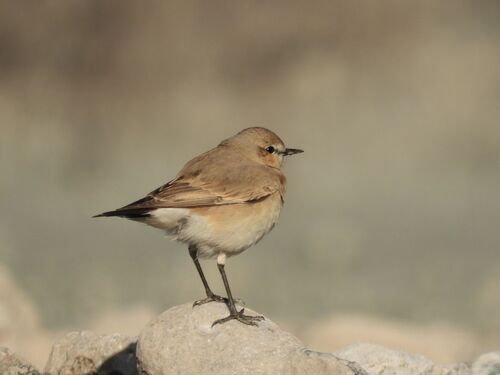
イナバヒタキ (Oenanthe isabellina) イナバヒタキ
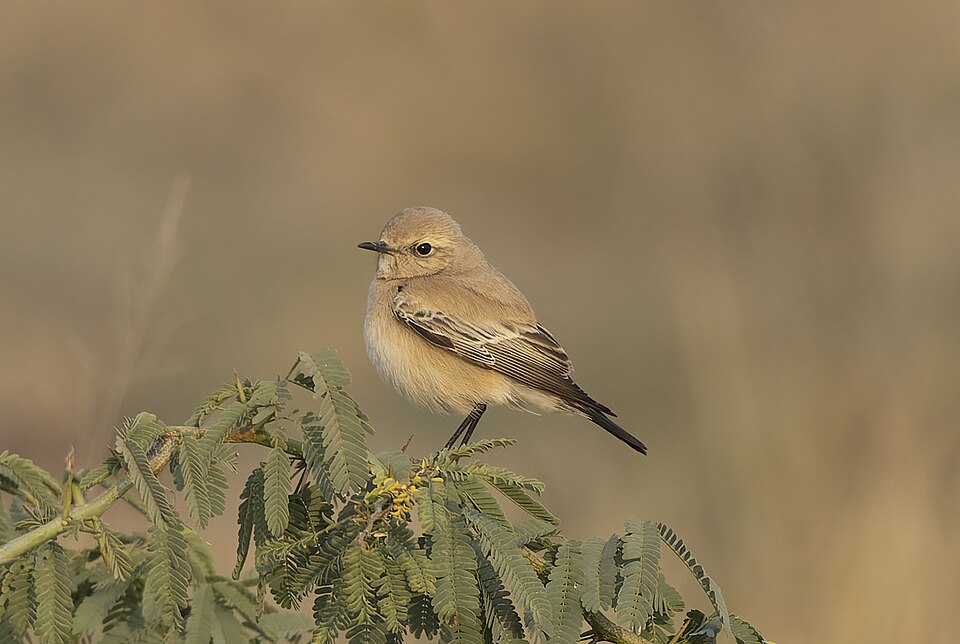
サバクヒタキ (Oenanthe deserti) サバクヒタキ

メディア

読み込み中…

要点

イナバヒタキとサバクヒタキを区別する最も信頼できるフィールドマークは尾のパターンです:イナバヒタキは常に尾の基部が広い白色で、先端部分のみが黒色であるのに対し、サバクヒタキはほぼ完全に黒色の尾を持ち、白色は基部に限られ、上からまたは後ろから見ると全体が黒く見えることがよくあります。この違いはすべての年齢と性別において、止まっている時も飛んでいる時も見ることができます。イナバヒタキはまた、明らかに色が薄く、体が大きく、より直立した姿勢と長いくちばしを持っていますが、サバクヒタキのオス(および一部のメス)は喉と顔に黒色を示し、イナバヒタキは決してそうしません。飛んでいる時、イナバヒタキの翼の下の羽毛は白色ですが、サバクヒタキのものは黒っぽいです。両種の幼鳥はより微妙に模様があり、尾のパターンと全体の色調が異なります。

識別のコツ

  1. 尾のパターンが最も信頼できるマークです: イナバヒタキは常に尾の基部が広い白色で(外側の羽はほとんど白色、中央の羽は約三分の一が白色)、先端部分のみが黒色です。サバクヒタキの尾は上尾羽覆いまでほぼ完全に黒色で、白色の基部は小さいです。これはすべての年齢と性別において、止まっている時も飛んでいる時も診断的です。
  2. 飛んでいる時の翼の下の色: イナバヒタキは白色の腋羽と翼の下の羽毛を持っていますが、サバクヒタキは黒色の腋羽と白色の先端を持つ翼の下の羽毛があります。これは飛んでいる時や羽繕いの時に最もよく見られます。
  3. 顔と喉のパターン: 成熟したオスのサバクヒタキは顎、喉、目の周り、耳羽に黒色があり、特に春/夏には肩まで広がることがあります。イナバヒタキは顔や喉に黒色を示すことは決してなく、顔は淡い色でクリーム色の眉斑と淡い茶色の耳羽を持っています。メスのサバクヒタキは黒色の喉がありませんが、イナバヒタキよりも顔が暗いです。
  4. 全体の色合い: イナバヒタキは全体的に色が薄く、イナバ色(パーチメント、淡い砂色)で、クリーム色の腹部と淡いバフ色の下尾羽覆いを持っています。サバクヒタキはより豊かで、特に胸部や側面ではバフ色や砂色が強く、上面はより暗く見えます。
  5. 幼鳥の羽毛: 幼鳥のサバクヒタキは上面がより斑点状で(淡い中心、茶色の先端)、イナバヒタキはより滑らかで色が薄いです。尾のパターンはすべての年齢で診断的です。
  6. サイズと構造: イナバヒタキはより大きく、ずんぐりしていて脚が長く、くちばしが長く、より直立した姿勢を持っています。サバクヒタキはより小さく、コンパクトで、尾が短いです。
  7. 眉斑と耳羽: イナバヒタキはクリーム色の眉斑と淡い茶色の耳羽を持っていますが、サバクヒタキの眉斑は淡いバフ色で、オスの耳羽は黒色の先端があります。
  8. 尾と上尾羽覆い: イナバヒタキの尾と上尾羽覆いは白色ですが、サバクヒタキのものは淡いバフ色または砂色(メス)または淡いバフ色(オス)で、イナバヒタキほど白くはありません。
  9. くちばしと脚: 両種は黒色のくちばしと脚を持っていますが、イナバヒタキのくちばしは長く、やや重いです。
  10. 止まっている時の印象: イナバヒタキはより直立していて細長く見え、しばしば高く立っています。サバクヒタキはよりコンパクトで水平です。
  11. 生息地の文脈: 真の砂漠や非常に荒れた砂利/石の地域にいる場合、サバクヒタキの方が可能性が高いです。イナバヒタキはステップ、開けた平原、そしてあまり荒れていない地面を好みます。
  12. 関連性: イナバヒタキは冬に孤立している可能性が高いですが、両種は渡りの際に他のヒタキと一緒になることがあります。
  13. 季節ごとの羽毛: オスのサバクヒタキの黒色の喉は冬に白色の羽毛の先端によって部分的に隠されることがあるため、繁殖期以外ではこのマークにのみ頼らないでください。尾のパターンは年間を通じて診断的です。
  14. 落とし穴: メスと幼鳥のサバクヒタキは色が薄く見えることがあり、顔に明らかな黒色がない場合がありますが、尾のパターンと翼の下の色は依然としてイナバヒタキと区別します。
  15. 飛行時の視点: 飛んでいる時は、尾と翼の下のパターンに注目して、特に混合した群れや渡りの際に迅速に区別します。

大きさ

イナバヒタキはサバクヒタキ(体重約29g、長さ14.5–15 cm対イナバヒタキの15–16.5 cm)よりも明らかに大きく、重いです。イナバヒタキはまた、ずんぐりしていて脚が長く、くちばしが長く、より直立した姿勢に見えます。サバクヒタキはよりコンパクトで尾が短く、直接比較するとより華奢に見えることがよくあります。

羽色

行動

両種は活発で地面で餌を探す昆虫食ですが、イナバヒタキは開けた地面を直立して歩いたり跳ねたりしているのが見られる可能性が高く、渡りの際には他のヒタキと孤立または緩やかに関連していることがよくあります。サバクヒタキは低い茂みや草の上に止まる傾向があり、地面に短い飛び出しを行い、時には短時間ホバリングします。両種は渡りの際に他のOenanthe種と関連することがありますが、イナバヒタキは一般的に動きがより直立していて脚が長いです。

生息環境

イナバヒタキは開けたステップ、乾燥した平原、高い高原で稀な植生を好み、サバクヒタキよりも草地や肥沃な地域にいることが多いです。サバクヒタキは半砂漠や真の砂漠の鳥であり、非常に稀な植生のある砂地や石の地面を好みます。渡りや冬に重複が見られることがありますが、イナバヒタキはサバクヒタキが好む最も荒れた砂漠の生息地ではめったに見られません。

より良い説明を送る

比較と同じ項目を使ってください。文章はすぐに公開されます。

The most reliable field mark to separate Isabelline Wheatear from Desert Wheatear is the tail pattern: Isabelline Wheatear always shows a broad white base to the tail with only the terminal portion black, while Desert Wheatear has an almost entirely black tail with white limited to the base, often appearing all-black from above or behind. This difference is visible in all ages and sexes, both perched and in flight. Isabelline Wheatear is also distinctly paler and larger, with a more upright stance and longer bill, while Desert Wheatear males (and some females) show black on the throat and face, which Isabelline never does. In flight, Isabelline's underwing coverts are white, while Desert's are blackish. Juveniles of both species are more subtly marked but still differ in tail pattern and overall tone.

  1. Tail pattern is the most reliable mark: Isabelline Wheatear always shows a broad white base to the tail (outer feathers mostly white, central feathers about one-third white), with only the terminal portion black. Desert Wheatear's tail is almost entirely black up to the upper tail-coverts, with only a small white base. This is diagnostic in all ages and sexes, perched or in flight.
  2. Underwing color in flight: Isabelline Wheatear has white axillaries and underwing coverts, while Desert Wheatear has black axillaries and underwing coverts tipped with white. This is best seen in flight or when preening.
  3. Face and throat pattern: Adult male Desert Wheatear has black on the chin, throat, lores, and ear-coverts, often extending to the shoulders, especially in spring/summer. Isabelline Wheatear never shows black on the face or throat; its face is pale with a creamy-white supercilium and pale brown ear-coverts. Female Desert Wheatear lacks the black throat but is still darker-faced than Isabelline.
  4. Overall coloration: Isabelline Wheatear is paler and more isabelline (parchment, pale sandy) overall, with a creamy-white belly and pale buff under tail-coverts. Desert Wheatear is richer, more buff or sandy, especially on the breast and flanks, and appears darker above.
  5. Juvenile plumage: Juvenile Desert Wheatear is more speckled above (pale centers, brown tips), while Isabelline is smoother and paler. Tail pattern remains diagnostic.
  6. Size and structure: Isabelline Wheatear is larger, bulkier, and longer-legged, with a longer bill and a more upright stance. Desert Wheatear is smaller, more compact, and shorter-tailed.
  7. Supercilium and ear-coverts: Isabelline has a creamy-white supercilium and pale brown ear-coverts; Desert's supercilium is pale buff and the ear-coverts are black-tipped in males.
  8. Rump and upper tail-coverts: Isabelline's rump and upper tail-coverts are white; Desert's are pale buff or sandy brown (females) or pale buff (males), never as white as Isabelline.
  9. Bill and legs: Both species have black bills and legs, but Isabelline's bill is longer and slightly heavier.
  10. Perched jizz: Isabelline appears more upright and elongated, often standing tall; Desert is more compact and horizontal.
  11. Habitat context: If in true desert or very barren sandy/stony areas, Desert Wheatear is more likely; Isabelline prefers steppe, open plains, and less barren ground.
  12. Association: Isabelline is more likely to be solitary in winter, though both may join other wheatears on passage.
  13. Seasonal plumage: Male Desert Wheatear's black throat may be partially obscured by white feather tips in winter, so do not rely solely on this mark outside breeding season; tail pattern remains diagnostic year-round.
  14. Pitfalls: Female and juvenile Desert Wheatear can look pale and may lack obvious black on the face, but the tail pattern and underwing color still separate them from Isabelline.
  15. Flight views: In flight, focus on the tail and underwing pattern for the quickest separation, especially in mixed flocks or during migration.

Isabelline Wheatear is noticeably larger and heavier (body mass ~29g) than Desert Wheatear (length 14.5–15 cm vs. Isabelline's 15–16.5 cm). Isabelline also appears bulkier and longer-legged, with a longer bill and a more upright posture. Desert Wheatear is more compact and shorter-tailed, often looking daintier in direct comparison.

  • Juvenile/First-year: Both species are pale and sandy, but juvenile Desert Wheatear is more speckled above due to pale centers and brown tips to the feathers, while Isabelline is smoother and paler overall. The tail pattern is diagnostic at all ages: Isabelline Wheatear has a broad white base to the tail (outer feathers more than half white), while Desert Wheatear's tail is almost entirely black up to the upper tail-coverts, with only the base white.
  • Adult male Desert Wheatear: Shows black on the chin, throat, lores, and ear-coverts, extending to the shoulders, especially in breeding plumage. Isabelline Wheatear never has black on the face or throat; its face is pale with a creamy-white supercilium and pale brown ear-coverts.
  • Females: Female Desert Wheatear lacks the black throat but is still darker and more buff below, with a sandy brown rump and upper tail-coverts. Isabelline females are paler, with a more uniform sandy or isabelline buff above and below.
  • Underwing: Isabelline Wheatear has white axillaries and underwing coverts; Desert Wheatear has black axillaries and underwing coverts tipped with white, a striking difference in flight.
  • Tail: In Isabelline, the white base of the tail is extensive, especially on the outer feathers; in Desert, the tail is black to the upper tail-coverts with only a small white base, giving a much darker impression from behind.

Both species are active, ground-feeding insectivores, but Isabelline Wheatear is more likely to be seen striding or hopping upright across open ground, often in solitary or loose association with other wheatears during migration. Desert Wheatear tends to perch on low bushes or tussocks and makes short sallies to the ground, sometimes hovering briefly. Both species may associate with other Oenanthe species on passage, but Isabelline is generally more upright and longer-legged in its movements.

Isabelline Wheatear prefers open steppe, arid plains, and high plateaux with sparse vegetation, often in more grassy or loamy areas than Desert Wheatear. Desert Wheatear is more strictly a bird of semi-desert and true desert, favoring sandy or stony ground with very sparse vegetation. Overlap can occur in migration or winter, but Isabelline is rarely found in the most barren desert habitats preferred by Desert Wheatear.

変更を破棄しますか?

保存していない編集があります。今離れると失われます。

イナバヒタキ · サバクヒタキ · 苦手な鳥