
Motmot

カオグロクイナ 対 アメリカムラサキバン

Porzana carolina 対 Porphyrio martinica

カオグロクイナとアメリカムラサキバンのクイズ
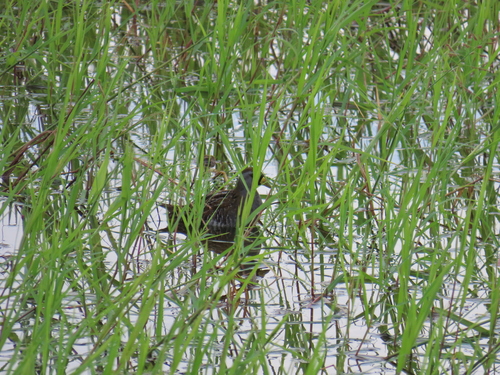
カオグロクイナ (Porzana carolina) カオグロクイナ
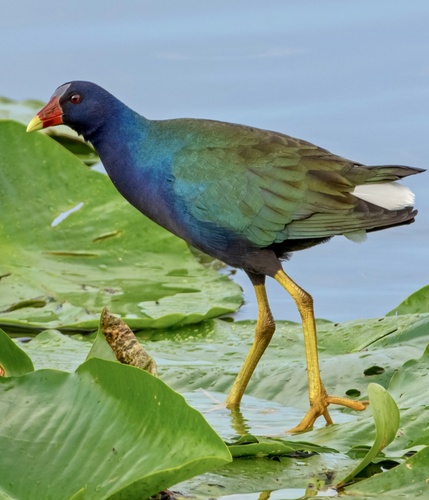
アメリカムラサキバン (Porphyrio martinica) アメリカムラサキバン

メディア

読み込み中…

要点

カオグロクイナとアメリカムラサキバンを区別するための最も信頼できるフィールドマークは、全体的なサイズと構造です:カオグロクイナは小さく、短いくちばしを持つコンパクトな体のレールであり、アメリカムラサキバンははるかに大きく、長く明るい黄色の脚と青い額の盾を持つ印象的な赤と黄色のくちばしを持っています。未熟なバンは茶色がかっていますが、長い脚と淡い盾を示し、若いカオグロクイナは小さく、短い黄色のくちばしを持ち、成鳥の黒い顔がありません。飛行中、アメリカムラサキバンの脚はぶら下がり、翼幅ははるかに広いです。カオグロクイナは開けた水辺の近くでうろついたり歩いたりしているのが見られる可能性が高く、アメリカムラサキバンは浮遊植物の上を這い回ることがよくあります。声と生息地も役立ちますが、サイズと構造が最も迅速なフィールドの手がかりです。

識別のコツ

  1. サイズは最も迅速な手がかりです: アメリカムラサキバンはカオグロクイナよりもはるかに大きく重いです—もしその鳥が鶏のサイズに見えるか、コモンバンとほぼ同じ大きさであれば、それはカオグロクイナではありません。
  2. くちばしと顔: カオグロクイナは成鳥では黒い顔と喉を持つ短くて太い黄色のくちばしを持っています;若い鳥は淡い顔とクリーム色の胸を持っています。アメリカムラサキバンは成鳥では額に淡い青い盾を持つ長い赤と黄色のくちばしを持ち、未熟な個体では淡いくちばし/盾を持っています。暗い光の中でも、盾は強いバンのマークです。
  3. 脚と足: アメリカムラサキバンの脚は明るい黄色(成鳥)または茶色がかった黄色(未熟/若鳥)で、非常に長く、鳥が植物の上を歩いたり、飛行中にぶら下げたりするのがよく見えます。カオグロクイナの脚ははるかに短く、目立ちません。
  4. 羽毛の色: 成鳥のカオグロクイナは上面が茶色で、下面が青灰色、黒と白の縞模様の側面を持っています;アメリカムラサキバンの成鳥は虹色の紫青と緑、赤/黄色のくちばし、青い盾を持っています。未熟なバンは茶色青銅色で紫色のヒントを持ち、若いカオグロクイナは茶色で白っぽい顔とクリーム色の胸を持っています。
  5. 側面のパターン: カオグロクイナ(すべての年齢)は側面に黒と白の縞模様を示します;アメリカムラサキバン(すべての年齢)は示しません。
  6. 飛行の外観: アメリカムラサキバンは脚をぶら下げて広い翼幅で飛びます;カオグロクイナは飛行中はコンパクトで、明らかな脚の突出はありません。
  7. 生息地の利用: カオグロクイナは密な湿地の植物を好み、見られるよりも聞かれることが多いです;アメリカムラサキバンは開けた湿地の浮遊植物の上を歩いているのが見られる可能性が高いです。
  8. 声: カオグロクイナの大きく下降するウィニーは特徴的です;バンは一般的に静かで、似たような鳴き声を出しません。
  9. 未熟個体の顔のパターン: 若いカオグロクイナは成鳥の黒い顔がありませんが、短い黄色のくちばしとコンパクトな形を持っています;未熟なバンは淡いくちばし/盾と長い脚を持っています。
  10. 尾の下の羽毛: 幼鳥のアメリカムラサキバンは白い尾の下の羽毛を示し、カオグロクイナにはありません。
  11. 行動: バンはしばしば羽を部分的に広げて歩いたり、ディスプレイをしたりします、特に求愛中;カオグロクイナはより秘密主義で、めったにディスプレイしません。
  12. 季節的文脈: カオグロクイナはその範囲の多くで移動する鳥で、特に春と秋に;アメリカムラサキバンは南部ではより定住していますが、移動することもあり、迷鳥として現れることもあります。
  13. 両性は似ている: どちらの種も羽毛において強い性的二形性を示さないため、性別は信頼できるフィールドマークではありません。
  14. 一般的な落とし穴: 未熟なバンは地味で茶色がかって見えることがありますが、サイズ、脚の長さ、淡い盾/くちばしによってカオグロクイナと区別されます。若いカオグロクイナは決してバンのように大きくも長脚でもありません。
  15. 疑わしい場合: サイズ、脚の長さ、くちばし/顔のパターンに焦点を当ててください—これらはすべての年齢と季節にわたって最も信頼できるマークです。

大きさ

アメリカムラサキバンはカオグロクイナよりも劇的に大きく、重いです。アメリカムラサキバンは平均約236g(範囲141–305g)で、長さは26–37cm、翼幅は50–61cmです。カオグロクイナははるかに小さく、長さは19–30cm、重さは49–112g、翼幅は35–40cmです。バンは重いだけでなく、細長く脚が長いように見え、カオグロクイナはコンパクトで短いくちばしを持っています。未熟なバンでさえ成鳥のカオグロクイナよりもはるかにがっしりしています。

羽色

行動

カオグロクイナは通常秘密主義で、湿地の端で歩いたり泳いだりし、密な植物の中に隠れていることが多いですが、時々開けた水辺で見られることがあります。アメリカムラサキバンは浮遊植物の上を這い回っているのが見られる可能性が高く、非常に長い足を使ってスイレンの葉や水生植物の上を歩きます。飛行中、バンは不器用で脚がぶら下がり、あまり遠くには飛びません;カオグロクイナも飛ぶのをためらいますが、フラッシュされたときにはよりコンパクトで直接的に見えます。バンは求愛中に羽を部分的に広げて歩いたりディスプレイしたりするのが見られることがあります。

生息環境

両種は湿地や水辺に生息していますが、カオグロクイナは北アメリカ全体に広く分布し、密な水生植物のある淡水湿地にしばしば見られます。アメリカムラサキバンは湖、川、湿地の浮遊または出現する植物の周辺を好み、特に南部アメリカ、中央アメリカ、南アメリカで見られます。バンは開けた浮遊植物の中で見られる可能性が高く、カオグロクイナはより密なカバーを好み、開けた場所で見られることは少ないです。

声

カオグロクイナは遅い、笛のような「ケル・ウィー」または下降する、きしむ「ウィニー」を出し、音程が遅くなり下がります。これらの呼び声は特徴的で、しばしば夜明けや夕暮れに聞かれます。アメリカムラサキバンは一般的に静かで、声だけで検出される可能性は低いです;その呼び声は提供されたメモには記載されていませんが、カオグロクイナのウィニーとは似ていません。したがって、大きな下降するウィニーはカオグロクイナの強い手がかりです。

より良い説明を送る

比較と同じ項目を使ってください。文章はすぐに公開されます。

The most reliable field mark for separating Sora from Purple Gallinule is overall size and structure: Sora is a small, short-billed rail with a compact body, while Purple Gallinule is much larger, with a long, bright yellow leg and a striking red-and-yellow bill with a blue forehead shield. Immature gallinules are brownish but still show long legs and a pale shield, while young Soras are smaller, with a short yellow bill and lack the adult's black face. In flight, Purple Gallinule’s legs dangle and its wingspan is much broader. Sora is more likely to be seen skulking or walking near open water, while Purple Gallinule often clambers on floating vegetation. Voice and habitat can help, but size and structure are the fastest field clues.

  1. Size is the fastest clue: Purple Gallinule is much larger and heavier than Sora—if the bird looks chicken-sized or nearly as big as a Common Gallinule, it is not a Sora.
  2. Bill and face: Sora has a short, thick yellow bill with a black face and throat in adults; young birds have a pale face and buff breast. Purple Gallinule has a long, red-and-yellow bill with a pale blue shield on the forehead (adults), or a pale bill/shield in immatures. Even in poor light, the shield is a strong gallinule mark.
  3. Legs and feet: Purple Gallinule’s legs are bright yellow (adults) or brown-yellowish (immatures/juveniles), extremely long, and often visible as the bird walks atop vegetation or dangles them in flight. Sora’s legs are much shorter and less conspicuous.
  4. Plumage color: Adult Sora is brown above and blue-grey below, with black-and-white barred flanks; Purple Gallinule adult is iridescent purple-blue and green, with a red/yellow bill and blue shield. Immature gallinules are brown-bronze with hints of purple, while young Soras are brown with a whitish face and buff breast.
  5. Flank pattern: Sora (all ages) shows black-and-white barring on the flanks; Purple Gallinule (all ages) does not.
  6. Flight appearance: Purple Gallinule flies with legs dangling and a broad wingspan; Sora is compact in flight, with no obvious leg projection.
  7. Habitat use: Sora prefers dense marsh vegetation and is often heard rather than seen; Purple Gallinule is more likely to be seen walking on floating plants in open marshes.
  8. Voice: Sora’s loud, descending whinny is distinctive; gallinule is generally quiet and does not give a similar call.
  9. Face pattern in immatures: Young Sora lacks the adult’s black face but still has a short yellow bill and compact shape; immature gallinule has a pale bill/shield and longer legs.
  10. Under-tail coverts: Juvenile Purple Gallinule shows white under-tail coverts, which Sora lacks.
  11. Behavior: Gallinule often struts or displays with wings partly open, especially during courtship; Sora is more secretive and rarely displays.
  12. Seasonal context: Sora is a migrant in much of its range, especially in spring and fall; Purple Gallinule is more resident in the south but also migrates and can appear as a vagrant.
  13. Sexes similar in both: Neither species shows strong sexual dimorphism in plumage, so sex is not a reliable field mark.
  14. Common pitfalls: Immature gallinules can appear drab and brownish, but their size, leg length, and pale shield/bill separate them from Sora. Young Soras are never as large or long-legged as gallinules.
  15. When in doubt: Focus on size, leg length, and bill/face pattern—these are the most reliable marks across all ages and seasons.

Purple Gallinule is dramatically larger and heavier than Sora. Purple Gallinule averages around 236 g (range 141–305 g) and measures 26–37 cm in length, with a wingspan of 50–61 cm. Sora is much smaller, at 19–30 cm long, weighing 49–112 g, and with a wingspan of 35–40 cm. The gallinule is not only heavier but also appears lankier and longer-legged, while Sora is compact and short-billed. Even immature gallinules are much bulkier than adult Soras.

  • Juvenile/Immature Sora: Young Soras lack the black facial markings of adults, instead showing a whitish face and buff breast, but retain the short yellow bill and small, compact body. Flanks are barred black and white, and upperparts are brown with dark markings. No distinctive upperwing pattern in flight is noted for Sora.
  • Juvenile/Immature Purple Gallinule: Juveniles are light brown with green-bronze hints on wings and back, white under-tail coverts, and a pale bill and shield. Immatures are brown-bronze with some purple on the chest and pale bill/shield. Adults are unmistakable: purple-blue plumage with green/turquoise gloss, bright red-and-yellow bill, pale blue forehead shield, and bright yellow legs/feet. In low light, adults may look dusky, but the shield and leg color remain distinctive.
  • Adults: Sora adults are brown above, blue-grey below, with a black face and throat, yellow bill, and black-and-white barred flanks. Purple Gallinule adults are much more colorful, with iridescent purple-blue and green plumage, red/yellow bill, blue shield, and yellow legs.

Sora is typically secretive, walking or swimming near the edges of marshes, often hidden in dense vegetation but sometimes seen near open water. Purple Gallinule is more likely to be seen clambering over floating vegetation, using its very long toes to walk atop lily pads and aquatic plants. In flight, gallinules are awkward, with legs dangling, and rarely fly far; Sora is also reluctant to fly but appears more compact and direct when flushed. Gallinules may be seen strutting or displaying with wings partly open, especially during courtship.

Both species are found in marshes and wetlands, but Sora is widespread across North America, often in freshwater marshes with dense emergent vegetation. Purple Gallinule prefers the margins of lakes, rivers, and marshes with floating or emergent plants, especially in the southern U.S., Central and South America. Gallinules are more likely to be seen in open, floating vegetation, while Sora prefers denser cover and is less often seen in the open.

Sora gives a slow, whistled "ker-whee" or a descending, squeaky "whinny" that slows and drops in pitch. These calls are distinctive and often heard at dawn or dusk. Purple Gallinule is generally quieter and less likely to be detected by voice alone; its calls are not described in the provided notes, but they are not similar to Sora’s whinny. Thus, a loud descending whinny is a strong clue for Sora.

変更を破棄しますか?

保存していない編集があります。今離れると失われます。

カオグロクイナ · アメリカムラサキバン · 苦手な鳥