
Motmot

オビチュウヒワシ 対 コウモリダカ

Circaetus cinerascens 対 Macheiramphus alcinus

オビチュウヒワシとコウモリダカのクイズ
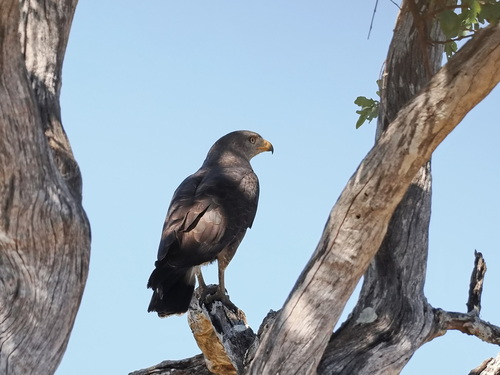
オビチュウヒワシ (Circaetus cinerascens) オビチュウヒワシ
コウモリダカ (Macheiramphus alcinus) コウモリダカ

メディア

読み込み中…

要点

コウモリダカとオビチュウヒワシの間で最も信頼できるフィールドマークは、全体的な構造と飛行シルエットです:コウモリダカは細身で長く尖った翼を持ち、ハヤブサのような印象を与えますが、オビチュウヒワシはよりがっしりしており、短い尾と広い翼を持っています。幼鳥の羽色は混乱を招くことがありますが、コウモリダカの幼鳥はより斑点が多く、淡い色合いの白い縁取りのあるオビチュウヒワシの幼鳥よりも多くの白を示します。止まっている姿では、コウモリダカの白い喉の斑点と顔の縞模様が特徴的であり、オビチュウヒワシは大きな頭と暗い縞模様のある胸を示します。飛行中、コウモリダカの長い翼と夕暮れ時の迅速で機敏な飛行は、オビチュウヒワシの重くて遅い羽ばたきとは異なります。生息地とタイミングも役立ちます:コウモリダカはほぼ常に夕暮れ時にコウモリの巣の近くで狩りをしているのが見られ、オビチュウヒワシは森林や森の縁に生息する日中の猛禽類です。

識別のコツ

  1. Flight silhouette: コウモリダカは細身で長く尖った翼を持ち、飛行中はハヤブサのような形をしています;オビチュウヒワシはよりがっしりしており、広い翼と短い尾を持っています。これは特に夕方の空に対して飛行中に最も明らかです。
  2. Perched structure: オビチュウヒワシは大きくてブロック状の頭と短い尾を持ち、太い首で重い印象を与えます。コウモリダカはより細身で直立しており、体に対して頭が小さいです。
  3. Juvenile plumage: 幼鳥のオビチュウヒワシは上面が淡い茶色で、白い縁取りのある羽毛と縞模様のある頭/胸を持っています;コウモリダカの幼鳥はより斑点が多い茶色で、特に腹部でより広範囲に白を示しますが、縞模様のある胸はありません。
  4. Adult underparts: 成鳥のオビチュウヒワシは白い腹部に淡い茶色の縞模様があり、特に腹部と太ももに見られます。コウモリダカの成鳥は、鋭い白い喉の斑点と胸を除いて暗い色をしており、他の腹部は暗い茶色または黒です。
  5. Facial pattern: コウモリダカは喉と胸に特徴的な白い斑点があり、各目の上と下に白い縞模様があり、マスクのような印象を与えます。オビチュウヒワシはこれらの顔のマークがなく、顔の色はより均一で、暗い縞模様があります。
  6. Eye, leg, and bare part color: オビチュウヒワシは黄色い目、耳、脚を持っています;コウモリダカの裸の部分の色は、ノートでは診断的とは記述されていません。
  7. Crested chest: オビチュウヒワシは「冠状の胸」を持っていると記述されており、これは羽毛や形状を指すかもしれませんが、これは微妙であり、他のマークと組み合わせて使用するのが最適です。
  8. Behavior at dusk: コウモリダカはほぼ独占的に夕暮れ時に狩りをしているのが見られ、コウモリの巣の近くで迅速に飛んでいます。夕暮れ時にコウモリを追いかける猛禽類を見た場合、それはほぼ確実にコウモリダカです。オビチュウヒワシは日中活動的で、夕暮れ時にはめったに活動しません。
  9. Feeding behavior: コウモリダカは飛行中にコウモリを丸ごと捕まえて飲み込み、しばしば迅速で繰り返し捕獲を行います。オビチュウヒワシは主に止まっているか、ゆっくりと上昇しながら蛇や他の獲物を狩ります。
  10. Habitat context: コウモリダカはコウモリのコロニーや洞窟の入り口に隣接する開けた地域にしばしば見られます;オビチュウヒワシは日中に森林や森の縁にいることが多いです。
  11. Wingbeat and flight style: コウモリダカは飛行中に機敏で速く、操縦性が高く、大きなハヤブサのように見えます。オビチュウヒワシは遅くて重い羽ばたきを持ち、機敏さは低いです。
  12. Size impression: オビチュウヒワシは特に止まっているときに大きくて頑丈に見えます;コウモリダカはより細身で細長いです。
  13. Confusion risk: 若いオビチュウヒワシは下側が全体的に暗く見えることがあり、コウモリダカと重なる可能性がありますが、構造と顔のパターンは信頼できます。幼鳥のコウモリダカは下側がより白いですが、幼鳥のオビチュウヒワシの縞模様のある胸はありません。
  14. Voice: ノートには診断的な声の記述はありません;分離のために声に頼らないでください。
  15. Season and timing: 夕暮れ時にコウモリを狩る猛禽類を見た場合、特に群れの中で、それはほぼ常にコウモリダカです。森林や森の縁での日中の目撃は、オビチュウヒワシの可能性が高いです。

大きさ

オビチュウヒワシはより大きく、がっしりしており、全長50〜58 cm、翼幅120〜134 cmです [wikipedia]。コウモリダカはわずかに小さく、はるかに細身で、約45 cmの長さで、重さは600〜650グラムです [wikipedia]。コウモリダカの翼は相対的に長くて狭く、ハヤブサのような外観を与えますが、オビチュウヒワシはよりコンパクトで、広い翼と明らかに短い尾を持っています。

羽色

行動

コウモリダカは薄暮の狩りに特化しており、ほぼ常に夕暮れ時にコウモリを追いかける迅速で機敏な飛行が見られ、しばしばコウモリの巣の近くで見られます。飛行中に小さな爪で獲物を捕らえ、丸ごと飲み込み、時には一度の狩りで複数のコウモリを捕まえます。オビチュウヒワシは日中の猛禽類で、主に昼間に狩りを行い、空中での機敏さは低く、しばしば止まっているか、遅くて重い羽ばたきで上昇しているのが見られます。コウモリダカの捕食はその大きな口のために非常に迅速ですが、オビチュウヒワシはより従来の方法で捕食します。

生息環境

コウモリダカはコウモリの巣の近くの開けた地域、森林の縁、サバンナ、さらには人間の集落の近くでも見られますが、コウモリが出現する夕暮れ時に最も信頼性が高いです。オビチュウヒワシは森林、森林の縁、河川の生息地を好み、日中に活動します。重なりがある可能性がありますが、コウモリダカの薄暮の活動とコウモリのコロニーとの関連は強い文脈の手がかりです。

より良い説明を送る

比較と同じ項目を使ってください。文章はすぐに公開されます。

The most reliable field mark between Western Banded Snake-Eagle and Bat Hawk is overall structure and flight silhouette: Bat Hawk is slender with long, pointed wings and a falcon-like jizz, while Western Banded Snake-Eagle is bulkier with a short tail and broad wings. Juvenile plumages can be confusing, but Bat Hawk juveniles are more mottled and show more white than the paler, white-edged juvenile Snake-Eagle. In perched views, Bat Hawk's white throat patch and facial streaks are distinctive, while Snake-Eagle shows a large head and dark-streaked breast. In flight, Bat Hawk's long wings and rapid, agile flight at dusk are unlike the heavier, slower wingbeats of Snake-Eagle. Habitat and timing can help: Bat Hawk is almost always seen hunting at dusk near bat roosts, while Snake-Eagle is a diurnal raptor of woodland and forest edge.

  1. Flight silhouette: Bat Hawk is slender with long, pointed wings and a falcon-like shape in flight; Snake-Eagle is bulkier, with broader wings and a short tail. This is most obvious in flight, especially against the evening sky.
  2. Perched structure: Snake-Eagle has a large, blocky head and short tail, giving it a thick-necked, heavy look. Bat Hawk is more slender and upright, with a smaller head relative to body.
  3. Juvenile plumage: Juvenile Snake-Eagles are paler brown above with white-edged feathers and streaked head/breast; Bat Hawk juveniles are more mottled brown and show more extensive white, especially on the underparts, but lack the streaked breast.
  4. Adult underparts: Adult Snake-Eagle has white underparts with pale brown streaks, especially on the belly and thighs. Bat Hawk adults are dark below except for a sharp white throat patch and chest, with the rest of the underparts dark brown or black.
  5. Facial pattern: Bat Hawk has a distinctive white patch on the throat and chest, plus a white streak above and below each eye, giving a masked look. Snake-Eagle lacks these facial marks and is more uniformly colored on the face, with dark streaking.
  6. Eye, leg, and bare part color: Snake-Eagle has yellow eyes, ears, and legs; Bat Hawk's bare part coloration is not described as diagnostic in the notes.
  7. Crested chest: Snake-Eagle is described as having a 'crested chest,' which may refer to the feathering or shape, but this is subtle and best used in combination with other marks.
  8. Behavior at dusk: Bat Hawk is almost exclusively seen hunting at dusk, flying rapidly near bat roosts. If you see a raptor at dusk chasing bats, it is almost certainly a Bat Hawk. Snake-Eagle is diurnal and rarely active at dusk.
  9. Feeding behavior: Bat Hawk catches and swallows bats whole in flight, often with rapid, repeated captures. Snake-Eagle hunts snakes and other prey, usually from a perch or slow soar.
  10. Habitat context: Bat Hawk is often near open areas adjacent to bat colonies or cave entrances; Snake-Eagle is more often in woodland or forest edge during the day.
  11. Wingbeat and flight style: Bat Hawk is agile, fast, and maneuverable in flight, resembling a large falcon. Snake-Eagle has slower, heavier wingbeats and is less agile.
  12. Size impression: Snake-Eagle appears larger and more robust, especially when perched; Bat Hawk is more slender and elongated.
  13. Confusion risk: Subadult Snake-Eagles may appear all dark below, which could overlap with Bat Hawk, but structure and facial pattern remain reliable. Juvenile Bat Hawks are more white below, but lack the streaked breast of juvenile Snake-Eagle.
  14. Voice: No diagnostic vocalizations are described in the notes; do not rely on voice for separation.
  15. Season and timing: If you see a raptor hunting bats at dusk, especially in a swarm, it is almost always Bat Hawk. Daytime sightings in woodland or forest edge are more likely Snake-Eagle.

Western Banded Snake-Eagle is larger and bulkier, measuring 50–58 cm in length with a wingspan of 120–134 cm [wikipedia]. Bat Hawk is slightly smaller and much more slender, at about 45 cm long and weighing 600–650 grams [wikipedia]. The Bat Hawk's wings are proportionally longer and narrower, giving it a falcon-like appearance, while the Snake-Eagle is more compact with broader wings and a noticeably short tail.

  • Juveniles: Juvenile Snake-Eagles are paler and browner above than adults, with white-edged feathers and dark streaking on the head, neck, and breast. Their underparts are white with pale brown streaks, especially on the belly and thighs. Juvenile Bat Hawks are mottled brown and show more white overall than adults, especially in the plumage, but lack the streaked breast of the Snake-Eagle.
  • Adults: Adult Snake-Eagles are grey-brown above with a large head, short tail, and dark-streaked head, neck, and breast. Underparts are white with pale brown streaks. Bat Hawks are dark brown or black overall, with a conspicuous white patch on the throat and chest, and a white streak above and below each eye. The Bat Hawk's face is more patterned, while the Snake-Eagle's is plainer but with a bulkier head.
  • Subadults/Transitions: Subadult Snake-Eagles may appear all dark grey-brown below, lacking the streaks, which can be confusing, but the structure remains different. Bat Hawks do not show this all-dark underpart phase.

Bat Hawk is highly specialized for crepuscular hunting, almost always seen at dusk chasing bats in rapid, agile flight, often near bat roosts. It captures prey in flight with small talons and swallows them whole, sometimes catching multiple bats in a single hunting session. Snake-Eagle is a diurnal raptor, hunting mainly during the day, and is less aerially agile, often seen perched or soaring with slower, heavier wingbeats. Bat Hawk's feeding is extremely rapid due to its large gape, while Snake-Eagle feeds more conventionally.

Bat Hawk is found in open areas near bat roosts, including forest edges, savanna, and even near human settlements, but is most reliably seen at dusk when bats emerge. Western Banded Snake-Eagle prefers woodland, forest edge, and riverine habitats and is active during the day. Overlap is possible, but Bat Hawk's crepuscular activity and association with bat colonies are strong context clues.

変更を破棄しますか?

保存していない編集があります。今離れると失われます。

オビチュウヒワシ · コウモリダカ · 苦手な鳥