

Grote bonte specht vs Alpenkauw
Dendrocopos major versus Pyrrhocorax graculus
Speel een quiz met Grote bonte specht en Alpenkauw
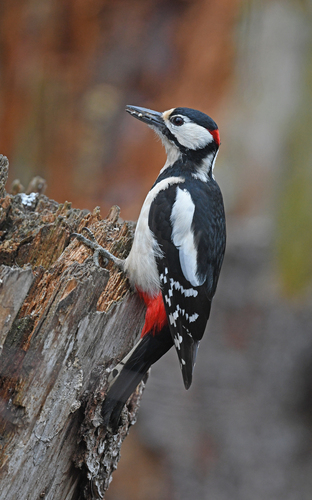 Grote bonte specht
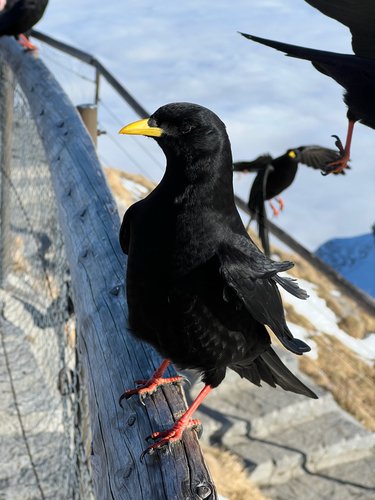 Alpenkauw
Kort gezegd
Het meest betrouwbare veldkenmerk om de Grote bonte specht van de Alpenkauw te scheiden, is de algehele kleur en structuur: de Grote bonte specht is een compacte, zwart-witte vogel met een gedurfde witte schoudervlek en rood op de buik (plus rood op het hoofd bij mannetjes en juvenielen), terwijl de Alpenkauw een glanzend zwarte, kraaiachtige vogel is met een gele snavel en rode poten. In de vlucht of in rust toont de specht een sterk zwart-wit contrast en een korte, beitelvormige snavel, terwijl de kauw uniform zwart is met een slanke, naar beneden gebogen gele snavel en langere vleugels en staart. Juveniele spechten kunnen verward worden met andere spechten, maar niet met kauwen, en vice versa. Habitat is ook een sterke aanwijzing: spechten in bosgebieden, kauwen in open gebieden op hoge bergen.
Herkenningstips
- Algehele kleur: De Grote bonte specht is zwart en wit met een rode ventgebied; de Alpenkauw is volledig glanzend zwart zonder witte of rode verenkleed.
- Snavel kleur en vorm: De specht heeft een rechte, beitelachtige leisteen-zwarte snavel; de kauw heeft een slanke, naar beneden gebogen gele snavel (volwassenen) of dof geel (juvenielen).
- Poten kleur: De poten van de specht zijn groenachtig-grijs; de poten van de kauw zijn felrood (volwassenen) of bruinachtig (juvenielen).
- Witte schoudervlek: Alleen de Grote bonte specht heeft een grote witte vlek op de schouder, zichtbaar in rust en in de vlucht.
- Rood op het hoofd: Mannelijke spechten hebben een rode nek; juvenielen hebben een rode kroon. Kauwen tonen nooit rood op het hoofd.
- Rood op de buik: Alleen de specht heeft een rode (volwassen) of roze (juveniele) onderbuik en onderstaart. De kauw is onderaan volledig zwart.
- Vleugelpatroon in de vlucht: De specht toont zwart-wit gestreepte vleugels en staart; de kauw is uniform zwart zonder strepen of wit.
- Staartvorm: De specht heeft een korte, stijve staart die gebruikt wordt voor ondersteuning op bomen; de kauw heeft een langere, flexibele staart, vaak gefan in de vlucht.
- Vluchtstijl: De specht vliegt in stuiterende, golvende bogen; de kauw zweeft, glijdt en voert acrobatische manoeuvres uit met losse, diepe vleugelslagen.
- Habitat: Specht in bossen, kauw in open gebieden op hoge bergen. Als je een 'specht' op een klif boven de boomgrens ziet, heroverweeg dat.
- Zitgedrag: De specht klimt op stammen en takken; de kauw zit op rotsen, kliffen of de grond, klimt nooit in bomen.
- Stem: De specht geeft scherpe 'kick' roepen en trommelt; de kauw geeft golvende, gefloten roep, nooit trommels.
- Geslachtsverschillen: Alleen de specht toont seksuele dimorfisme (rode nek bij mannetjes); de geslachten van de kauw zijn identiek.
- Verwarring bij juvenielen: De rode kroon en doffere verenkleed van de juveniele specht zijn uniek; de juveniele kauw is gewoon een doffere zwarte vogel met een doffe gele snavel.
- Grootte: De kauw is bijna twee keer zo lang en veel zwaarder dan de specht; in directe vergelijking is de kauw kraai-groot, de specht is veel kleiner.
Grootte
De Grote bonte specht is een middelgrote specht, ongeveer 20–24 cm lang en weegt rond de 89 g [wikidata]. De Alpenkauw is veel groter, met een lengte van 37–39 cm en een spanwijdte van 75–85 cm, en is bijna twee keer zo lang als de specht. De kauw is ook veel zwaarder (volwassen massa niet gegeven in AVONET, maar Wikipedia geeft 188–252 g), met een proportioneel langere staart en vleugels. In het veld lijkt de kauw kraai-groot en slank, terwijl de specht compact en kortstaartig is.
Verenkleed
- Juveniele/onvolwassen vogels: De juveniele Grote bonte specht heeft een rode kroon (minder uitgebreid bij vrouwtjes), doffere en browner bovenkant, en minder gedefinieerde markeringen dan volwassenen. De onderbuik is rozeachtig in plaats van rood. De juveniele Alpenkauw is gewoon een doffere versie van de volwassene: nog steeds volledig zwart maar met een doffe gele snavel en bruinachtige poten. Er zijn geen gedurfde witte vlekken of rood op de onderdelen in kauwen van welke leeftijd dan ook.
- Volwassenen: De Grote bonte specht is zwart boven met grote witte schoudervlekken, een witte gezicht en onderdelen (behalve voor een scharlakenrode onderbuik en onderstaart), en zwart-wit gestreepte vleugels en staart. Mannetjes hebben een rode nek, vrouwtjes missen dit. De Alpenkauw is overal glanzend zwart, zonder wit of rood in het verenkleed, een korte gele snavel en rode poten. De geslachten zijn identiek in kauwen.
- In de vlucht: De Grote bonte specht toont sterk zwart-wit contrast op de bovenste vleugel en een witte schoudervlek; de Alpenkauw is volledig zwart zonder enige wit.
Gedrag
De Grote bonte specht wordt vaak gezien terwijl hij op boomstammen en takken klimt, omhoog hopt in korte sprongetjes, en trommelt of tikt op hout. Hij brengt zelden tijd op de grond door en vliegt op een stuiterende, golvende manier die typisch is voor spechten. De Alpenkauw is zeer luchtig, vaak gezien terwijl hij zweeft, glijdt of acrobatische vluchtmanoeuvres uitvoert in opstijgende lucht nabij kliffen. Op de grond loopt of hopt hij in open gebieden, vaak in groepen. Hij klimt niet in bomen of trommelt.
Habitat
De Grote bonte specht is een bosvogel, te vinden in bossen, parken en tuinen in het Palearctisch gebied, inclusief laagland en montane bossen. Hij wordt zelden aangetroffen in open of boomloze gebieden. De Alpenkauw is strikt een soort van hoge bergen, broedend en foeragerend boven de boomgrens op kliffen, rotsachtige hellingen en alpine weiden van Spanje tot Nepal. Hij wordt niet aangetroffen in bossen of laaglandhabitats. Als je een zwarte vogel met een gele snavel in hoge bergen ziet, is het bijna zeker een Alpenkauw; als in het bos, een specht.
Geluid
De Grote bonte specht geeft scherpe 'kick' of 'chik' roepen en trommelt op hout; zijn roepen zijn kort, hard en niet kraaiachtig. De Alpenkauw heeft een golvende 'preep' en gefloten 'sweeeooo', hoger van toon en muzikaler dan typische kraaien, plus een rollende churr alarmroep. Zijn roepen zijn nooit trommelen of spechtachtig. De stem is een sterke aanwijzing als je het hoort.