

Roodhalsduif vs Musduif
Patagioenas squamosa versus Columbina passerina
Speel een quiz met Roodhalsduif en Musduif
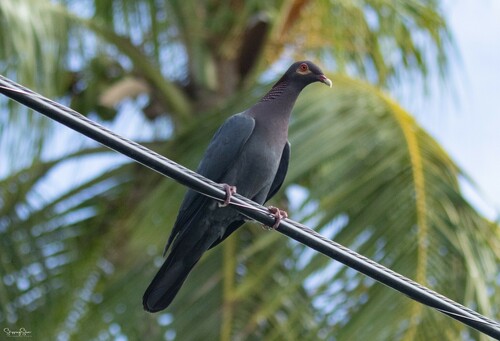 Roodhalsduif
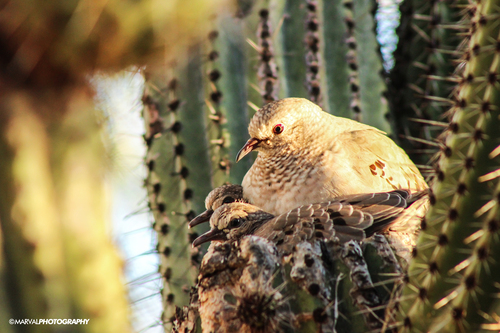 Musduif
Kort gezegd
Het meest betrouwbare veldkenmerk tussen Roodhalsduif en Musduif is de algehele grootte en structuur: Roodhalsduif is een massieve, zwaar gebouwde duif met een leisteengrijze en kastanjebruine nek, terwijl Musduif klein, kortstaartig en bruinachtig is, met kastanjekleurige vleugels zichtbaar in de vlucht. Als je een duif ziet met een schubachtige nek en rode blote huid rond het oog, is het Roodhalsduif; als je een kleine, op de grond foeragerende vogel ziet met een schubachtige kop en kastanjekleurige vleugelflitsen in de vlucht, is het Musduif. Onvolwassen en volwassen Musduiven tonen beide kastanjekleurige primaire veren in de vlucht, wat Roodhalsduif nooit toont. De kleur van de snavel, de lengte van de staart en het gedrag (boombewonend vs. terrestrisch) zijn ook sterke aanwijzingen.
Herkenningstips
- Grootte is de snelste scheiding: Roodhalsduif is enorm (duif-groot), Musduif is klein (vogel-groot). Als je het niet zeker weet, vergelijk dan met nabijgelegen duiven of gewone vogels voor schaal.
- Vluchtpatroon en vleugelkleur: In de vlucht toont Musduif van alle leeftijden kastanjekleurige primaire veren en vleugelranden—zoek naar een flits van roestkleur in de vleugels. Roodhalsduif toont nooit kastanjekleur in de vleugel.
- Staartvorm en lengte: Roodhalsduif heeft een lange staart, terwijl de staart van Musduif zeer kort is en nauwelijks voorbij het lichaam uitsteekt.
- Snavelkleur: Roodhalsduif heeft een rode basis van de snavel met een bleke punt; Musduif heeft een gele snavel met een zwarte punt.
- Ooghuid: Roodhalsduif heeft een blote huid rond het oog (rood bij mannetjes, geelachtig bij vrouwtjes); Musduif mist deze eigenschap.
- Patroon van hoofd en nek: Roodhalsduif heeft een schubachtige nek en kastanjebruine nek; Musduif heeft een schubachtig patroon op het hoofd en de bovenborst, maar niet op de nek.
- Pootkleur: Roodhalsduif heeft rode poten; de pootkleur van Musduif is niet onderscheidend in de notities.
- Zittende houding: Roodhalsduif zit rechtop in bomen, vaak hoog; Musduif is bijna altijd op de grond, gehurkt en wandelend.
- Vederkleur: Roodhalsduif is leisteengrijs met kastanjebruin; Musduif is bruin boven, met een roze gezicht en schubachtige kop.
- Seksueel dimorfisme: Mannetjes Musduiven hebben een leisteengrijze kroon en een roze-grijze buik; vrouwtjes zijn grijzer en meer uniform. Roodhalsduif toont subtiele seksuele verschillen alleen in de kleur van de blote ooghuid.
- Habitatcontext: Als je het in de boomtoppen of voeden in bomen ziet, is het bijna zeker Roodhalsduif; als het op open grond is, waarschijnlijk Musduif.
- Vocalisatie: Als je een zachte, stijgende 'whoop' roep hoort, is het Musduif; de roep van Roodhalsduif wordt hier niet beschreven.
- Groepsgrootte: Roodhalsduif is meestal alleen of in kleine groepen; Musduif kan in paren of kleine groepen op de grond zijn.
- Gedrag bij verstoring: Roodhalsduif vliegt krachtig de bomen in; Musduif vliegt laag en valt snel terug naar de grond.
- Valstrikken: Onvolwassen Musduiven kunnen saai en schubachtig lijken, maar zullen altijd kastanjekleur in de vleugel tonen in de vlucht. Roodhalsduif toont dit nooit, ongeacht de leeftijd.
Grootte
Grootte is de meest directe scheiding: Roodhalsduif is een grote duif, met een gewicht van ongeveer 312 g en een lengte van 14–16 inch, waardoor het meerdere keren groter is dan Musduif. Musduif is de kleinste duif in de Verenigde Staten, slechts 15–18 cm (5.9–7.1 in) lang en weegt 26–40 g. In het veld lijkt Roodhalsduif bulky en langstaartig, terwijl Musduif klein, compact en kortstaartig is, vaak beschreven als 'vogel-groot.' Zelfs van een afstand is de grootteverschil onmiskenbaar.
Verenkleed
-
Jong/Onvolwassen/Vluchtkenmerken: Musduif van alle leeftijden toont kastanjekleurige primaire veren en vleugelranden in de vlucht, een unieke eigenschap die niet voorkomt bij Roodhalsduif. Roodhalsduif mist kastanjekleur in de vleugel en is in plaats daarvan uniform leisteengrijs met kastanjebruine nek.
-
Volwassen vederkleed: Roodhalsduif is over het algemeen leisteengrijs met een kastanjebruine nek en een kenmerkend schubachtig patroon op de nek. Het heeft een rode blote plek rond het oog (meer roodachtig bij mannetjes, meer geelachtig bij vrouwtjes), en rode poten en snavelbasis. Musduif is bruin boven, met een schubachtige uitstraling op het hoofd en de bovenborst, en een zeer korte staart. De snavel is geel met een zwarte punt, en het gezicht is rozeachtig. Mannetjes hebben een leisteengrijze kroon en een roze-grijze buik, terwijl vrouwtjes grijzer en gelijkmatiger gekleurd zijn. De vleugels zijn bruin met zwarte vlekken wanneer ze zitten, maar in de vlucht zijn de kastanjekleurige primaire veren diagnostisch.
Gedrag
Roodhalsduif wordt typisch gezien zittend in bomen of voeden met fruit in de boomtoppen, vaak alleen of in kleine groepen, en is voorzichtig—snel om weg te vliegen als ze gestoord worden. Musduif wordt bijna altijd op de grond gezien, wandelend of voeden in open gebieden, en vliegt alleen als ze van dichtbij benaderd worden. Zijn vlucht is laag en direct, en valt snel terug naar de grond. Als je een duif-groot vogel in een boom ziet, is het bijna zeker Roodhalsduif; een kleine duif die op open grond loopt is Musduif.
Habitat
Beide soorten komen voor in het Caribisch gebied, maar hun voorkeurshabitats verschillen. Roodhalsduif wordt het vaakst aangetroffen in regenwouden en bosrijke gebieden, soms nabij menselijke nederzettingen, en wordt over het algemeen geassocieerd met bomen. Musduif geeft de voorkeur aan open, droge gebieden, velden, bermen en struikgewas, en wordt zelden in dicht bos aangetroffen. In overlappingszones kan de habitatcontext helpen: een grote duif in de boomtoppen is Roodhalsduif, een kleine duif op open grond is Musduif.
Geluid
Musduif geeft een zachte, repetitieve 'whoop' roep die in toonhoogte stijgt en vrij onderscheidend is. De vocalisaties van Roodhalsduif worden niet beschreven in de gegeven notities, dus de stem is alleen diagnostisch voor Musduif: als je de 'whoop' roep hoort, is het niet Roodhalsduif.