

fire-eyed diucon vs primavera
Pyrope pyrope versus Nengetus cinereus
Jogue um quiz com fire-eyed diucon e primavera
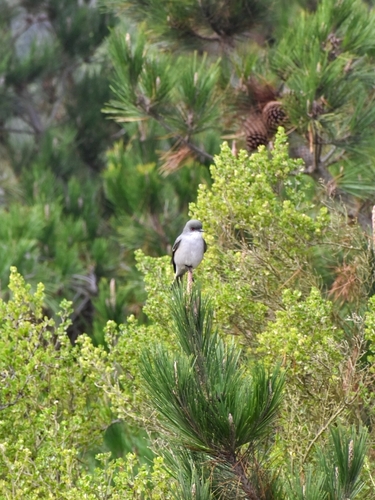 fire-eyed diucon
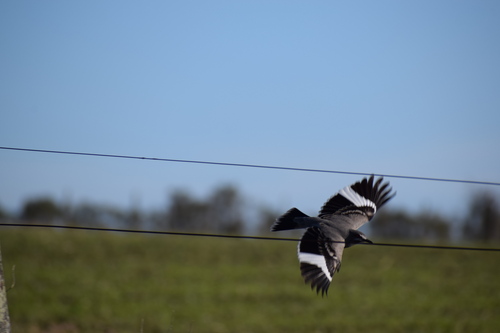 primavera
Em resumo
The most reliable field mark between Fire-eyed Diucon and Grey Monjita is the strong white wing and tail pattern of the Grey Monjita, especially obvious in flight, versus the much plainer, dark gray wings and tail of the Fire-eyed Diucon. Both species have a bright red iris as adults, but the Monjita’s bold white facial markings and wing flashes stand out against the Diucon’s more uniform gray. Juveniles of both species lack the red eye, but the Monjita still shows more white in the wings and tail. Structure and size also differ: Grey Monjita is bulkier and longer, with a heavier build and longer tail. Use wing and tail pattern first, especially for birds in flight or at a distance.
Dicas de identificação
-
White wing and tail pattern (all ages, especially in flight): Grey Monjita shows bold white bases to the primaries, white-tipped wing coverts, and a black tail with wide white tips, creating a striking contrast in flight and often visible at rest. Fire-eyed Diucon lacks these features, having plain dark gray wings with only pale gray edges and a tail with only slightly paler tips.
-
Facial pattern (adults): Grey Monjita has a wide white supercilium (eyebrow), a thin white moustache, and a broad black malar stripe, giving it a strongly marked face. Fire-eyed Diucon’s face is uniform dark gray with no strong markings.
-
Underparts: Monjita’s throat and belly are bright white, with a clean division from the ashy gray breast. Diucon’s throat is pale ashy gray with faint streaks, breast is darker ashy gray, and belly is only grayish white, never as cleanly white as Monjita.
-
Iris color (adults): Both species have a bright red iris as adults, so this does not help separate them. Juveniles of both have a brown iris.
-
Juvenile plumage: Juvenile Monjita is still patterned like the adult, with white in the wings and tail, while juvenile Diucon is plain and lacks strong white markings.
-
Size and structure: Monjita is larger and heavier, with a longer tail and bulkier build. Diucon is smaller and more compact. This is most useful when both species are seen together, or with experience.
-
Bill and legs: Both have black bills and legs, not useful for separation.
-
Perched posture: Monjita often perches upright and conspicuously in open areas, while Diucon may be more retiring and found in shrubbier or streamside habitats.
-
Flight display: Monjita’s display is a looping, undulating flight from and back to a perch. Diucon’s display is a high, slow-winged, silent flight.
-
Habitat context: In Argentina and Chile, Diucon is more likely in shrubby or riparian areas; Monjita prefers open fields and savannas. Outside Argentina/Chile, a 'Diucon' is almost certainly a Monjita.
-
Tail pattern at rest: Monjita’s tail shows white tips even when perched, while Diucon’s tail is more uniformly dark gray with only slightly paler tips.
-
Wing panel at rest: The white bases to the primaries and white-tipped coverts of Monjita can create a pale wing panel even when not in flight; Diucon’s wings remain dark and plain.
-
Pitfall – red eye: Do not rely on red iris alone, as both species share this as adults. For juveniles, the lack of red eye does not help separate them.
-
Pitfall – general grayness: Both are gray flycatchers, but Monjita is much more sharply marked with white and black contrasts, while Diucon is overall plainer and darker.
-
Seasonal variation: No significant seasonal plumage change is noted for either species; age and wing/tail pattern are more important for separation.
Tamanho
Grey Monjita is distinctly larger and heavier than Fire-eyed Diucon. The Monjita measures 21–25 cm in length and weighs 50–62 g, while the Diucon is 18.5–21.5 cm and 31–50 g. This size difference is often visible in the field, with Monjita appearing bulkier and longer-tailed. However, overlap at the small end of Monjita and large end of Diucon means size alone is not always diagnostic, especially if seen singly or at a distance.
Plumagem
-
Juvenile/immature birds: Both species have a brownish tinge to the gray and lack the adult's red iris, but the Grey Monjita already shows its characteristic white wing bases and tail tips, which are visible in flight and often at rest. The Diucon juvenile is plainer, with a brown iris and no strong white in the wings or tail.
-
Adults: Grey Monjita is strikingly marked with a wide white supercilium (eyebrow), thin white moustache, and a broad black malar stripe, plus black wings with wide white bases to the primaries (creating a bold white panel in flight), white-tipped wing coverts, and a black tail with wide white tips. Fire-eyed Diucon is much more uniform: dark gray crown and upperparts, blackish wings with only pale gray edges to inner remiges, and a dark gray tail with only slightly paler outer feathers and tips. The Diucon's throat is pale ashy gray with faint streaks, breast darker ashy gray, and belly/vent grayish white to white. The Monjita’s underparts are whiter overall, especially the throat and belly.
-
Iris: Both adults have a bright red iris, but this is not useful for separating them from each other. Juveniles of both species have a brown iris.
Comportamento
Both species are perch-and-sally flycatchers, often seen dropping from a perch to the ground or sallying out to catch insects. Grey Monjita tends to be more conspicuous, often perching in open areas and making looping, undulating display flights. Fire-eyed Diucon is more likely to be found singly or in pairs, sometimes near streamside vegetation, and its display flight is high and slow-winged but silent. Monjita may use a wider variety of perches, including exposed branches and even holes in trees for nesting.
Habitat
Both species overlap in Argentina and can be found in open country, but their broader ranges differ: Fire-eyed Diucon is restricted to Argentina and Chile (with rare vagrancy to the Falklands), while Grey Monjita is much more widespread in South America, found in Argentina, Bolivia, Brazil, Paraguay, Peru, Suriname, and Uruguay. In areas of overlap, Diucon is more associated with shrubby areas and streamside vegetation, while Monjita favors open habitats and is more likely to be seen in open fields or savannas.