
combatente vs pilrito-de-peito-preto
Calidris pugnax versus Calidris alpina
Jogue um quiz com combatente e pilrito-de-peito-preto
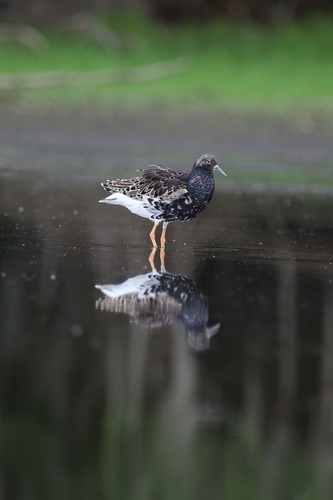 combatente
 pilrito-de-peito-preto
Em resumo
A maneira mais confiável de separar o combatente do pilrito-de-peito-preto é pela estrutura geral e comportamento: o combatente é mais robusto, com barriga saliente, pescoço mais longo, cabeça pequena e pernas mais longas, enquanto o pilrito-de-peito-preto é mais compacto e de pernas curtas. Em voo, ambos mostram uma faixa branca na asa, mas a do combatente é fina e indistinta, enquanto a do pilrito-de-peito-preto é estreita, mas mais óbvia. As plumagens juvenis e não reprodutivas podem ser confusas, mas o juvenil do combatente apresenta um padrão escamoso na parte superior e uma forte coloração amarelada abaixo, enquanto os juvenis do pilrito-de-peito-preto têm dois 'V's brancos fracos nas costas e podem mostrar marcas pretas na barriga ou flancos. A forma do bico também é uma pista chave: o bico do combatente é de comprimento médio e reto, enquanto o do pilrito-de-peito-preto é notavelmente curvado para baixo e preto. Sempre verifique a distinta mancha preta na barriga do pilrito-de-peito-preto em reprodução, que o combatente nunca apresenta.
Dicas de identificação
- Tamanho e robustez: O combatente é muito maior e mais pesado que o pilrito-de-peito-preto. Mesmo as fêmeas do combatente são mais robustas, de pernas mais longas e pescoço mais longo que qualquer pilrito-de-peito-preto. Use isso como uma primeira verificação em bandos mistos.
- Estrutura: O combatente tem uma cabeça pequena, pescoço longo, corpo com barriga saliente e pernas longas. O pilrito-de-peito-preto é compacto, com pescoço curto e pernas curtas. Isso é especialmente óbvio quando os pássaros estão se alimentando ou parados.
- Forma do bico: O bico do combatente é de comprimento médio e reto, enquanto o do pilrito-de-peito-preto é mais curto, preto e notavelmente curvado para baixo (curvado na ponta). A cor do bico não é útil para o combatente, mas a forma é.
- Cor das pernas: A cor das pernas do combatente varia: verde-escuro em juvenis, rosa a laranja em adultos, com alguns machos mostrando pernas laranja-avermelhadas na época de reprodução. As pernas do pilrito-de-peito-preto são sempre pretas. Esta é uma verificação útil a curta distância, mas cuidado com a lama.
- Padrão de voo: Ambos mostram uma faixa branca na asa em voo, mas a do combatente é fina e indistinta, enquanto a do pilrito-de-peito-preto é estreita, mas mais óbvia. O combatente também mostra ovais brancos nas laterais da cauda, que o pilrito-de-peito-preto não possui.
- Bate de asa: O combatente tem um bate de asa mais profundo e lento em voo, refletindo seu tamanho maior. O voo do pilrito-de-peito-preto é mais rápido e ágil.
- Plumagem juvenil: O juvenil do combatente tem um padrão escamoso na parte superior e uma forte coloração amarelada abaixo; os juvenis do pilrito-de-peito-preto têm dois 'V's brancos fracos nas costas e frequentemente marcas pretas na barriga/flancos. Procure o padrão escamoso e o tamanho geral para o combatente.
- Plumagem de reprodução: O macho do combatente é inconfundível com seu colar ornamentado e tufos. A fêmea do combatente ainda é maior e com barriga saliente. O pilrito-de-peito-preto em reprodução é único por mostrar uma mancha preta sólida na barriga, que o combatente nunca apresenta.
- Plumagem não reprodutiva: Ambos ficam mais apagados, mas o combatente permanece mais robusto e com barriga saliente, com pescoço e pernas mais longos. O pilrito-de-peito-preto é mais compacto e acinzentado acima, branco abaixo.
- Comportamento alimentar: O combatente se alimenta com uma postura mais ereta e movimentos mais lentos; o pilrito-de-peito-preto usa uma ação rápida de 'máquina de costura'.
- Habitat: O combatente é mais provável de ser encontrado em pântanos vegetados e prados úmidos, especialmente na época de reprodução; o pilrito-de-peito-preto prefere áreas abertas de lama e regiões costeiras, especialmente no inverno.
- Voz: Apenas o chamado do pilrito-de-peito-preto ('chreep') é distintivo e pode ajudar em voo ou em bandos.
- Armadilhas: Pequenas fêmeas do combatente podem ser confundidas com grandes pilritos-de-peito-preto, especialmente em plumagem apagada. Sempre verifique a estrutura e a forma do bico. O juvenil do combatente pode ser confundido com o juvenil do pilrito-de-peito-preto, mas o combatente é maior, de pernas mais longas e tem um rosto mais simples.
- Contexto: Se você ver um limícola muito grande, com barriga saliente e pernas longas entre pássaros do tamanho do pilrito-de-peito-preto, suspeite do combatente. Se você ver um limícola compacto, de pernas curtas, com bico curvado para baixo e uma mancha preta na barriga na primavera/verão, é o pilrito-de-peito-preto.
- Quando as marcas falham: Em luz fraca ou a grande distância, confie no tamanho, estrutura e comportamento em bandos. A forma do bico e a cor das pernas podem ser difíceis de julgar, mas o comportamento geral e o estilo de voo são confiáveis.
Tamanho
O combatente é consideravelmente maior e mais pesado que o pilrito-de-peito-preto. O adulto do combatente pesa em média 136 g, com fêmeas medindo 22–26 cm de comprimento e uma envergadura de 46–49 cm. O pilrito-de-peito-preto é muito menor e mais leve, com 16–20 cm de comprimento, 38–43 cm de envergadura e 34–77 g de peso. Mesmo a menor fêmea do combatente parecerá mais robusta e de pernas mais longas que o maior pilrito-de-peito-preto. Em bandos mistos, o combatente se destaca como o maior limícola com barriga saliente, enquanto o pilrito-de-peito-preto é notavelmente mais compacto.
Plumagem
- Juvenil/Primeiro inverno: O juvenil do combatente tem partes superiores escamosas e arrumadas com centros de penas escuras e uma forte coloração amarelada nas partes inferiores. O juvenil do pilrito-de-peito-preto é marrom acima com dois 'V's brancos fracos nas costas e frequentemente mostra marcas pretas nos flancos ou na barriga. Ambos podem parecer semelhantes à distância, mas o combatente é maior, com pescoço mais longo e tem um rosto mais simples em comparação com o pilrito-de-peito-preto, que é mais compacto e de pescoço curto.
- Não reprodutiva/Inverno adulto: Ambas as espécies ficam mais apagadas no inverno. As fêmeas do combatente e os machos não reprodutivos são cinza-marrom acima com penas de centros escuros e bordas brancas, enquanto o pilrito-de-peito-preto é acinzentado-marrom acima e branco abaixo. As partes superiores do combatente podem ainda parecer mais escamosas, e o pássaro permanece mais robusto.
- Plumagem de reprodução: O macho do combatente é inconfundível com seu colar ornamentado e tufos, mas mesmo as fêmeas em plumagem de reprodução são maiores e mais robustas que o pilrito-de-peito-preto. O pilrito-de-peito-preto em reprodução é único entre limícolas de tamanho semelhante por ter uma mancha preta sólida na barriga, que o combatente nunca mostra.
- Em voo: Ambos mostram uma faixa branca na asa, mas a do combatente é fina e indistinta, enquanto a do pilrito-de-peito-preto é estreita, mas mais distinta. O combatente também mostra ovais brancos nas laterais da cauda, que o pilrito-de-peito-preto não possui.
Comportamento
O combatente frequentemente parece ter barriga saliente e pescoço longo, alimentando-se com uma postura mais ereta e movimentos mais lentos. O pilrito-de-peito-preto é mais compacto e agachado, alimentando-se com uma ação rápida de 'máquina de costura', escolhendo metódicamente o substrato. Em voo, o combatente tem um bate de asa mais profundo e lento em comparação com o voo mais rápido e ágil do pilrito-de-peito-preto. Ambas as espécies são gregárias, mas os bandos de pilritos-de-peito-preto tendem a ser mais apertados e mais sincronizados, especialmente em voo.
Habitat
Ambas as espécies podem ocorrer juntas durante a migração e no inverno, mas o combatente se reproduz em pântanos e prados úmidos, enquanto o pilrito-de-peito-preto prefere habitats de tundra e costeiros para reprodução. No inverno, ambos podem ser encontrados em áreas de lama, prados úmidos e pântanos. O combatente tende a favorecer áreas úmidas ligeiramente mais vegetadas ou interiores, enquanto o pilrito-de-peito-preto é mais estritamente costeiro durante a migração e no inverno, frequentemente em bandos muito grandes em áreas abertas de lama.
Voz
O pilrito-de-peito-preto emite um chamado típico de areia 'chreep' e um trinado áspero durante a exibição. Nenhuma vocalização distintiva do combatente é notada nas fontes para separação em campo.