
Ruff vs Dunlin
Calidris pugnax versus Calidris alpina
Play a quiz with Ruff and Dunlin
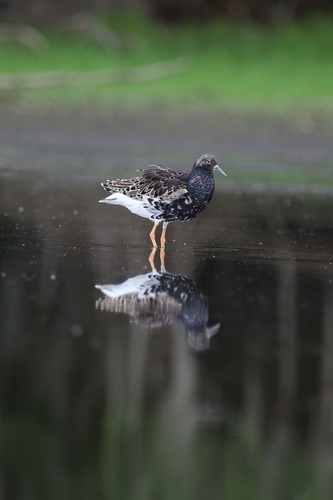 Ruff
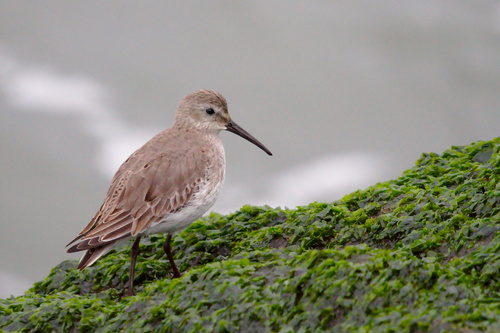 Dunlin
In short
The most reliable way to separate Ruff from Dunlin is by overall structure and jizz: Ruff is bulkier, pot-bellied, with a longer neck, small head, and longer legs, while Dunlin is more compact and short-legged. In flight, both show a white wingbar, but Ruff's is thin and indistinct, whereas Dunlin's is narrow but more obvious. Juvenile and non-breeding plumages can be confusing, but juvenile Ruff shows a scaly upperpart pattern and a strong buff wash below, while Dunlin juveniles have two weak whitish 'V's on the back and may show black belly or flank marks. Bill shape is also a key clue: Ruff has a medium-length, straight bill, while Dunlin's is noticeably decurved and black. Always check for the distinctive black belly patch on breeding Dunlin, which Ruff never shows.
Identification tips
- Size and bulk: Ruff is much larger and heavier than Dunlin. Even female Ruff are bulkier, longer-legged, and longer-necked than any Dunlin. Use this as a first check in mixed flocks.
- Structure: Ruff has a small head, longish neck, pot-bellied body, and long legs. Dunlin is compact, short-necked, and short-legged. This is especially obvious when birds are feeding or standing.
- Bill shape: Ruff's bill is medium-length and straight, while Dunlin's is shorter, black, and noticeably decurved (downcurved at the tip). Bill color is not helpful for Ruff, but the shape is.
- Leg color: Ruff's leg color varies: dark greenish in juveniles, pink to orange in adults, with some males showing reddish-orange legs in breeding season. Dunlin's legs are always black. This is a useful check at close range, but beware of mud.
- Flight pattern: Both show a white wingbar in flight, but Ruff's is thin and indistinct, while Dunlin's is narrow but more obvious. Ruff also shows white ovals on the sides of the tail, which Dunlin lacks.
- Wingbeat: Ruff has a deeper, slower wingbeat in flight, reflecting its larger size. Dunlin's flight is quicker and more agile.
- Juvenile plumage: Juvenile Ruff has a neat, scaly upperpart pattern and strong buff wash below; Dunlin juveniles have two weak whitish 'V's on the back and often black belly/flank marks. Look for the scaly pattern and overall size for Ruff.
- Breeding plumage: Male Ruff is unmistakable with its ornate ruff and tufts. Female Ruff is still larger and pot-bellied. Breeding Dunlin is unique in showing a solid black belly patch, which Ruff never shows.
- Non-breeding plumage: Both become duller, but Ruff remains bulkier and more pot-bellied, with a longer neck and legs. Dunlin is more compact and greyish above, white below.
- Feeding behavior: Ruff feeds with a more upright stance and slower movements; Dunlin uses a rapid 'sewing machine' action.
- Habitat: Ruff is more likely in vegetated marshes and wet meadows, especially in the breeding season; Dunlin prefers open mudflats and coastal areas, especially in winter.
- Voice: Only Dunlin's call ('chreep') is distinctive and may help in flight or in flocks.
- Pitfalls: Small female Ruff can be mistaken for large Dunlin, especially in dull plumage. Always check structure and bill shape. Juvenile Ruff may be confused with juvenile Dunlin, but Ruff is larger, longer-legged, and has a plainer face.
- Context: If you see a very large, pot-bellied, long-legged wader among Dunlin-sized birds, suspect Ruff. If you see a compact, short-legged, decurved-billed wader with a black belly patch in spring/summer, it's Dunlin.
- When marks fail: In poor light or at great distance, rely on size, structure, and flocking behavior. Bill shape and leg color may be hard to judge, but overall jizz and flight style are reliable.
Size
Ruff is considerably larger and heavier than Dunlin. Adult Ruff averages 136 g in body mass, with females 22–26 cm long and a 46–49 cm wingspan. Dunlin is much smaller and lighter, at 16–20 cm length, 38–43 cm wingspan, and 34–77 g weight. Even the smallest female Ruff will look bulkier and longer-legged than the largest Dunlin. In mixed flocks, Ruff stands out as the largest, pot-bellied wader, while Dunlin is noticeably more compact.
Plumage
- Juvenile/First-winter: Juvenile Ruff has neat, scaly upperparts with dark feather centers and a strong buff tinge to the underparts. Juvenile Dunlin is brown above with two weak whitish 'V's on the back and often shows black marks on the flanks or belly. Both can look similar at a distance, but Ruff is larger, longer-necked, and has a plainer face compared to the more compact, short-necked Dunlin.
- Non-breeding/Adult winter: Both species become duller in winter. Ruff females and non-breeding males are grey-brown above with white-fringed, dark-centered feathers, while Dunlin is greyish-brown above and white below. Ruff's upperparts may still look more scaly, and the bird remains bulkier.
- Breeding plumage: Male Ruff is unmistakable with its ornate ruff and tufts, but even females in breeding plumage are larger and more pot-bellied than Dunlin. Breeding Dunlin is unique among similar-sized waders in having a solid black belly patch, which Ruff never shows.
- In flight: Both show a white wingbar, but Ruff's is thin and indistinct, while Dunlin's is narrow but more distinct. Ruff also shows white ovals on the sides of the tail, which Dunlin lacks.
Behaviour
Ruff often appears pot-bellied and long-necked, feeding with a more upright stance and slower movements. Dunlin is more compact and crouched, feeding with a rapid 'sewing machine' action, methodically picking at the substrate. In flight, Ruff has a deeper, slower wingbeat compared to the faster, more agile flight of Dunlin. Both species are gregarious, but Dunlin flocks tend to be tighter and more synchronized, especially in flight.
Habitat
Both species can occur together on migration and in winter, but Ruff breeds in marshes and wet meadows, while Dunlin prefers tundra and coastal habitats for breeding. In winter, both may be found on mudflats, wet meadows, and marshes. Ruff tends to favor slightly more vegetated or inland wet areas, while Dunlin is more strictly coastal on migration and in winter, often in very large flocks on open mudflats.
Voice
Dunlin gives a typical sandpiper 'chreep' call and a harsh trill in display. No distinctive Ruff vocalization is noted in the sources for field separation.