

bentevizinho-de-asa-ferrugínea vs saí-de-perna-amarela
Myiozetetes cayanensis versus Cyanerpes caeruleus
Jogue um quiz com bentevizinho-de-asa-ferrugínea e saí-de-perna-amarela
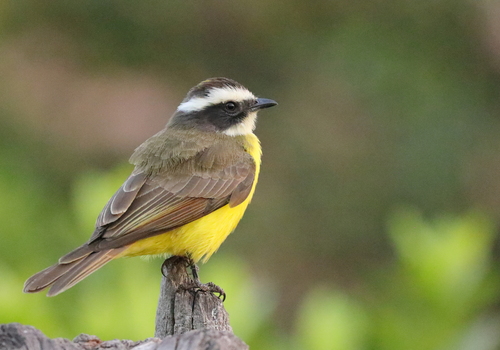 bentevizinho-de-asa-ferrugínea
 saí-de-perna-amarela
Em resumo
A marca de campo mais confiável para separar o bentevizinho-de-asa-ferrugínea da saí-de-perna-amarela é a combinação de tamanho, estrutura e formato do bico: o bentevizinho é muito maior, com um bico grosso e reto, enquanto a saí é minúscula e tem um bico esguio e fortemente curvado para baixo. Os juvenis de bentevizinho-de-asa-ferrugínea apresentam bordas canela-ferrugínea nas asas e na cauda, que nunca aparecem em saís de qualquer idade. Os machos adultos de saí-de-perna-amarela são inconfundivelmente violeta-azuis com asas e máscara pretas, enquanto as fêmeas e os juvenis são esverdeados com marcas faciais em buff e azul, nunca se assemelhando ao bentevizinho marrom-e-amarelo. Em voo ou empoleirados, a aparência robusta e ereta do bentevizinho e a aparência pequena, ativa e esguia da saí também são pistas fortes.
Dicas de identificação
- Tamanho e volume: O bentevizinho-de-asa-ferrugínea é muito maior e mais pesado que a saí-de-perna-amarela. Se o pássaro parecer do tamanho de um pardal ou menor, não é um bentevizinho.
- Formato do bico: O bentevizinho tem um bico preto grosso, reto e atarracado; a saí tem um bico preto esguio e fortemente curvado para baixo. O formato do bico é visível mesmo à distância e é diagnóstico.
- Bordas das asas e cauda de juvenis: Os juvenis de bentevizinho-de-asa-ferrugínea apresentam bordas canela-ferrugínea proeminentes nas asas e na cauda, nunca presentes em saís de qualquer idade. Se você ver canela ou ferrugem nas asas/cauda de um pássaro acastanhado, pense em bentevizinho.
- Plumagem do macho adulto: O macho adulto de saí-de-perna-amarela é vívido violeta-azul com máscara e asas pretas—nenhum bentevizinho é azul ou preto-e-azul.
- Fêmea adulta/juvenil de saí: As fêmeas e os juvenis de saí são verdes por cima com marcas faciais em buff e azul, partes inferiores estriadas em off-white e caudas esverdeadas. Nenhum bentevizinho é verde por cima com rosto azul ou buff.
- Supercílio: O bentevizinho-de-asa-ferrugínea tem um supercílio branco largo e longo que se estende bem além do olho; as fêmeas de saí têm um supercílio canela-buff, mas é muito mais curto e situado em um rosto verde.
- Mancha na coroa: Os bentevizinhos adultos têm uma mancha na coroa oculta amarela a laranja-dourada (raramente visível); as saís nunca mostram uma mancha na coroa.
- Partes inferiores: As partes inferiores do bentevizinho são amarelas brilhantes com uma garganta branca; as partes inferiores da saí nunca são amarelas sólidas—fêmeas/juvenis são estriadas em off-white com flancos esverdeados, machos são azuis.
- Cauda: A cauda do bentevizinho é marrom-escura com bordas oliva; a cauda da saí é preta (macho) ou verde (fêmea/juvenil), nunca marrom.
- Cor das pernas: Os machos de saí têm pernas e pés amarelos brilhantes, as fêmeas são verde-claro a amarelo-oliva; as pernas do bentevizinho são sempre pretas.
- Comportamento de empoleiramento: Os bentevizinhos empoleiram-se eretos e imóveis, frequentemente em galhos expostos; as saís são inquietas, movendo-se rapidamente pela folhagem, raramente permanecendo expostas por muito tempo.
- Contexto de habitat: Os bentevizinhos costumam estar em áreas abertas, bordas de floresta ou empoleiramentos conspícuos; as saís permanecem no sub-coberto/coberto, especialmente em árvores em flor ou frutíferas.
- Associação em grupo: As saís frequentemente se juntam a bandos de espécies mistas e se alimentam com tanagers; os bentevizinhos geralmente são solitários ou em pares.
- Dimorfismo sexual: A saí apresenta forte dimorfismo sexual (machos azuis, fêmeas esverdeadas); os sexos do bentevizinho são idênticos em plumagem.
- Armadilha: Bentevizinhos imaturos podem parecer apagados e podem ser confundidos com fêmeas de saí, mas procure as bordas canela das asas/cauda e a falta de tons verdes ou azuis.
Tamanho
O bentevizinho-de-asa-ferrugínea é significativamente maior (16,5–18 cm, 22–29,5 g) que a saí-de-perna-amarela (9,3–11,4 cm, 7,8–14 g) [wikipedia]. O bentevizinho é quase duas vezes o comprimento e mais do que o dobro da massa da saí. Essa diferença é óbvia mesmo à distância: o bentevizinho parece robusto e forte, enquanto a saí é minúscula e delicada.
Plumagem
- Os juvenis de bentevizinho-de-asa-ferrugínea não têm mancha amarela na coroa e apresentam extensas bordas canela-ferrugínea nas penas das asas e da cauda. Essa borda canela nunca está presente na saí-de-perna-amarela de qualquer idade.
- Os adultos de bentevizinho-de-asa-ferrugínea têm uma coroa escura e fuliginosa (com uma mancha amarela oculta), um supercílio branco largo, partes superiores marrons a marrom-oliva simples e asas cinza-escuro com finas bordas ruivas nas primárias. As partes inferiores são amarelas brilhantes, garganta branca.
- Os machos adultos de saí-de-perna-amarela são impressionantes violeta-azuis com máscara preta, lores, garganta, asas e cauda. As fêmeas e os juvenis são verdes por cima com marcas faciais em buff e azul, garganta em buff, partes inferiores estriadas em off-white e caudas esverdeadas. Suas asas são escuras com bordas verdes/verde-amarelas, nunca ruivas ou canela.
- Nenhuma idade ou sexo de saí-de-perna-amarela apresenta a combinação de partes superiores marrons, supercílio branco e partes inferiores amarelas do bentevizinho.
Comportamento
Os bentevizinhos-de-asa-ferrugínea costumam empoleirar-se eretos e sair para capturar insetos, frequentemente retornando ao mesmo empoleiramento exposto. Eles parecem robustos e determinados, frequentemente permanecendo imóveis por longos períodos. As saís-de-perna-amarela são altamente ativas, forrageando rapidamente pelo dossel e sub-coberto, frequentemente em pares ou pequenos grupos, e frequentemente se juntando a bandos de espécies mistas. Eles se movem com agilidade e raramente se empoleiram em locais abertos por muito tempo.
Habitat
Ambas as espécies ocorrem no Panamá e em grande parte da América do Sul, mas suas preferências de microhabitat diferem. O bentevizinho-de-asa-ferrugínea é frequentemente visto em matas abertas, bordas de floresta e empoleiramentos conspícuos em áreas semi-abertas. A saí-de-perna-amarela prefere o sub-coberto e o dossel da floresta, especialmente onde árvores em flor ou frutíferas estão presentes, e é menos provável de ser vista em áreas baixas ou abertas. O contexto pode ajudar: um pássaro forrageando no dossel com tanagers é mais provável que seja uma saí; um pássaro saindo de um galho baixo em uma clareira é mais provável que seja um bentevizinho.
bentevizinho-de-asa-ferrugínea · saí-de-perna-amarela · Minhas aves difíceis