

white-crowned forktail vs bornean forktail
Enicurus leschenaulti versus Enicurus borneensis
Jogue um quiz com white-crowned forktail e bornean forktail
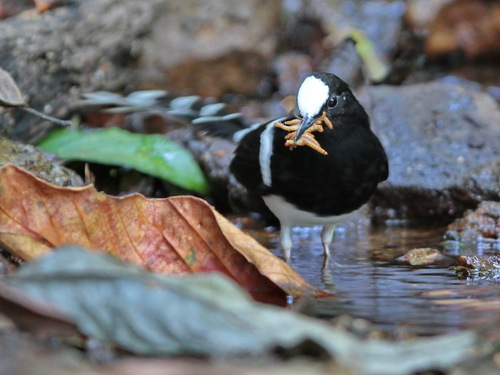 white-crowned forktail
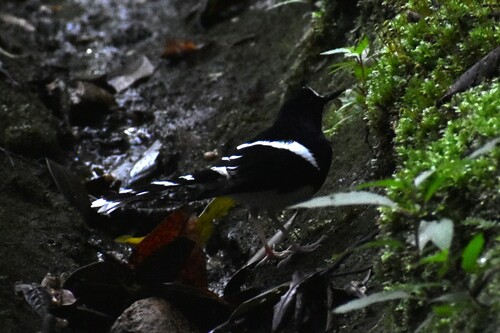 bornean forktail
Em resumo
A marca de campo mais confiável entre o white-crowned forktail e o bornean forktail é a extensão do branco na cabeça: o white-crowned forktail apresenta uma proeminente mancha branca na coroa, enquanto o bornean forktail tem uma testa branca reduzida que não se estende sobre a coroa. O padrão da cauda também é diagnóstico—o white-crowned forktail tem cinco manchas brancas na cauda, o bornean forktail tem quatro. Ambos são impressionantes aves preto-e-branco ribeirinhas com caudas longas e profundamente bifurcadas, mas o white-crowned forktail é maior e ocorre em florestas de planície a montanha em uma ampla faixa asiática, enquanto o bornean forktail é endêmico dos riachos montanhosos de Bornéu. As plumagens juvenis não são descritas em detalhes para o bornean forktail, mas os juvenis do white-crowned forktail não têm a coroa branca e são mais marrons no geral, o que pode causar confusão.
Dicas de identificação
- Branco na Cabeça (Adultos): O white-crowned forktail tem uma coroa e uma testa brancas ousadas, enquanto o branco do bornean forktail é restrito à testa e não se estende sobre a coroa. Esta é a marca mais consistente em adultos.
- Contagem de Manchas na Cauda: Conte as manchas brancas na cauda—o white-crowned forktail tem cinco, o bornean forktail tem quatro. Isso é melhor visto quando a cauda está aberta ou em voo.
- Comprimento e Estrutura da Cauda: Ambos têm caudas longas e profundamente bifurcadas, mas a cauda do bornean forktail é proporcionalmente mais longa em relação ao seu corpo menor. O white-crowned forktail é overall maior e mais robusto.
- Armadilha Juvenil: O juvenil do white-crowned forktail não tem a coroa branca e é mais marrom acima e nas flancos, potencialmente se assemelhando ao bornean forktail se apenas o padrão da cabeça for verificado. No entanto, a contagem de manchas na cauda e o tamanho geral ainda ajudam a separá-los.
- Cor do Manto: Ambos têm um manto preto sólido, então este não é um ponto de separação entre esses dois (mas útil contra outros forktails).
- Padrão das Asas: O white-crowned forktail tem uma forte faixa branca através das coberturas maiores; o bornean forktail não é descrito em detalhes, mas provavelmente é semelhante—não confie apenas nisso.
- Bico e Pés: Ambos têm bicos pretos e pés rosados; estes não são úteis para separação.
- Voz: Os chamados diferem sutilmente, mas a menos que você esteja familiarizado com ambos, não confie na voz para separação.
- Habitat e Faixa: Se você estiver em Bornéu em floresta montanhosa acima das planícies, o bornean forktail é esperado. Em floresta de planície ou fora de Bornéu, é quase certamente o white-crowned forktail.
- Variação de Subespécies: Algumas subespécies do white-crowned forktail (por exemplo, frontalis) têm uma mancha branca na coroa menor, que pode se aproximar da aparência do bornean forktail—use a contagem de manchas na cauda e o tamanho para confirmação.
- Contexto: O white-crowned forktail pode ser encontrado em uma variedade mais ampla de habitats úmidos, incluindo buracos de animais e valas, enquanto o bornean forktail está ligado a riachos montanhosos primários e intocados.
- Visões em Voo: Em voo, concentre-se na contagem de manchas na cauda e na extensão do branco na cabeça; estas são visíveis mesmo à distância.
- Visões Empoleiradas: Procure pela coroa branca (white-crowned forktail) versus apenas uma testa branca (bornean forktail) e o volume geral.
- Sazonalidade: O white-crowned forktail pode mudar de elevação sazonalmente e é mais provável de ser encontrado no inverno em algumas partes de sua faixa; o bornean forktail é residente em Bornéu montanhoso.
- Armadilha Comum: O juvenil do white-crowned forktail pode ser mal identificado como bornean forktail devido à falta de coroa branca—use o tamanho, habitat e especialmente a contagem de manchas na cauda para evitar esse erro.
Tamanho
O white-crowned forktail é o maior forktail, medindo 25–28 cm de comprimento e averaging 34 g de massa ([wikipedia], [wikidata]). O bornean forktail é descrito como menor, mas medidas precisas não são fornecidas; no entanto, é notado que tem uma cauda mais longa em relação ao tamanho do corpo. Em comparação direta, o white-crowned forktail parecerá mais robusto e mais longo no geral, especialmente quando empoleirado ou em voo.
Plumagem
- Juvenis: Os juvenis do white-crowned forktail são preto-marrons acima, com flancos marrons e barrigas manchadas, e não têm a mancha branca na coroa. A plumagem juvenil do bornean forktail não é descrita, mas a ausência da coroa branca em imaturos pode causar confusão.
- Adultos: Os adultos do white-crowned forktail têm uma coroa e uma mancha na testa brancas ousadas, contrastando fortemente com um rosto e garganta pretos, e um manto completamente preto. A cauda é longa, profundamente bifurcada, com cinco manchas brancas (criada por pontas brancas nas penas da cauda). As asas são principalmente pretas com uma forte faixa branca através das coberturas maiores. Os adultos do bornean forktail têm uma testa branca reduzida (não se estendendo até a coroa), e apenas quatro manchas brancas na cauda. Ambas as espécies têm rumps e barrigas brancas, mas o padrão da cabeça e a contagem de manchas na cauda são os melhores pontos de separação.
Comportamento
Ambas as espécies frequentam riachos e rios de rápido fluxo, frequentemente vistas balançando suas caudas e forrageando ao longo da borda da água. Não há uma diferença comportamental forte observada nas fontes, mas o white-crowned forktail pode ser encontrado em uma faixa mais ampla de elevações e às vezes em vegetação densa de planície, enquanto o bornean forktail está restrito a riachos de floresta montanhosa.
Habitat
O white-crowned forktail ocupa uma ampla gama de florestas tropicais e subtropicais úmidas de planície e montanha, tipicamente ao longo de rios, cachoeiras e riachos, mas também pode ser encontrado em água lamacenta ou de movimento lento no inverno. Sua faixa abrange grande parte do Sul e Sudeste Asiático. O bornean forktail é endêmico de Bornéu e estritamente ligado a riachos de florestas primárias montanhosas, substituindo o white-crowned forktail em elevações mais altas na ilha. Se visto em floresta de planície ou fora de Bornéu, é quase certamente não é o bornean forktail.
Voz
O white-crowned forktail emite apitos agudos e ressonantes ('tseee, tseee' ou 'zweeet'), com chamados de alarme mais ásperos ('scree chit chit') e uma canção assobiada complexa em exibição. O bornean forktail tem chamados diferentes, mas os detalhes não são fornecidos nas fontes. Diferenças sutis no chamado podem ser aparentes para observadores experientes, mas não são a separação de campo mais confiável.
white-crowned forktail · bornean forktail · Minhas aves difíceis