

maria-te-viu vs suiriri
Tyrannulus elatus versus Tyrannus melancholicus
Jogue um quiz com maria-te-viu e suiriri
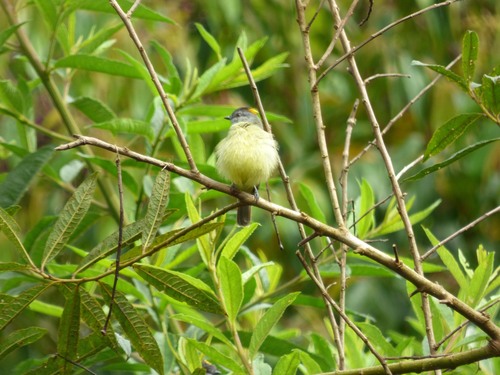 maria-te-viu
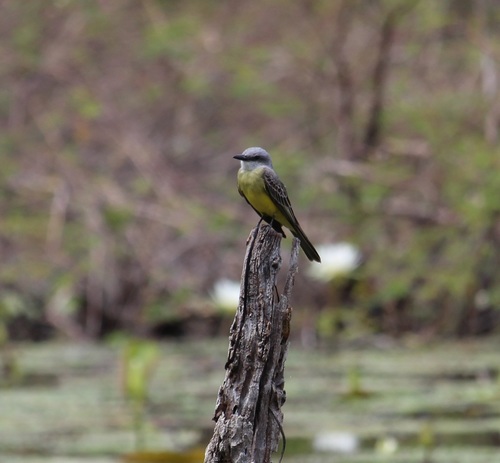 suiriri
Em resumo
A marca de campo mais confiável para separar a maria-te-viu do suiriri é o tamanho e a estrutura: a maria-te-viu é um pequeno e compacto pega-moscas com um bico curto e arredondado e uma distinta faixa amarela na coroa, enquanto o suiriri é muito maior, com um bico pesado e longo e uma cabeça cinza pálido com uma sutil faixa laranja na coroa. Em todas as idades, o suiriri apresenta uma cauda longa e profundamente bifurcada e uma postura robusta e ereta, contrastando com a cauda curta da maria-te-viu e sua aparência mais delicada. Ambos têm partes inferiores amarelas, mas a cabeça do suiriri é muito mais pálida e sua máscara é mais ousada. Suiriris imaturos podem mostrar bordas de asas em um tom pálido, mas mesmo os pássaros jovens são muito maiores e mais robustos do que qualquer maria-te-viu.
Dicas de identificação
- O tamanho é a primeira verificação: Se o pássaro estiver em qualquer lugar perto do tamanho de um pardal ou menor, não pode ser um suiriri. Suiriris são grandes e robustos pega-moscas; maria-te-vius são pequenos e delicados.
- Forma e tamanho do bico: O bico da maria-te-viu é curto, arredondado e preto; o do suiriri é longo, pesado e cinza. Mesmo à distância, o bico do suiriri parece grosso e proeminente.
- Forma da cauda: A cauda do suiriri é longa e profundamente bifurcada, especialmente óbvia quando aberta ou em voo. A cauda da maria-te-viu é curta, entalhada e nunca bifurcada.
- Faixa da coroa: Procure a faixa brilhante amarela ou laranja-amarelada na coroa da maria-te-viu (especialmente nos machos); a faixa laranja do suiriri raramente é visível e a cabeça parece cinza pálido no geral.
- Padrão da cabeça: A maria-te-viu tem um supercílios acinzentado e uma linha ocular fina e escura; o suiriri tem uma máscara escura ousada e nenhum supercílios forte.
- Cor das partes inferiores: Ambos têm barrigas amarelas, mas a da maria-te-viu é mais pálida e mais lavada com oliva no peito, enquanto a do suiriri é amarelo brilhante, claramente demarcada de uma garganta e peito cinza pálido.
- Barras das asas: A maria-te-viu sempre mostra duas barras nítidas brancas a amareladas nas asas; as barras do suiriri são menos distintas, mas os juvenis podem mostrar bordas pálidas nas coberturas.
- Marcas juvenis/imaturas: Apenas os jovens suiriris têm bordas pálidas nas coberturas das asas; as maria-te-vius não mostram isso em nenhuma idade.
- Comportamento de empoleiramento: Suiriris empoleiram-se altos e expostos, muitas vezes em fios ou treetops; maria-te-vius são mais propensas a estar no meio da copa ou entre a folhagem.
- Estilo de voo: Suiriris fazem longas e acrobáticas investidas e podem pairar; maria-te-vius fazem voos curtos e diretos.
- Contexto do habitat: Em habitats muito abertos, urbanos ou à beira da estrada, é mais provável encontrar o suiriri; a maria-te-viu prefere bordas de florestas ou vegetação mais densa.
- Vocalização: Se você ouvir um trinado agudo 'tree-e-e-e-e-e', é um suiriri; a voz da maria-te-viu não é descrita aqui.
- Diferenças sexuais: As fêmeas de maria-te-viu são ligeiramente menores e mais pálidas do que os machos, mas ainda assim muito menores do que qualquer suiriri.
- Íris e pernas: Ambos têm íris escuras e pernas cinzas a pretas, não sendo um separador útil.
- Sobreposição de distribuição: Ambos podem ocorrer juntos na América Central e no norte da América do Sul, mas o suiriri é muito mais amplamente distribuído em habitats abertos e perturbados.
Tamanho
A maria-te-viu é dramaticamente menor, pesando cerca de 7 g e medindo apenas 10–11 cm de comprimento, em comparação com os 37 g e 22 cm de comprimento do suiriri. No campo, o suiriri parece quase três vezes a massa da maria-te-viu e é muito mais longo, com uma cabeça e bico visivelmente maiores. Essa diferença de tamanho é óbvia mesmo à distância ou em bandos mistos.
Plumagem
- Padrão de asas juvenil/imaturo: Jovens suiriris mostram bordas pálidas nas coberturas das asas, o que pode criar uma aparência ligeiramente 'escamosa' na asa superior. A maria-te-viu, em contraste, nunca mostra isso; suas barras de asas são sempre brancas a amareladas e nítidas em todas as idades.
- Faixa da coroa: A maria-te-viu tem uma faixa brilhante amarela a laranja-amarelada na coroa, situada em uma coroa mais escura (cinza-ardósia a negra), especialmente nos machos. A faixa do suiriri é laranja, mas geralmente oculta, e a cabeça é cinza pálido no geral.
- Supercílios e máscara: A maria-te-viu tem um supercílios acinzentado e uma linha ocular fina e escura, enquanto o suiriri tem uma máscara ocular escura e ousada e nenhum supercílios forte.
- Partes inferiores: Ambos são amarelos por baixo, mas o amarelo da maria-te-viu é mais pálido e mais lavado com oliva no peito, enquanto o do suiriri é mais brilhante e mais nitidamente demarcado da garganta e peito cinza pálido.
- Cauda: A cauda do suiriri é longa, marrom e profundamente bifurcada; a da maria-te-viu é curta, oliva escura e entalhada, mas não bifurcada.
- Bico: A maria-te-viu tem um bico curto e arredondado, preto; o do suiriri é pesado, longo e cinza.
Comportamento
O suiriri é conspícuo, frequentemente empoleirando-se alto e fazendo longos voos acrobáticos para capturar insetos, às vezes pairando ou perseguindo presas de forma agressiva. É territorial e irá perseguir pássaros muito maiores. A maria-te-viu é mais reservada, forrageando silenciosamente na copa média a alta, fazendo investidas curtas e raramente empoleirando-se de forma tão proeminente. Maria-te-vius são menos propensas a serem vistas defendendo território ou se envolvendo em perseguições aéreas.
Habitat
Ambas as espécies podem ocorrer em áreas semi-abertas com árvores, mas o suiriri é mais provável em campos abertos, parques urbanos, beiras de estrada e jardins, muitas vezes em empoleiramentos muito visíveis. A maria-te-viu prefere bordas de florestas, áreas florestais e habitats mais densamente vegetados, geralmente não tão expostos quanto os suiriris. Na América Central e no norte da América do Sul, o suiriri é muito mais amplamente distribuído e comum em habitats perturbados ou abertos.
Voz
O suiriri tem um trinado distintivo e agudo, frequentemente descrito como 'tree-e-e-e-e-e', e uma canção mais complexa ao amanhecer. A voz da maria-te-viu não é descrita nas notas, então a vocalização é apenas um separador confiável se o chamado do suiriri for ouvido.