

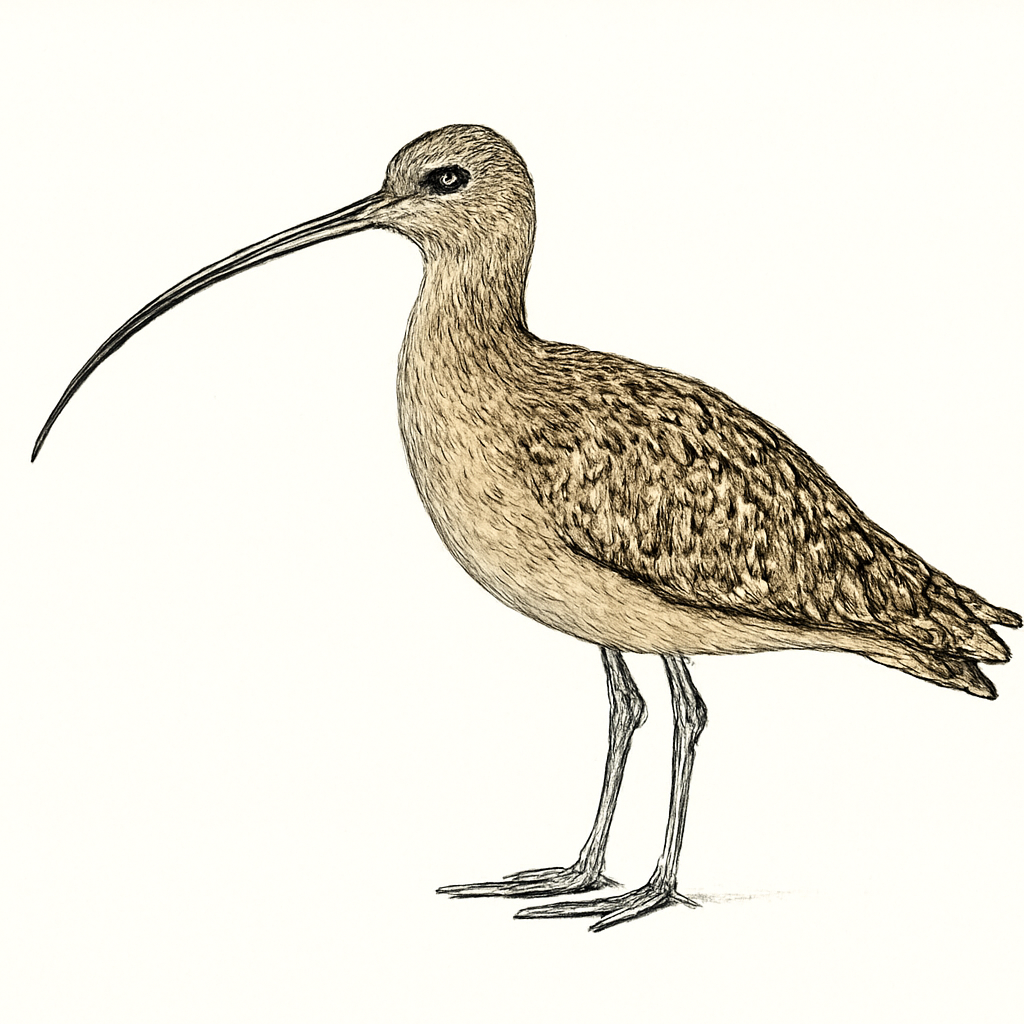
Long-billed Curlew
Numenius americanus
Sandpipers and Allies (Scolopacidae) · Charadriiformes · Shorebirds
Play a quiz with Long-billed Curlew and similar species
View all photos, video and sound
Review needed
Motmot is a community-driven project, and many photos still need a human check. If you know this bird, you can help by reviewing its images.

O-o, we ran out of AI credits. I develop Motmot in my spare time, and there is no funding behind it right now. If you would like to help it grow, write to me at info@motmot.club.
How to identify Long-billed Curlew
Writing identification notes…
This looks up identification notes in open sources, then asks the model to write them. It can take a minute.
Log in to generate identification notes for this bird.
Often mixed up with
In quizzes, players most often confuse Long-billed Curlew with these birds—either this species was picked by mistake, or the other way around.
| Species | Mix-ups |
|---|---|
| Far Eastern Curlew Numenius madagascariensis | 27 |
| Eurasian Curlew Numenius arquata | 9 |
| Whimbrel Numenius phaeopus | 8 |
| Marbled Godwit Limosa fedoa | 4 |
| Eskimo Curlew Numenius borealis | 2 |
Family
Scolopacidae is a large family of shorebirds, or waders, which mainly includes many species known as sandpipers, but also others such as woodcocks, curlews, and snipes. Most of these species eat small invertebrates picked out of the mud or soil. There is no evidence that different lengths of bills enable multiple species to feed in the same habitat, particularly on the coast, without direct competition for food.
Order
Charadriiformes (, from Charadrius, the type genus of family Charadriidae) is a diverse order of small to medium-large birds. It includes about 390 species and has members in all parts of the world. Most charadriiform birds live near water and eat invertebrates or other small animals; however, some are pelagic (seabirds), others frequent deserts, and a few are found in dense forest.