

Abdim's Stork vs African Woolly-necked Stork
Ciconia abdimii versus Ciconia microscelis
Play a quiz with Abdim's Stork and African Woolly-necked Stork
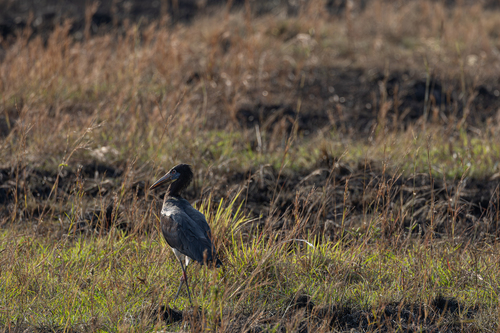 Abdim's Stork
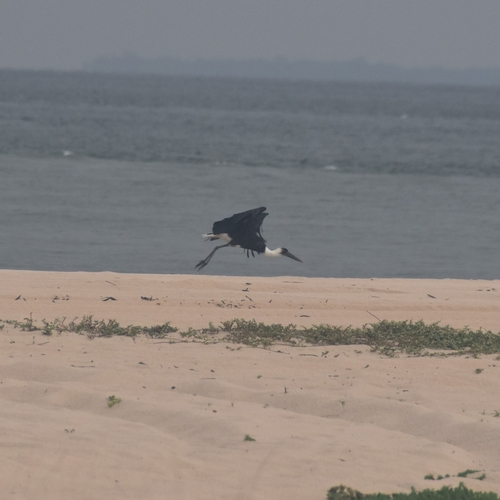 African Woolly-necked Stork
In short
The most reliable field mark between Abdim's Stork and African Woolly-necked Stork is the contrasting neck: Abdim's has a dark neck with a white belly, while the Woolly-necked shows a distinctive fluffy white neck and black body. Juvenile Woolly-necked Storks have a feathered, sometimes streaked, forehead and a white mark on the forehead, while Abdim's juveniles closely resemble adults but lack these features. Abdim's is notably smaller and slimmer, with grey legs and red knees/feet, while Woolly-necked is bulkier with long red legs and a heavier, mostly dark bill. In flight, the Woolly-necked reveals a glowing orange-red band of bare skin under the wing, absent in Abdim's. Both can occur in open country, but Woolly-necked is more often seen near wetlands or in agricultural mosaics.
Identification tips
- Neck color and texture: Adult Woolly-necked Stork always shows a fluffy, downy white neck, contrasting with a black 'skull cap' and body. Abdim's Stork has a black neck and head, lacking the woolly white neck.
- Juvenile forehead: Juvenile Woolly-necked Storks have a feathered, sometimes streaked, forehead and a prominent white mark in the center of the forehead when newly fledged. Abdim's juveniles lack these marks and have a plain dark head.
- Underwing in flight: When Woolly-necked Stork opens its wings, a narrow band of neon orange-red bare skin is visible along the underside of the forearm—an eye-catching mark not present in Abdim's at any age.
- Body size and shape: Abdim's is smaller and slimmer, with a more delicate build. Woolly-necked is larger, bulkier, and has a heavier bill and longer legs.
- Leg color: Abdim's Stork has grey legs with red knees and feet. Woolly-necked Stork has long red legs throughout.
- Bill color: Abdim's has a grey bill; Woolly-necked's bill is blackish or dark red with a black base, appearing heavier and longer.
- Facial skin (breeding season): Abdim's adults in breeding condition show red facial skin in front of the eye and blue near the bill. Woolly-necked lacks this facial skin coloration.
- Belly and undertail: Both species have white on the lower belly and undertail, but in Woolly-necked the undertail coverts are long and black, usually covering the white tail. In Abdim's, the white underparts are more extensive and sharply demarcated from the black upperparts.
- Tail shape: Woolly-necked's tail is deeply forked and white, but this is often hidden by undertail coverts and not a reliable field mark unless seen well.
- Flight style: Woolly-necked may perform acrobatic flight displays (rolling, tumbling, steep dives) and can make a loud noise with its wings. Abdim's is more straightforward in flight.
- Group size: Abdim's is often seen in flocks, especially when foraging; Woolly-necked is more solitary or in small groups.
- Habitat context: Abdim's prefers open, dry country and is often seen far from water. Woolly-necked is more likely in or near wetlands, agricultural mosaics, or wooded areas, but can also be found away from water.
- Iris color: Woolly-necked has a deep crimson or wine-red iris, which may be visible at close range; this is not noted for Abdim's.
- Sex differences: Both species are sexually monomorphic in plumage, but male Woolly-necked Storks may be slightly larger.
- Vocalizations: Woolly-necked may give whistles or hissing sounds, especially at the nest or when threatened. Abdim's is not noted for distinctive vocalizations.
Size
Abdim's Stork is the smallest stork species, averaging about 73 cm in length and just over 1 kg in weight. African Woolly-necked Stork is larger, standing 75–92 cm tall (so always at least as tall, usually taller) and is heavier-bodied. In the field, Abdim's appears more slender and delicate, while Woolly-necked looks bulkier and more robust, especially around the neck and body. The bill of Woolly-necked is also heavier and longer relative to head size.
Plumage
- Juvenile/immature birds: Juvenile Woolly-necked Storks have a feathered forehead, sometimes streaked black-and-white, and a prominent white mark in the center of the forehead when newly fledged. Their neck feathers are longer and fluffier, and the overall iridescence is much less than in adults. Juvenile Abdim's Stork lacks these forehead marks and closely resembles adults, with dark upperparts and white underparts but without the facial skin coloration of breeding adults.
- Adults: Abdim's Stork has a black head, neck, and upperparts, with white underparts. The legs are grey with red knees and feet, and the bill is grey. In breeding season, facial skin in front of the eye turns red, and blue appears near the bill. Woolly-necked Stork adults are glossy black overall with a distinctive fluffy white neck and lower belly/undertail coverts. The black 'skull cap' is sharply bordered. The bill is blackish or dark red with a black base. In flight or display, Woolly-necked shows a striking narrow band of neon orange-red bare skin along the underside of the forearm, which is absent in Abdim's. The tail of Woolly-necked is deeply forked and white, but usually hidden by long black undertail coverts.
Behaviour
Both species are broad-winged soaring birds, often gliding with necks outstretched. Woolly-necked Stork is noted for acrobatic flight displays, including rolling, tumbling, and steep dives, sometimes making a loud noise with wind through its quills. Abdim's Stork is more likely to be seen foraging in groups in open country, often following grass fires or herds to catch insects. Woolly-necked tends to be more solitary or in small loose colonies, and is less tied to wetlands than most storks, sometimes nesting in trees away from water.
Habitat
Abdim's Stork prefers open habitats such as savannas and grasslands across sub-Saharan Africa and Yemen, often far from water. It is commonly found in areas with abundant insects, especially following rains or fires. African Woolly-necked Stork uses a broader range of habitats, including marshes in forests, agricultural areas, and freshwater wetlands, but is not strictly tied to wetlands and can nest in a variety of trees, even in dry agricultural landscapes. Both species can overlap in open country, but Woolly-necked is more likely in wetter or more wooded settings.
Voice
Neither species is highly vocal, but Woolly-necked Stork is known to give bisyllabic whistles during displays and a fierce hissing sound when threatened. There is no mention of distinctive calls for Abdim's Stork in the provided notes.
Abdim's Stork · African Woolly-necked Stork · My Tricky Birds