

Afep Pigeon vs Western Bronze-naped Pigeon
Columba unicincta versus Columba iriditorques
Play a quiz with Afep Pigeon and Western Bronze-naped Pigeon
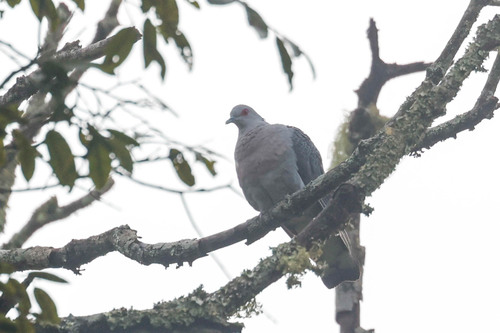 Afep Pigeon
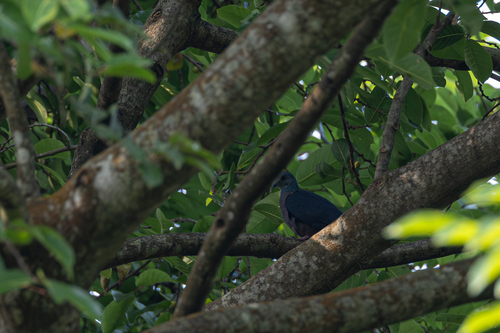 Western Bronze-naped Pigeon
In short
The most reliable field mark to separate Afep Pigeon from Western Bronze-naped Pigeon is size: Afep is much larger and bulkier, with a pale grey neck and pinkish-grey body, while Western Bronze-naped is distinctly smaller and shows a dark bluish-grey or cinnamon crown with a broad pale tail band visible on landing. Both species have pale tail bands, but the Afep's is a broad white bar with a blackish tip, while the Bronze-naped's is a pale terminal band. Sex and age differences are more pronounced in Western Bronze-naped, especially the female's reddish crown and chestnut underparts. In flight or perched, overall bulk, plumage tone, and tail pattern are key. Vocalizations differ, but both are loud and distinctive if heard.
Identification tips
- Size is the quickest check: Afep Pigeon is much larger and heavier than Western Bronze-naped. If the bird looks big and bulky for a pigeon, suspect Afep.
- Tail band pattern: Afep Pigeon shows a broad white bar with a blackish tip on the tail; Western Bronze-naped has a pale, broad terminal tail band, especially visible when landing. Watch for the blackish tip in Afep, which is lacking in Western Bronze-naped.
- Plumage tone: Afep is overall pale grey to pinkish-grey with a pale hind neck and white underparts; Western Bronze-naped is darker, with males showing a bluish-grey head and vinous underparts, and females with a cinnamon crown and chestnut underparts.
- Sexual dimorphism: Afep sexes are similar; Western Bronze-naped females are distinctly different from males, with reddish-brown crown and chestnut underparts. If you see this, it's not Afep.
- Eye and orbital ring: Afep has red eyes and orbital rings, a subtle but useful mark at close range. No such feature is noted for Western Bronze-naped.
- Head and neck: Afep has a pale grey hind neck, while Western Bronze-naped males have a dark bluish-grey head; females have a cinnamon crown.
- Underparts: Afep's underparts are white (throat and belly), contrasting with the darker vinous or chestnut underparts of Western Bronze-naped.
- Flight jizz: Afep's flight is heavier and slower due to its size; Western Bronze-naped is more agile and quick.
- Landing view: The pale tail band of Western Bronze-naped is most obvious as it lands; in Afep, look for the white bar and black tip.
- Voice: If you hear a loud "doo doo doo" or "whu whu whu whu-WHU", it's Afep. Western Bronze-naped's call is not described here.
- Habitat overlap: Both can occur in African forests, so do not rely on location alone unless you are outside the range of one species.
- Bulk and posture: Perched Afep will look more robust and thick-necked than the slimmer Western Bronze-naped.
- Sex/age confusion: If you see a reddish-brown crown and chestnut underparts, it's a female Western Bronze-naped, not an immature Afep.
- No distinctive juvenile wing pattern: Neither species is described with unique juvenile upperwing marks, so focus on tail and body color.
- When in doubt, size and tail pattern are safest: If you cannot judge color well, use overall size and the presence or absence of the blackish tail tip (Afep) versus a clean pale terminal band (Western Bronze-naped).
Size
Afep Pigeon is substantially larger and heavier, measuring 35–36 cm in length and weighing 356–490 g (no AVONET value, but Wikipedia and Wikidata agree on this range). Western Bronze-naped Pigeon is much smaller, about 25 cm long and weighing only 122–130 g. Even at a distance, Afep appears bulkier and more robust, while Western Bronze-naped is medium-sized and more delicate. This size difference is the most immediate and reliable separation, especially when both species could occur together.
Plumage
No age-specific upperwing or flight pattern is described for either species beyond the tail band, but this is still useful: Afep Pigeon of all ages shows a broad white tail bar with a blackish tip, while Western Bronze-naped Pigeon has a pale, broad terminal tail band, most noticeable when landing. Adult Afep Pigeon is overall pinkish-grey with a pale grey hind neck and white throat and belly, contrasting with dark grey wings; the eye and orbital ring are red. Western Bronze-naped Pigeon adult males have a dark bluish-grey head and dark vinous belly and breast, while females have a cinnamon-reddish brown crown and greyish chestnut underparts. The sexes are similar in Afep, but Western Bronze-naped shows clear sexual dimorphism. Both can show pale tail bands, but the rest of the plumage is much paler and greyer in Afep, darker and more colorful in Western Bronze-naped.
Behaviour
Both species are pigeons of African forests and may be seen perched or flying, but the Afep's larger size gives it a slower, heavier flight and a more ponderous jizz when perched. Western Bronze-naped Pigeon, being smaller, is likely to appear more agile and less bulky in flight and on branches. The pale tail band of Western Bronze-naped is especially noticeable as the bird lands.
Habitat
Afep Pigeon is native to the African tropical rainforest from Sierra Leone east to Uganda, favoring dense forest. Western Bronze-naped Pigeon is found in most countries of Africa, also in forested habitats. There is considerable overlap in habitat, so context alone is not diagnostic, but Afep may be more strictly tied to deep rainforest, while Western Bronze-naped can be found in a wider range of wooded areas.
Voice
Afep Pigeon has a loud, repetitive call described as "doo doo doo" or "whu whu whu whu-WHU". No vocal description is given for Western Bronze-naped Pigeon in these notes, but both are said to be loud. If you hear the Afep's distinctive call, it is diagnostic.