
Motmot

African Silverbill vs Indian Silverbill

Euodice cantans versus Euodice malabarica

Play a quiz with African Silverbill and Indian Silverbill
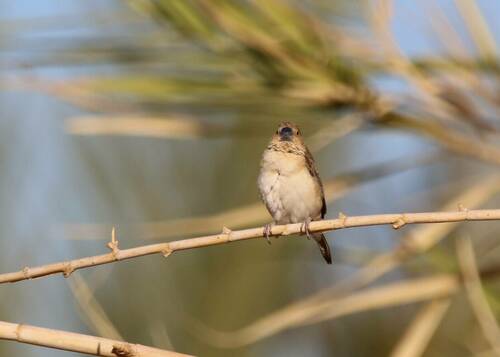
African Silverbill (Euodice cantans) African Silverbill
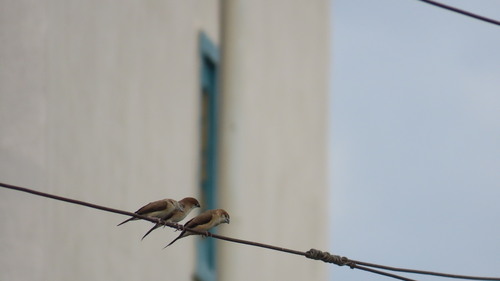
Indian Silverbill (Euodice malabarica) Indian Silverbill

Media

Loading…

In short

African Silverbill and Indian Silverbill are extremely similar estrildid finches, but can be separated with careful attention to underpart color and upperpart pattern, especially in immatures. The most reliable field mark is the underpart tone: African Silverbill adults and immatures show whitish underparts, while Indian Silverbill adults have white but with buffy flanks, and immatures are distinctly buff below. Upperpart vermiculation is present in adult African but absent in Indian. Tail shape and length, as well as subtle differences in bill color and rump contrast, can also help. Both species are gregarious and often found in dry, open habitats, but their ranges rarely overlap except in introduced populations.

Identification tips

  1. Underpart color in immatures: Immature African Silverbills have pale whitish underparts, while immature Indian Silverbills are distinctly buff below. This is the most reliable mark for young birds.
  2. Adult upperpart vermiculation: Adult African Silverbills show fine vermiculation (delicate barring) on the upperparts, absent in Indian Silverbill. This can be subtle, so look for a more uniform brown in Indian.
  3. Flank color in adults: Indian Silverbill adults have buffy flanks, while African Silverbill adults are cleaner white below. This is best seen in good light and at close range.
  4. Tail shape and length: Indian Silverbill has a slightly longer, more pointed tail, with central feathers longer than the outer ones, giving a tapered look. African Silverbill's tail is long but less obviously pointed. Immature Indian Silverbills have a shorter tail than adults.
  5. Bill color: African Silverbill's bill is described as silver-blue, while Indian's is silver-grey. This difference is subtle and may be affected by light or wear.
  6. Rump contrast: Both have a white rump, but the contrast with the black tail may appear sharper in Indian Silverbill due to the tail shape and darker upperparts.
  7. Wing color: Both have dark wings, but the Indian Silverbill's wings are described as darker and more contrasting with the white rump.
  8. Sex differences: Both species are sexually monomorphic in plumage, so sex is not useful for separation.
  9. Vocalizations: Calls are similar and not reliable for separation unless the full song is heard and compared in detail.
  10. Habitat and range: In their native ranges, habitat is a strong clue—African Silverbill in sub-Saharan Africa, Indian Silverbill in South Asia and the Middle East. In introduced populations, do not rely on habitat.
  11. Behavior: Both species feed in flocks, cling to grass stems, and show similar courtship displays. Behavior is not a separator.
  12. Size: Indian Silverbill is marginally larger (11–11.5 cm vs 10 cm), but this is not useful in the field.
  13. Pitfalls: Immature Indian Silverbills with buff underparts are often mistaken for African Silverbill, but the underpart color is diagnostic. Beware of lighting conditions that can make buff appear paler.
  14. Flight views: No distinctive upperwing or flight pattern differences are described, so rely on underpart and tail shape if seen in flight.
  15. Subspecies variation: African Silverbill subspecies E. c. orientalis is darker on the face and upperparts, which could be confused for Indian Silverbill, but underpart color and vermiculation still help separate them.

Size

Both species are very close in size and structure, with Indian Silverbill slightly heavier on average (12.0 g for Indian Silverbill per [wikidata]; no mass given for African Silverbill, but length is about 10 cm for African and 11–11.5 cm for Indian [wikipedia]). In the field, this difference is negligible and not a reliable separator.

Plumage

Juvenile and immature birds are best separated by underpart color: immature African Silverbills have pale whitish underparts, while immature Indian Silverbills show buff underparts and a shorter, pointed tail. Adult African Silverbills show finely vermiculated (delicately barred) light-brown upperparts, which are lacking in Indian Silverbill. Indian Silverbill adults have buff-brown upperparts, white underparts, and buffy flanks, with a dark wing and black, pointed tail. Both species have a white rump and black tail, but the Indian's tail appears more pointed due to the feather shape. The African's bill is described as silver-blue, while the Indian's is silver-grey; this is subtle and not always reliable. Sexes are similar in both species.

Behaviour

Both species are highly social, feeding in flocks and often seen clinging to grass stems for seeds. Their courtship and general behavior are very similar, with males displaying by holding grass stems and performing upright postures. No major behavioral differences are noted in the sources for field separation.

Habitat

African Silverbill is native to dry savanna south of the Sahara, while Indian Silverbill occupies drier regions of the Middle East and Indian subcontinent. Both species have been introduced to other regions and may overlap in some urban or disturbed habitats. In their native ranges, habitat alone is usually sufficient for separation, but not in areas where both have been introduced.

Voice

Both species have similar call notes (tseep or tsiptsip), but their songs differ in structure, though this is subtle and not easily used in the field unless the full song is heard and compared. African Silverbill males give a single 'tseep', females a double 'tsiptsip', and in flight, a repeated 'tseep tseep tseep'. Song differences are more apparent in detailed study than casual field observation.

Submit a better description

Use the same sections as the comparison. Your text is published immediately.

African Silverbill and Indian Silverbill are extremely similar estrildid finches, but can be separated with careful attention to underpart color and upperpart pattern, especially in immatures. The most reliable field mark is the underpart tone: African Silverbill adults and immatures show whitish underparts, while Indian Silverbill adults have white but with buffy flanks, and immatures are distinctly buff below. Upperpart vermiculation is present in adult African but absent in Indian. Tail shape and length, as well as subtle differences in bill color and rump contrast, can also help. Both species are gregarious and often found in dry, open habitats, but their ranges rarely overlap except in introduced populations.

  1. Underpart color in immatures: Immature African Silverbills have pale whitish underparts, while immature Indian Silverbills are distinctly buff below. This is the most reliable mark for young birds.
  2. Adult upperpart vermiculation: Adult African Silverbills show fine vermiculation (delicate barring) on the upperparts, absent in Indian Silverbill. This can be subtle, so look for a more uniform brown in Indian.
  3. Flank color in adults: Indian Silverbill adults have buffy flanks, while African Silverbill adults are cleaner white below. This is best seen in good light and at close range.
  4. Tail shape and length: Indian Silverbill has a slightly longer, more pointed tail, with central feathers longer than the outer ones, giving a tapered look. African Silverbill's tail is long but less obviously pointed. Immature Indian Silverbills have a shorter tail than adults.
  5. Bill color: African Silverbill's bill is described as silver-blue, while Indian's is silver-grey. This difference is subtle and may be affected by light or wear.
  6. Rump contrast: Both have a white rump, but the contrast with the black tail may appear sharper in Indian Silverbill due to the tail shape and darker upperparts.
  7. Wing color: Both have dark wings, but the Indian Silverbill's wings are described as darker and more contrasting with the white rump.
  8. Sex differences: Both species are sexually monomorphic in plumage, so sex is not useful for separation.
  9. Vocalizations: Calls are similar and not reliable for separation unless the full song is heard and compared in detail.
  10. Habitat and range: In their native ranges, habitat is a strong clue—African Silverbill in sub-Saharan Africa, Indian Silverbill in South Asia and the Middle East. In introduced populations, do not rely on habitat.
  11. Behavior: Both species feed in flocks, cling to grass stems, and show similar courtship displays. Behavior is not a separator.
  12. Size: Indian Silverbill is marginally larger (11–11.5 cm vs 10 cm), but this is not useful in the field.
  13. Pitfalls: Immature Indian Silverbills with buff underparts are often mistaken for African Silverbill, but the underpart color is diagnostic. Beware of lighting conditions that can make buff appear paler.
  14. Flight views: No distinctive upperwing or flight pattern differences are described, so rely on underpart and tail shape if seen in flight.
  15. Subspecies variation: African Silverbill subspecies E. c. orientalis is darker on the face and upperparts, which could be confused for Indian Silverbill, but underpart color and vermiculation still help separate them.

Both species are very close in size and structure, with Indian Silverbill slightly heavier on average (12.0 g for Indian Silverbill per [wikidata]; no mass given for African Silverbill, but length is about 10 cm for African and 11–11.5 cm for Indian [wikipedia]). In the field, this difference is negligible and not a reliable separator.

Juvenile and immature birds are best separated by underpart color: immature African Silverbills have pale whitish underparts, while immature Indian Silverbills show buff underparts and a shorter, pointed tail. Adult African Silverbills show finely vermiculated (delicately barred) light-brown upperparts, which are lacking in Indian Silverbill. Indian Silverbill adults have buff-brown upperparts, white underparts, and buffy flanks, with a dark wing and black, pointed tail. Both species have a white rump and black tail, but the Indian's tail appears more pointed due to the feather shape. The African's bill is described as silver-blue, while the Indian's is silver-grey; this is subtle and not always reliable. Sexes are similar in both species.

Both species are highly social, feeding in flocks and often seen clinging to grass stems for seeds. Their courtship and general behavior are very similar, with males displaying by holding grass stems and performing upright postures. No major behavioral differences are noted in the sources for field separation.

African Silverbill is native to dry savanna south of the Sahara, while Indian Silverbill occupies drier regions of the Middle East and Indian subcontinent. Both species have been introduced to other regions and may overlap in some urban or disturbed habitats. In their native ranges, habitat alone is usually sufficient for separation, but not in areas where both have been introduced.

Both species have similar call notes (tseep or tsiptsip), but their songs differ in structure, though this is subtle and not easily used in the field unless the full song is heard and compared. African Silverbill males give a single 'tseep', females a double 'tsiptsip', and in flight, a repeated 'tseep tseep tseep'. Song differences are more apparent in detailed study than casual field observation.

Discard your changes?

You have unsaved edits. If you leave now, those changes will be lost.

African Silverbill · Indian Silverbill · My Tricky Birds