

Ashy Minivet vs Brown-rumped Minivet
Pericrocotus divaricatus versus Pericrocotus cantonensis
Play a quiz with Ashy Minivet and Brown-rumped Minivet
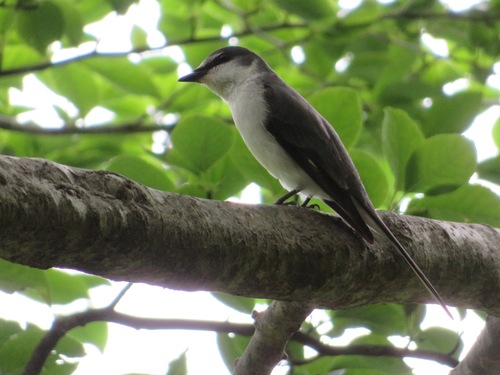 Ashy Minivet
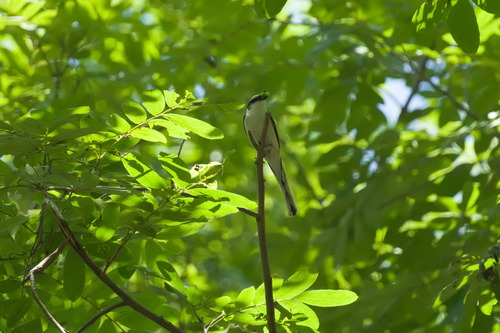 Brown-rumped Minivet
In short
The most reliable field mark to separate Ashy Minivet from Brown-rumped Minivet is the male Ashy Minivet’s striking white face and black nape, which is never matched by Brown-rumped. Females and immatures are trickier, as female Ashy Minivet can closely resemble female Brown-rumped Minivet, especially in subtle plumage. Ashy Minivet is overall colder-toned, with greys, whites, and blacks, while Brown-rumped Minivet tends to show warmer tones and a brownish rump. In flight or at a distance, focus on the face pattern and overall coldness of coloration. Both species are similar in size and structure, so plumage details are key for separation.
Identification tips
- Male Ashy Minivet is diagnostic: Look for a white face and black nape—no other minivet in the region, including Brown-rumped, shows this pattern. This is the single best field mark for males.
- Female Ashy vs. Brown-rumped Minivet: Female Ashy Minivet has a grey cap, a black line between bill and eye, and a narrow white supercilium. Brown-rumped females are warmer overall, with a brownish rump and less sharply defined facial markings. In poor light or at distance, this can be subtle.
- Overall coloration: Ashy Minivet is cold grey and white, lacking any yellow, orange, or red. Brown-rumped Minivet is slightly warmer, especially on the rump, but this can be hard to judge in the field.
- Rump color: If seen well from behind, Brown-rumped Minivet shows a brownish rump patch, especially in females and immatures. Ashy Minivet’s rump is concolorous with the back (grey), with no brown tinge.
- Wing and tail pattern: Both species show white in the outer tail feathers and a white wing panel, but Ashy Minivet may have a slightly more contrasting white band across the flight feathers. This is subtle and not always reliable.
- Face pattern in females/immatures: The black line between bill and eye and the narrow white band above it are good marks for female Ashy Minivet, but can be hard to see without good views.
- Juvenile/immature birds: No distinctive age-specific upperwing or flight pattern is described for either species, so rely on face and rump coloration for separation.
- Bill and structure: Both species have similar black bills and feet, with no useful difference in shape or size.
- Behavior: Both forage in the canopy and join mixed flocks; Ashy Minivet may be seen in larger migrant flocks, especially on passage.
- Habitat and range: Ashy Minivet is a long-distance migrant and may appear in large numbers during migration; Brown-rumped is more localized to China and Indochina. Out of range, consider the possibility of Ashy Minivet.
- Voice: Ashy Minivet has a high-pitched, metallic trill; no distinctive call is noted for Brown-rumped in the sources, so do not rely on voice for separation unless Ashy’s trill is heard.
- Pitfalls: Female and immature Ashy Minivets are the most likely to be confused with Brown-rumped Minivet. Always try to get a clear view of the face and rump, and beware of lighting that can affect apparent coloration.
- Seasonal context: If observing a large flock of minivets on migration, Ashy Minivet is more likely, especially outside the breeding range of Brown-rumped.
- Mixed flocks: Both species may join mixed-species minivet flocks, so check each individual carefully.
- When in doubt: If the face is white and nape black (male), it is Ashy Minivet. If the rump is distinctly brownish and face markings are weak, suspect Brown-rumped, especially in China or Indochina.
Size
Both species are very similar in size and structure, typical of minivets. Ashy Minivet has a recorded body mass of 24.0 g [wikidata]; no mass is available for Brown-rumped, but field experience and references suggest they are nearly identical in bulk and length. Bill and tail proportions are not noted as distinctive between the two.
Plumage
Adult male Ashy Minivet is unmistakable with its white face, black nape, and grey upperparts; Brown-rumped Minivet males never show this combination. Female Ashy Minivet is much more similar to female Brown-rumped Minivet, both showing greyish upperparts and pale underparts, but Ashy tends to be colder and cleaner in tone, with a distinctive black line between bill and eye and a narrow white supercilium. Brown-rumped females have a warmer, browner rump and less sharply defined facial markings. Juvenile and immature plumages are not described in detail for either species in the provided notes, but the cold vs. warm tone and face pattern remain the best clues. Both species show white in the outer tail feathers, and a white wing panel, but the extent and contrast may be slightly greater in Ashy Minivet. No distinctive age-specific upperwing pattern is described for either species, so focus on adult and female face and rump coloration.
Behaviour
Both species forage actively in the canopy, often joining mixed-species flocks. Ashy Minivet is noted for sometimes forming large migrant flocks, especially on passage. Foraging style, flight, and perching behavior are very similar and not reliably separable in the field.
Habitat
Ashy Minivet breeds in northeast Asia and migrates long distances, wintering in South and Southeast Asia, sometimes as far as Sri Lanka. It is found in forests and open areas with scattered trees. Brown-rumped Minivet breeds in China and winters in Indochina. Both species use similar wooded habitats, so habitat is not a strong separator except at the extremes of their ranges. Ashy Minivet is a rare migrant in South Asia, while Brown-rumped is more local to China and Indochina.
Voice
Ashy Minivet gives a high-pitched, metallic trill. No vocalization is described for Brown-rumped Minivet in the provided notes, so voice is not a reliable separator based on current information.