
Motmot

Black-winged Petrel vs Buller's Shearwater

Pterodroma nigripennis versus Ardenna bulleri

Play a quiz with Black-winged Petrel and Buller's Shearwater
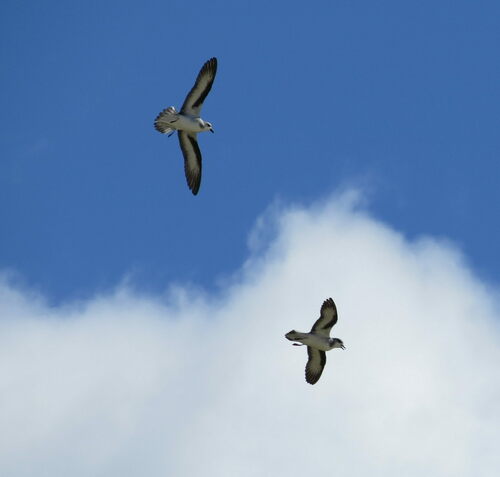
Black-winged Petrel (Pterodroma nigripennis) Black-winged Petrel
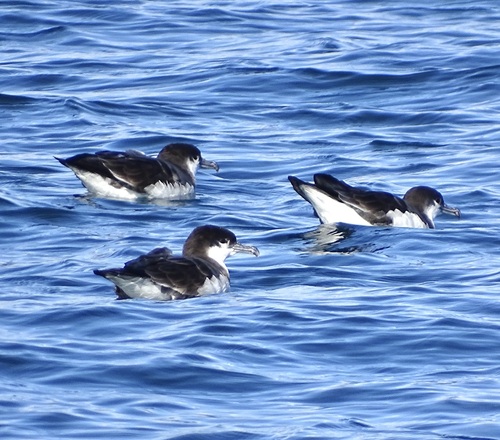
Buller's Shearwater (Ardenna bulleri) Buller's Shearwater

Media

Loading…

In short

The most reliable field mark to separate Black-winged Petrel from Buller's Shearwater is the upperwing pattern in flight: Buller's Shearwater of all ages shows a bold, broken black 'M' across the upperwings, while Black-winged Petrel has a more uniform dark outer wing with pale inner wing, lacking the 'M' shape. Buller's is also much larger and bulkier, with a wedge-shaped tail, compared to the petrel's smaller, slimmer build and square-cut tail. Both species have white underparts and pale faces, but Buller's Shearwater's size and distinctive upperwing pattern are unmistakable at sea. Structure, tail shape, and flight style also help in challenging views.

Identification tips

  1. Upperwing pattern in flight (all ages): Buller's Shearwater shows a bold, broken black 'M' across the upperwings, with a pale panel between dark primaries and a dark stripe from tertials to coverts. This 'M' is visible in all plumages and is unique among large shearwaters. Black-winged Petrel lacks this pattern, instead showing a more uniform dark outer wing and pale inner wing, without any 'M' or strong contrast.
  2. Size and structure: Buller's is much larger and heavier, with a broad wingspan and robust body. Black-winged Petrel is small, slender, and more delicate in build. If seen together, the size difference is dramatic.
  3. Tail shape: Buller's Shearwater has a wedge-shaped, blackish tail, while Black-winged Petrel has a square-cut tail with black and white barring. This can be seen in good views, especially when banking or landing.
  4. Head pattern: Both species have pale faces, but Buller's has grey extending down to the eye and very white cheeks, which can appear to shine in bright light. Black-winged Petrel has a pale grey cap and nape, white cheeks, and a dark grey collar—look for the collar to help separate it.
  5. Underparts: Both are white below, so this is not helpful for separation.
  6. Flight style: Buller's uses steady, powerful glides and shallow wingbeats, reflecting its size. Black-winged Petrel is more buoyant and agile, with rapid flicks and quick turns.
  7. Bill: Both have dark bills, but Buller's is proportionally longer and heavier, matching its larger head. This is subtle at distance.
  8. Plumage pitfalls: The 'M' pattern of Buller's may be mistaken for a gadfly petrel, but the size is much greater. Black-winged Petrel's dark outer wing can look like a shearwater at a glance, but lacks the 'M' and is much smaller.
  9. Juvenile separation: Juvenile Buller's Shearwater already shows the adult wing pattern, so the 'M' is always present. Black-winged Petrel's immature plumage is not described as differing from adult.
  10. Context and range: Buller's is more likely near the Americas, especially off the US west coast in late summer/autumn; Black-winged Petrel is more central Pacific. Use location to support, not replace, field marks.
  11. Tail barring: Look for black and white barring on Black-winged Petrel's tail in good views; Buller's tail is uniformly dark and wedge-shaped.
  12. Cheek contrast: Both can show white cheeks, but Buller's are especially bright and set off by the grey extending to the eye.
  13. Mixed flocks: Both may join mixed feeding flocks, but Buller's is more likely to follow ships.
  14. Perched/nesting views: On land, Buller's nests in forested slopes or rocky crevices; Black-winged Petrel prefers sandy soil on grassy slopes, but these are rarely seen by birders.
  15. When in doubt: Focus on the upperwing pattern and overall size—these are the most reliable and visible differences at sea.

Size

Buller's Shearwater is nearly twice as heavy as Black-winged Petrel (326 g vs 167 g) and is much longer (46–47 cm vs 29 cm) with a broader wingspan (97–99 cm vs 67 cm) [wikidata, wikipedia]. In the field, Buller's appears as a large, broad-winged shearwater, while Black-winged Petrel is a small, slender petrel with long, narrow wings. If seen together, the size gap is obvious; Buller's is bulkier and more powerful in flight, while Black-winged Petrel looks delicate and agile.

Plumage

Upperwing pattern in flight is the key difference for all ages: Buller's Shearwater shows a striking, broken black 'M' across the upperwing, with blackish primaries and a dark stripe from tertials to coverts, separated by a pale grey panel that can look almost white in bright light. This 'M' is unique among large shearwaters and mimics some smaller gadfly petrels, but is much bolder and broader than anything on Black-winged Petrel. Black-winged Petrel, by contrast, has pale grey inner wings and dark grey-black outer wings, but lacks any 'M' or strong contrast—the dark is mostly confined to the outer edge. Both have white underparts. On the head, both species show pale faces, but Buller's has the grey of the upperparts extending down to eye level, with white cheeks that can appear bright. Black-winged Petrel has a pale grey cap and nape, white cheeks, and a dark grey collar. Tails differ: Buller's is wedge-shaped and blackish, while Black-winged Petrel's is square-cut and barred black and white. Juvenile Buller's Shearwater already shows the adult's 'M' pattern, so this mark is reliable for all ages; Black-winged Petrel's immature plumage is not described as differing from adult in these sources.

Behaviour

Buller's Shearwater typically flies with steady, powerful glides and shallow wingbeats, using its size and long wings for dynamic soaring. Black-winged Petrel is more buoyant and agile, often using rapid, flickering wingbeats and quick changes of direction. At sea, Buller's may follow ships or join mixed feeding flocks, while Black-winged Petrel is more likely to be seen alone or in small groups, skimming low over the waves. On land, both nest in burrows, but Buller's prefers forested slopes and rocky crevices, while Black-winged Petrel digs tunnels in sandy soil on grassy slopes.

Habitat

Both species are pelagic and spend most of their lives far out at sea, only coming to land to breed. Buller's Shearwater breeds mainly on the Poor Knights Islands off northern New Zealand and ranges widely across the Pacific, often seen off the west coast of the Americas in late summer and autumn. Black-winged Petrel breeds on scattered Pacific islands from eastern Australia to French Polynesia, and is most common between Peru and Hawaii outside the breeding season. Overlap at sea is possible, but Buller's is generally more coastal near the Americas, while Black-winged Petrel is more central Pacific. Both may be seen in mixed seabird flocks, but context and location can help if the view is poor.

Submit a better description

Use the same sections as the comparison. Your text is published immediately.

The most reliable field mark to separate Black-winged Petrel from Buller's Shearwater is the upperwing pattern in flight: Buller's Shearwater of all ages shows a bold, broken black 'M' across the upperwings, while Black-winged Petrel has a more uniform dark outer wing with pale inner wing, lacking the 'M' shape. Buller's is also much larger and bulkier, with a wedge-shaped tail, compared to the petrel's smaller, slimmer build and square-cut tail. Both species have white underparts and pale faces, but Buller's Shearwater's size and distinctive upperwing pattern are unmistakable at sea. Structure, tail shape, and flight style also help in challenging views.

  1. Upperwing pattern in flight (all ages): Buller's Shearwater shows a bold, broken black 'M' across the upperwings, with a pale panel between dark primaries and a dark stripe from tertials to coverts. This 'M' is visible in all plumages and is unique among large shearwaters. Black-winged Petrel lacks this pattern, instead showing a more uniform dark outer wing and pale inner wing, without any 'M' or strong contrast.
  2. Size and structure: Buller's is much larger and heavier, with a broad wingspan and robust body. Black-winged Petrel is small, slender, and more delicate in build. If seen together, the size difference is dramatic.
  3. Tail shape: Buller's Shearwater has a wedge-shaped, blackish tail, while Black-winged Petrel has a square-cut tail with black and white barring. This can be seen in good views, especially when banking or landing.
  4. Head pattern: Both species have pale faces, but Buller's has grey extending down to the eye and very white cheeks, which can appear to shine in bright light. Black-winged Petrel has a pale grey cap and nape, white cheeks, and a dark grey collar—look for the collar to help separate it.
  5. Underparts: Both are white below, so this is not helpful for separation.
  6. Flight style: Buller's uses steady, powerful glides and shallow wingbeats, reflecting its size. Black-winged Petrel is more buoyant and agile, with rapid flicks and quick turns.
  7. Bill: Both have dark bills, but Buller's is proportionally longer and heavier, matching its larger head. This is subtle at distance.
  8. Plumage pitfalls: The 'M' pattern of Buller's may be mistaken for a gadfly petrel, but the size is much greater. Black-winged Petrel's dark outer wing can look like a shearwater at a glance, but lacks the 'M' and is much smaller.
  9. Juvenile separation: Juvenile Buller's Shearwater already shows the adult wing pattern, so the 'M' is always present. Black-winged Petrel's immature plumage is not described as differing from adult.
  10. Context and range: Buller's is more likely near the Americas, especially off the US west coast in late summer/autumn; Black-winged Petrel is more central Pacific. Use location to support, not replace, field marks.
  11. Tail barring: Look for black and white barring on Black-winged Petrel's tail in good views; Buller's tail is uniformly dark and wedge-shaped.
  12. Cheek contrast: Both can show white cheeks, but Buller's are especially bright and set off by the grey extending to the eye.
  13. Mixed flocks: Both may join mixed feeding flocks, but Buller's is more likely to follow ships.
  14. Perched/nesting views: On land, Buller's nests in forested slopes or rocky crevices; Black-winged Petrel prefers sandy soil on grassy slopes, but these are rarely seen by birders.
  15. When in doubt: Focus on the upperwing pattern and overall size—these are the most reliable and visible differences at sea.

Buller's Shearwater is nearly twice as heavy as Black-winged Petrel (326 g vs 167 g) and is much longer (46–47 cm vs 29 cm) with a broader wingspan (97–99 cm vs 67 cm) [wikidata, wikipedia]. In the field, Buller's appears as a large, broad-winged shearwater, while Black-winged Petrel is a small, slender petrel with long, narrow wings. If seen together, the size gap is obvious; Buller's is bulkier and more powerful in flight, while Black-winged Petrel looks delicate and agile.

Upperwing pattern in flight is the key difference for all ages: Buller's Shearwater shows a striking, broken black 'M' across the upperwing, with blackish primaries and a dark stripe from tertials to coverts, separated by a pale grey panel that can look almost white in bright light. This 'M' is unique among large shearwaters and mimics some smaller gadfly petrels, but is much bolder and broader than anything on Black-winged Petrel. Black-winged Petrel, by contrast, has pale grey inner wings and dark grey-black outer wings, but lacks any 'M' or strong contrast—the dark is mostly confined to the outer edge. Both have white underparts. On the head, both species show pale faces, but Buller's has the grey of the upperparts extending down to eye level, with white cheeks that can appear bright. Black-winged Petrel has a pale grey cap and nape, white cheeks, and a dark grey collar. Tails differ: Buller's is wedge-shaped and blackish, while Black-winged Petrel's is square-cut and barred black and white. Juvenile Buller's Shearwater already shows the adult's 'M' pattern, so this mark is reliable for all ages; Black-winged Petrel's immature plumage is not described as differing from adult in these sources.

Buller's Shearwater typically flies with steady, powerful glides and shallow wingbeats, using its size and long wings for dynamic soaring. Black-winged Petrel is more buoyant and agile, often using rapid, flickering wingbeats and quick changes of direction. At sea, Buller's may follow ships or join mixed feeding flocks, while Black-winged Petrel is more likely to be seen alone or in small groups, skimming low over the waves. On land, both nest in burrows, but Buller's prefers forested slopes and rocky crevices, while Black-winged Petrel digs tunnels in sandy soil on grassy slopes.

Both species are pelagic and spend most of their lives far out at sea, only coming to land to breed. Buller's Shearwater breeds mainly on the Poor Knights Islands off northern New Zealand and ranges widely across the Pacific, often seen off the west coast of the Americas in late summer and autumn. Black-winged Petrel breeds on scattered Pacific islands from eastern Australia to French Polynesia, and is most common between Peru and Hawaii outside the breeding season. Overlap at sea is possible, but Buller's is generally more coastal near the Americas, while Black-winged Petrel is more central Pacific. Both may be seen in mixed seabird flocks, but context and location can help if the view is poor.

Discard your changes?

You have unsaved edits. If you leave now, those changes will be lost.

Black-winged Petrel · Buller's Shearwater · My Tricky Birds