
Motmot

Brown Skua vs South Polar Skua

Stercorarius antarcticus versus Stercorarius maccormicki

Play a quiz with Brown Skua and South Polar Skua
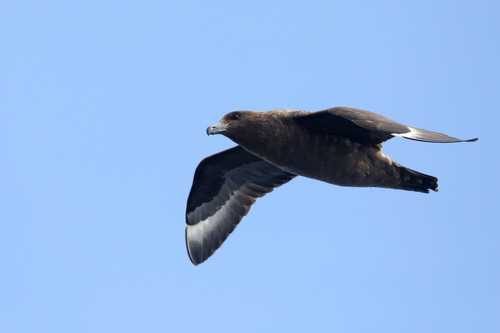
Brown Skua (Stercorarius antarcticus) Brown Skua
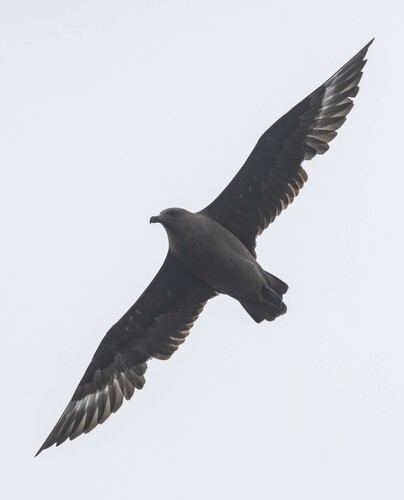
South Polar Skua (Stercorarius maccormicki) South Polar Skua

Media

Loading…

In short

The most reliable field mark between Brown Skua and South Polar Skua is the head and body contrast in adults: South Polar Skua typically shows a distinctly paler (whitish or straw-brown) head and underparts compared to its darker back, while Brown Skua is overall more uniformly dark brown. This contrast is especially useful in good light and at moderate range. Juveniles and dark morph South Polar Skuas are much harder to separate from Brown Skua, requiring close attention to subtle plumage tones and bill color. Both species are large, barrel-chested seabirds with powerful, direct flight, but Brown Skua is generally heavier and bulkier. In the field, look for the pale head on South Polar Skua adults first, but be cautious with immatures and dark morphs.

Identification tips

  1. Adult head contrast: In good views, adult South Polar Skuas (especially pale/intermediate morphs) show a pale (whitish or straw-brown) head and underparts contrasting with a darker brown back and wings. Brown Skua is uniformly dark brown, lacking this contrast. This is the single best field mark for adults.
  2. Juvenile/dark morph challenge: Juvenile and dark morph South Polar Skuas are very similar to Brown Skuas—both are overall dark brown. In these cases, separation is extremely difficult and often not possible without close, prolonged views.
  3. Bill color (close views): South Polar Skua may show a blue base to the bill, especially in fresh plumage and on pale/intermediate morphs, while Brown Skua's bill is typically all dark. This is subtle and only useful at close range.
  4. Overall tone: South Polar Skua (especially dark morphs and juveniles) tends to be a colder, greyer brown, while Brown Skua is a warmer, richer brown. This is subjective and unreliable in poor light.
  5. Size and bulk: Brown Skua is heavier and bulkier, with a more massive build, especially when perched. South Polar Skua is still large but slimmer and less imposing. Use this only in direct comparison or with experience.
  6. White wing flashes: Both species show white flashes in the wings, so this is not a separator.
  7. Flight style: Both have strong, direct flight with broad wings and a barrel-chested look. Brown Skua may appear even more powerful, but this is subtle.
  8. Habitat context: In the breeding season, Brown Skua is more likely on subantarctic islands, while South Polar Skua breeds on the Antarctic continent. Outside breeding, both can occur at sea, so context is only a weak clue.
  9. No reliable vocal differences: The sources do not provide diagnostic vocalizations for field separation.
  10. Beware of overlap: In areas where both species occur, especially at sea, expect confusion with immatures and dark morphs—sometimes separation is not possible.
  11. Do not rely on range alone: Both species can wander widely outside the breeding season, so do not use range as a primary separator unless at a known breeding site.
  12. No age-specific upperwing pattern difference: The sources do not describe distinctive juvenile or immature upperwing patterns for either species, so do not rely on this feature.
  13. Plumage uniformity: Brown Skua is always uniform dark brown; any bird with a distinctly paler head and underparts is a South Polar Skua.
  14. Sexual dimorphism: Both species show only slight size differences between sexes; this is not useful for field ID.
  15. Summary tip: If you see a large skua with a pale head and dark back, it's a South Polar Skua (adult pale/intermediate morph). If it's uniformly dark brown, it's likely a Brown Skua or a dark/juvenile South Polar Skua—be cautious and look for other clues.

Size

Brown Skua is the heavier and more robust of the two, with adult body mass ranging from 1.2–2.18 kg (noted averages for males and females often exceeding 1.5 kg), making it the heaviest skua and rivaling the largest gulls. South Polar Skua is still a large bird but averages lighter, with an adult body mass around 1349 g (1.35 kg) [wikidata]. Both are similar in length (Brown Skua 52–64 cm, South Polar Skua about 53 cm) and wingspan, but Brown Skua's greater bulk and heavier build are often apparent in direct comparison, especially when perched.

Plumage

Adult South Polar Skuas (especially pale and intermediate morphs) show a strong contrast between their pale (whitish or straw-brown) head and underparts and their darker brown back and upperwings. This contrast is diagnostic when visible. Brown Skua, by contrast, is uniformly dark brown overall, lacking the pale head and underpart contrast. Juvenile and dark morph South Polar Skuas are much more similar to Brown Skuas, both appearing overall dark brown; in these cases, South Polar tends to have a colder brown tone and a blue base to the bill, but these are subtle and unreliable at distance or in poor light. Both species show white wing flashes in flight, and both have powerful, broad wings, but there are no detailed age-specific upperwing pattern differences noted in the sources for separating juveniles or immatures. Thus, adult head contrast is the key plumage mark, but beware of overlap in young or dark birds.

Behaviour

Both species are aggressive, powerful seabirds known for kleptoparasitism (stealing food from other birds) and predation. Their flight is direct and strong, with a heavy, barrel-chested appearance and broad wings. Brown Skua may appear even more robust and imposing, reflecting its greater body mass. Both can be seen harassing gulls, terns, or other seabirds, and both are bold around humans in their breeding areas. No significant behavioral differences are noted in the sources for field separation.

Habitat

Brown Skua breeds in subantarctic and Antarctic zones, often on islands or coastal areas, and disperses northward outside the breeding season. South Polar Skua breeds in Antarctica proper and is highly pelagic outside the breeding season, migrating to oceans worldwide. In overlap zones (such as Antarctic waters), both may occur together, but Brown Skua is more likely on subantarctic islands, while South Polar Skua is more strictly Antarctic in breeding. Habitat is not a reliable separator outside the breeding season, but context may help in some locations.

Submit a better description

Use the same sections as the comparison. Your text is published immediately.

The most reliable field mark between Brown Skua and South Polar Skua is the head and body contrast in adults: South Polar Skua typically shows a distinctly paler (whitish or straw-brown) head and underparts compared to its darker back, while Brown Skua is overall more uniformly dark brown. This contrast is especially useful in good light and at moderate range. Juveniles and dark morph South Polar Skuas are much harder to separate from Brown Skua, requiring close attention to subtle plumage tones and bill color. Both species are large, barrel-chested seabirds with powerful, direct flight, but Brown Skua is generally heavier and bulkier. In the field, look for the pale head on South Polar Skua adults first, but be cautious with immatures and dark morphs.

  1. Adult head contrast: In good views, adult South Polar Skuas (especially pale/intermediate morphs) show a pale (whitish or straw-brown) head and underparts contrasting with a darker brown back and wings. Brown Skua is uniformly dark brown, lacking this contrast. This is the single best field mark for adults.
  2. Juvenile/dark morph challenge: Juvenile and dark morph South Polar Skuas are very similar to Brown Skuas—both are overall dark brown. In these cases, separation is extremely difficult and often not possible without close, prolonged views.
  3. Bill color (close views): South Polar Skua may show a blue base to the bill, especially in fresh plumage and on pale/intermediate morphs, while Brown Skua's bill is typically all dark. This is subtle and only useful at close range.
  4. Overall tone: South Polar Skua (especially dark morphs and juveniles) tends to be a colder, greyer brown, while Brown Skua is a warmer, richer brown. This is subjective and unreliable in poor light.
  5. Size and bulk: Brown Skua is heavier and bulkier, with a more massive build, especially when perched. South Polar Skua is still large but slimmer and less imposing. Use this only in direct comparison or with experience.
  6. White wing flashes: Both species show white flashes in the wings, so this is not a separator.
  7. Flight style: Both have strong, direct flight with broad wings and a barrel-chested look. Brown Skua may appear even more powerful, but this is subtle.
  8. Habitat context: In the breeding season, Brown Skua is more likely on subantarctic islands, while South Polar Skua breeds on the Antarctic continent. Outside breeding, both can occur at sea, so context is only a weak clue.
  9. No reliable vocal differences: The sources do not provide diagnostic vocalizations for field separation.
  10. Beware of overlap: In areas where both species occur, especially at sea, expect confusion with immatures and dark morphs—sometimes separation is not possible.
  11. Do not rely on range alone: Both species can wander widely outside the breeding season, so do not use range as a primary separator unless at a known breeding site.
  12. No age-specific upperwing pattern difference: The sources do not describe distinctive juvenile or immature upperwing patterns for either species, so do not rely on this feature.
  13. Plumage uniformity: Brown Skua is always uniform dark brown; any bird with a distinctly paler head and underparts is a South Polar Skua.
  14. Sexual dimorphism: Both species show only slight size differences between sexes; this is not useful for field ID.
  15. Summary tip: If you see a large skua with a pale head and dark back, it's a South Polar Skua (adult pale/intermediate morph). If it's uniformly dark brown, it's likely a Brown Skua or a dark/juvenile South Polar Skua—be cautious and look for other clues.

Brown Skua is the heavier and more robust of the two, with adult body mass ranging from 1.2–2.18 kg (noted averages for males and females often exceeding 1.5 kg), making it the heaviest skua and rivaling the largest gulls. South Polar Skua is still a large bird but averages lighter, with an adult body mass around 1349 g (1.35 kg) [wikidata]. Both are similar in length (Brown Skua 52–64 cm, South Polar Skua about 53 cm) and wingspan, but Brown Skua's greater bulk and heavier build are often apparent in direct comparison, especially when perched.

Adult South Polar Skuas (especially pale and intermediate morphs) show a strong contrast between their pale (whitish or straw-brown) head and underparts and their darker brown back and upperwings. This contrast is diagnostic when visible. Brown Skua, by contrast, is uniformly dark brown overall, lacking the pale head and underpart contrast. Juvenile and dark morph South Polar Skuas are much more similar to Brown Skuas, both appearing overall dark brown; in these cases, South Polar tends to have a colder brown tone and a blue base to the bill, but these are subtle and unreliable at distance or in poor light. Both species show white wing flashes in flight, and both have powerful, broad wings, but there are no detailed age-specific upperwing pattern differences noted in the sources for separating juveniles or immatures. Thus, adult head contrast is the key plumage mark, but beware of overlap in young or dark birds.

Both species are aggressive, powerful seabirds known for kleptoparasitism (stealing food from other birds) and predation. Their flight is direct and strong, with a heavy, barrel-chested appearance and broad wings. Brown Skua may appear even more robust and imposing, reflecting its greater body mass. Both can be seen harassing gulls, terns, or other seabirds, and both are bold around humans in their breeding areas. No significant behavioral differences are noted in the sources for field separation.

Brown Skua breeds in subantarctic and Antarctic zones, often on islands or coastal areas, and disperses northward outside the breeding season. South Polar Skua breeds in Antarctica proper and is highly pelagic outside the breeding season, migrating to oceans worldwide. In overlap zones (such as Antarctic waters), both may occur together, but Brown Skua is more likely on subantarctic islands, while South Polar Skua is more strictly Antarctic in breeding. Habitat is not a reliable separator outside the breeding season, but context may help in some locations.

Discard your changes?

You have unsaved edits. If you leave now, those changes will be lost.

Brown Skua · South Polar Skua · My Tricky Birds