
Motmot

Cory's Shearwater vs Yelkouan Shearwater

Calonectris diomedea versus Puffinus yelkouan

Play a quiz with Cory's Shearwater and Yelkouan Shearwater
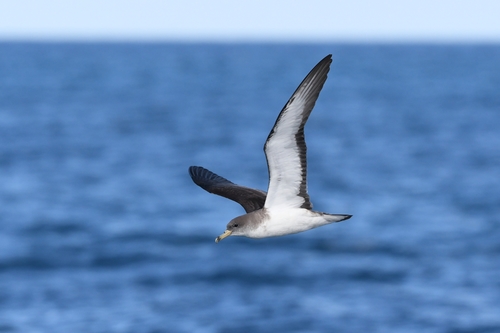
Cory's Shearwater (Calonectris diomedea) Cory's Shearwater
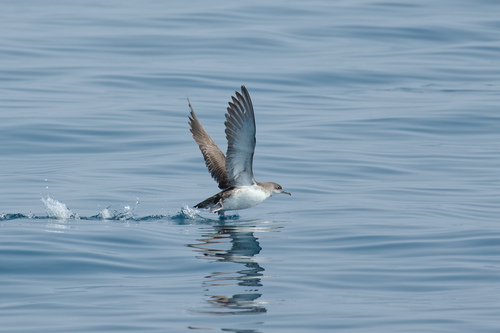
Yelkouan Shearwater (Puffinus yelkouan) Yelkouan Shearwater

Media

Loading…

In short

The most reliable way to separate Cory's Shearwater from Yelkouan Shearwater is by size and structure: Cory's is much larger and bulkier, with broader wings and a heavier, pale yellow bill, while Yelkouan is distinctly smaller, slimmer, and more agile in flight. In good views, Cory's shows a mostly white underwing with a broad white patch extending onto the primaries (especially the outermost), whereas Yelkouan's underwing is darker and more contrasting, with less extensive white. Both species are brownish above and white below, but Yelkouan appears more sharply contrasted in flight. If seen together, Cory's dwarfs Yelkouan, but lone birds require careful attention to wing pattern and structure.

Identification tips

  1. Size and bulk: Cory's is much larger and heavier than Yelkouan. If you see a shearwater that looks big and powerful, especially if with other species, suspect Cory's. Yelkouan is noticeably smaller and more delicate.
  2. Underwing pattern: Cory's shows a broad white area on the underwing, extending well onto the primaries (especially P10), so the underwing looks mostly white with a narrow dark trailing edge. Yelkouan's underwing is darker, with less white on the primaries, giving a more contrasting look. This is often the best field mark in flight for all ages.
  3. Bill color and shape: Cory's has a thick, pale yellow bill with a dark patch near the tip, visible at close range. Yelkouan's bill is slimmer and less prominent, lacking the strong yellow coloration.
  4. Flight style: Cory's flies with slow, deep wingbeats and long, effortless glides, often appearing heavy and unhurried. Yelkouan is much more agile, with rapid, shallow wingbeats and frequent changes in direction, often flying low and dipping close to the water.
  5. Upperpart color: Both are brownish-grey above, but Cory's is paler and more uniform, while Yelkouan may look darker and more sharply contrasted with the white underparts.
  6. Head and body shape: Cory's has a long, broad head and a strong, thick neck, giving a 'blocky' look. Yelkouan is more slender, with a smaller head and a shorter neck.
  7. Tail: Cory's has a longer, more wedge-shaped tail, while Yelkouan's tail is shorter and less prominent.
  8. Perched jizz: On land or water, Cory's looks large, long-bodied, and heavy-billed. Yelkouan is compact and neat.
  9. Habitat: Cory's is more often seen far offshore or in the Atlantic outside the breeding season, while Yelkouan is more coastal, but this is not always reliable due to overlap.
  10. Sex and age: Both species are similar across sexes and ages, so these marks apply year-round.
  11. Confusion risk: In poor light or at distance, size and underwing pattern can be hard to judge, so use a combination of marks. Lone birds are especially tricky; try to get multiple views.
  12. Comparison with Manx/other shearwaters: Yelkouan is very similar to Manx Shearwater in structure and flight, but Cory's is always much larger and bulkier than either.
  13. Bill color in close views: If you can see a pale yellow bill with a dark tip, it's Cory's; a dark, slim bill suggests Yelkouan.
  14. Group context: If you see a mixed flock, Cory's will stand out as the largest bird present.
  15. Plumage pitfalls: Both species can look darker above and whiter below in strong sunlight or at certain angles, so rely on underwing and size for best results.

Size

Cory's Shearwater is substantially larger, with a body mass around 886 g and a length of 45–52 cm, wingspan 112–122 cm. Yelkouan Shearwater is much smaller, at 30–35 cm long and a wingspan of 70–84 cm. In the field, Cory's appears heavy and long-winged, often described as 'bulky,' while Yelkouan is compact and noticeably lighter, with a more delicate build. This size difference is usually obvious with experience or when both species are present, but can be underestimated at distance or on lone birds.

Plumage

There are no detailed age-specific upperwing patterns provided for either species, but adult Cory's Shearwater (and by extension, Scopoli's) shows a key feature: the underwing has a broad white area extending onto the primaries, especially the outermost (P10), making the underwing appear mostly white with a narrow dark trailing edge. This is visible in all plumages, as sexes and ages are similar. Yelkouan Shearwater, by contrast, has a darker underwing with less white on the primaries, so the underwing appears more contrasting and less 'glowing' white. Above, both are brownish-grey, but Cory's is paler and more uniform, while Yelkouan can look more sharply marked due to the stronger contrast between dark upperparts and white underparts. Bills are also different: Cory's has a pale yellow bill with a dark tip, while Yelkouan's bill is not described in detail but is proportionally smaller and less robust.

Behaviour

Cory's Shearwater flies with slow, deep wingbeats and long glides, giving a heavy, languid impression. It often soars and shears with little effort, rarely dipping close to the water. Yelkouan Shearwater is much more agile, with rapid, shallow wingbeats and frequent changes of direction, often flying low and dipping from side to side with stiff wings. Yelkouan's flight is more 'nervous' and reminiscent of Manx Shearwater, while Cory's is stately and powerful. When perched, Cory's looks large and long-bodied; Yelkouan is compact and short-necked.

Habitat

Both species breed on Mediterranean islands and forage at sea, but Cory's (Scopoli's) is more likely to be seen in the open Mediterranean and into the Atlantic outside the breeding season. Yelkouan is more coastal and often seen closer to shore, especially in the eastern Mediterranean. However, there is significant overlap, and both can occur together in the Mediterranean, so habitat alone is not diagnostic.

Submit a better description

Use the same sections as the comparison. Your text is published immediately.

The most reliable way to separate Cory's Shearwater from Yelkouan Shearwater is by size and structure: Cory's is much larger and bulkier, with broader wings and a heavier, pale yellow bill, while Yelkouan is distinctly smaller, slimmer, and more agile in flight. In good views, Cory's shows a mostly white underwing with a broad white patch extending onto the primaries (especially the outermost), whereas Yelkouan's underwing is darker and more contrasting, with less extensive white. Both species are brownish above and white below, but Yelkouan appears more sharply contrasted in flight. If seen together, Cory's dwarfs Yelkouan, but lone birds require careful attention to wing pattern and structure.

  1. Size and bulk: Cory's is much larger and heavier than Yelkouan. If you see a shearwater that looks big and powerful, especially if with other species, suspect Cory's. Yelkouan is noticeably smaller and more delicate.
  2. Underwing pattern: Cory's shows a broad white area on the underwing, extending well onto the primaries (especially P10), so the underwing looks mostly white with a narrow dark trailing edge. Yelkouan's underwing is darker, with less white on the primaries, giving a more contrasting look. This is often the best field mark in flight for all ages.
  3. Bill color and shape: Cory's has a thick, pale yellow bill with a dark patch near the tip, visible at close range. Yelkouan's bill is slimmer and less prominent, lacking the strong yellow coloration.
  4. Flight style: Cory's flies with slow, deep wingbeats and long, effortless glides, often appearing heavy and unhurried. Yelkouan is much more agile, with rapid, shallow wingbeats and frequent changes in direction, often flying low and dipping close to the water.
  5. Upperpart color: Both are brownish-grey above, but Cory's is paler and more uniform, while Yelkouan may look darker and more sharply contrasted with the white underparts.
  6. Head and body shape: Cory's has a long, broad head and a strong, thick neck, giving a 'blocky' look. Yelkouan is more slender, with a smaller head and a shorter neck.
  7. Tail: Cory's has a longer, more wedge-shaped tail, while Yelkouan's tail is shorter and less prominent.
  8. Perched jizz: On land or water, Cory's looks large, long-bodied, and heavy-billed. Yelkouan is compact and neat.
  9. Habitat: Cory's is more often seen far offshore or in the Atlantic outside the breeding season, while Yelkouan is more coastal, but this is not always reliable due to overlap.
  10. Sex and age: Both species are similar across sexes and ages, so these marks apply year-round.
  11. Confusion risk: In poor light or at distance, size and underwing pattern can be hard to judge, so use a combination of marks. Lone birds are especially tricky; try to get multiple views.
  12. Comparison with Manx/other shearwaters: Yelkouan is very similar to Manx Shearwater in structure and flight, but Cory's is always much larger and bulkier than either.
  13. Bill color in close views: If you can see a pale yellow bill with a dark tip, it's Cory's; a dark, slim bill suggests Yelkouan.
  14. Group context: If you see a mixed flock, Cory's will stand out as the largest bird present.
  15. Plumage pitfalls: Both species can look darker above and whiter below in strong sunlight or at certain angles, so rely on underwing and size for best results.

Cory's Shearwater is substantially larger, with a body mass around 886 g and a length of 45–52 cm, wingspan 112–122 cm. Yelkouan Shearwater is much smaller, at 30–35 cm long and a wingspan of 70–84 cm. In the field, Cory's appears heavy and long-winged, often described as 'bulky,' while Yelkouan is compact and noticeably lighter, with a more delicate build. This size difference is usually obvious with experience or when both species are present, but can be underestimated at distance or on lone birds.

There are no detailed age-specific upperwing patterns provided for either species, but adult Cory's Shearwater (and by extension, Scopoli's) shows a key feature: the underwing has a broad white area extending onto the primaries, especially the outermost (P10), making the underwing appear mostly white with a narrow dark trailing edge. This is visible in all plumages, as sexes and ages are similar. Yelkouan Shearwater, by contrast, has a darker underwing with less white on the primaries, so the underwing appears more contrasting and less 'glowing' white. Above, both are brownish-grey, but Cory's is paler and more uniform, while Yelkouan can look more sharply marked due to the stronger contrast between dark upperparts and white underparts. Bills are also different: Cory's has a pale yellow bill with a dark tip, while Yelkouan's bill is not described in detail but is proportionally smaller and less robust.

Cory's Shearwater flies with slow, deep wingbeats and long glides, giving a heavy, languid impression. It often soars and shears with little effort, rarely dipping close to the water. Yelkouan Shearwater is much more agile, with rapid, shallow wingbeats and frequent changes of direction, often flying low and dipping from side to side with stiff wings. Yelkouan's flight is more 'nervous' and reminiscent of Manx Shearwater, while Cory's is stately and powerful. When perched, Cory's looks large and long-bodied; Yelkouan is compact and short-necked.

Both species breed on Mediterranean islands and forage at sea, but Cory's (Scopoli's) is more likely to be seen in the open Mediterranean and into the Atlantic outside the breeding season. Yelkouan is more coastal and often seen closer to shore, especially in the eastern Mediterranean. However, there is significant overlap, and both can occur together in the Mediterranean, so habitat alone is not diagnostic.

Discard your changes?

You have unsaved edits. If you leave now, those changes will be lost.

Cory's Shearwater · Yelkouan Shearwater · My Tricky Birds