
Motmot

European Honey-buzzard vs Crested Honey-buzzard

Pernis apivorus versus Pernis ptilorhynchus

Play a quiz with European Honey-buzzard and Crested Honey-buzzard
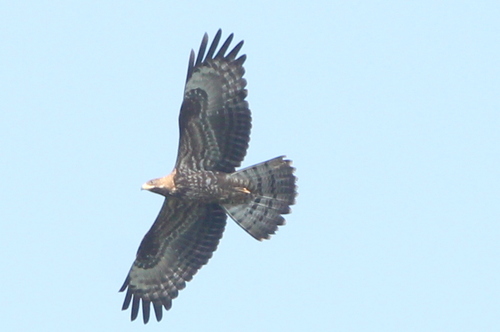
European Honey-buzzard (Pernis apivorus) European Honey-buzzard
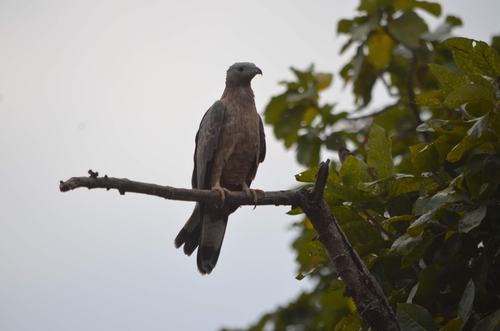
Crested Honey-buzzard (Pernis ptilorhynchus) Crested Honey-buzzard

Media

Loading…

In short

The most reliable field mark between European Honey-buzzard and Crested Honey-buzzard is the pattern of tail and underwing bands, which varies by age and sex. Juvenile and female Crested Honey-buzzards show more tail and underwing bands than European, and the Crested's underwing pattern is more complex, especially in flight. Structurally, Crested Honey-buzzard is bulkier and heavier, but both species share a long-necked, small-headed look and can appear surprisingly similar, especially at a distance or in poor light. Sexes are separable in both, with males showing blue-grey heads and females brown, but the Crested's iris color (brown in males, yellow in females) and throat stripe are additional clues. Careful attention to the number of tail and underwing bands in flight, alongside size and subtle plumage differences, is key to separating these two often-confused Pernis species.

Identification tips

  1. Tail band count in flight (all ages): Crested Honey-buzzard (female and juvenile) shows three black tail bands; European Honey-buzzard typically shows only two narrow dark bars and a broad subterminal bar. This is the most reliable mark in flight.
  2. Underwing banding (all ages): Crested has three (male) or four (female) black underwing bands; European has a simpler pattern with fewer, broader bands. Juvenile Crested also shows extensive black primary tips, which are less marked in European.
  3. Head color and iris (adults): Males of both have blue-grey heads, but Crested male has a brown iris and a dark throat stripe, while European male lacks the throat stripe and has a less contrasting head. Female Crested has a brown head and yellow iris; European female is brown-headed but lacks the yellow iris.
  4. Throat stripe (adults): Crested Honey-buzzard (both sexes, but especially male) shows a dark throat stripe, absent in European.
  5. Head shape: Crested's head lacks a strong superciliary ridge and appears pigeon-like; European's head is small but less pigeon-like. This is subtle and best seen at close range.
  6. Overall coloration: Crested is brown above but paler below, with a more complex underwing pattern; European is generally darker above and below, with a plainer underwing.
  7. Size and structure: Crested is bulkier and heavier, but both species are long-necked and small-headed. Size is only useful if both are seen together or in direct comparison.
  8. Flight silhouette: European soars with flat wings, sometimes slightly drooped at the tips, and may show an angular chest in direct flight. Crested appears bulkier and less angular.
  9. Sexual dimorphism: Both species show sex differences in head color and iris, but only Crested shows a yellow iris in females and a brown iris in males.
  10. Juvenile confusion: Juvenile European Honey-buzzard mimics Common Buzzard, while juvenile Crested mimics Nisaetus hawk-eagles. In both, mimicry can mislead observers, but the tail and underwing band count remains diagnostic.
  11. Habitat and range: European is found in Europe and western Asia, Crested in Asia and the Middle East. Out of range, either species is unlikely, but vagrancy is possible.
  12. Voice: Only European's call is described ('peee-lu'); lack of distinctive call in Crested means voice is rarely useful.
  13. Pitfalls: Both species are variable, and light conditions can obscure underwing and tail patterns. Always try to count tail and underwing bands and note iris color if possible.
  14. Display and behavior: Both are secretive but may be seen displaying or migrating. Use these opportunities to study wing and tail patterns.
  15. When in doubt: If tail and underwing bands are not visible, note head color, iris, throat stripe, and overall structure, but beware of overlap and variability.

Size

Crested Honey-buzzard is larger and heavier than European Honey-buzzard. Crested measures about 57–60 cm in length and weighs 750–1,490 g, while European is 52–60 cm long but lighter at 440–1,050 g [wikipedia][avonet]. Both have long wings and tails, but Crested is bulkier overall. In the field, size alone is rarely diagnostic unless both are seen together, but Crested's greater mass and bulkier jizz may be apparent in good views.

Plumage

Juvenile and immature birds are most frequently confused. Juvenile Crested Honey-buzzard shows more extensive black primary tips and narrower, more numerous underwing bands than European. In the tail, juvenile and female Crested have three black bands, while European typically shows only two narrow dark bars and a broad subterminal bar (regardless of age/sex). Adult males of both species have blue-grey heads, but Crested males have a brown iris and a dark throat stripe, while European males lack the throat stripe and have a less contrasting head. Females of both are brown-headed, but Crested females are darker overall and have a yellow iris. Crested is brown above but generally paler below than European, and the underwing pattern is more complex, with three (male) or four (female) black underwing bands, compared to European's simpler pattern. The head of Crested lacks a strong superciliary ridge, giving a pigeon-like look, while European's head is small but less pigeon-like. Both species are variable, but the number and width of tail and underwing bands are the most consistent plumage clues.

Behaviour

Both species are inconspicuous and secretive outside of migration or display, spending much time in woodland and foraging on the ground for wasp nests. In flight, both soar on flat wings with a long-necked, small-headed silhouette, but European Honey-buzzard is noted for holding its wings straight with horizontal or slightly drooped tips, and sometimes shows a pronounced angular chest in direct flight. Crested may appear bulkier and less angular. Both are more easily observed during migration or display flights, when wing and tail patterns are most visible.

Habitat

European Honey-buzzard breeds in European and western Asian woodlands, wintering in Africa, and is scarce but increasing in the UK, especially in southeastern England. Crested Honey-buzzard is found across Asia, from Siberia to Southeast Asia, and is expanding westward into the Middle East. Both prefer woodland habitats and are inconspicuous except during migration or display. Crested is adapting to anthropogenic habitats in some areas, such as irrigated plantations, but this is not a reliable field separation.

Voice

European Honey-buzzard's call is a clear 'peee-lu.' No distinctive vocalization is described for Crested Honey-buzzard in the provided notes, so voice is not a reliable separator between these two in the field.

Submit a better description

Use the same sections as the comparison. Your text is published immediately.

The most reliable field mark between European Honey-buzzard and Crested Honey-buzzard is the pattern of tail and underwing bands, which varies by age and sex. Juvenile and female Crested Honey-buzzards show more tail and underwing bands than European, and the Crested's underwing pattern is more complex, especially in flight. Structurally, Crested Honey-buzzard is bulkier and heavier, but both species share a long-necked, small-headed look and can appear surprisingly similar, especially at a distance or in poor light. Sexes are separable in both, with males showing blue-grey heads and females brown, but the Crested's iris color (brown in males, yellow in females) and throat stripe are additional clues. Careful attention to the number of tail and underwing bands in flight, alongside size and subtle plumage differences, is key to separating these two often-confused Pernis species.

  1. Tail band count in flight (all ages): Crested Honey-buzzard (female and juvenile) shows three black tail bands; European Honey-buzzard typically shows only two narrow dark bars and a broad subterminal bar. This is the most reliable mark in flight.
  2. Underwing banding (all ages): Crested has three (male) or four (female) black underwing bands; European has a simpler pattern with fewer, broader bands. Juvenile Crested also shows extensive black primary tips, which are less marked in European.
  3. Head color and iris (adults): Males of both have blue-grey heads, but Crested male has a brown iris and a dark throat stripe, while European male lacks the throat stripe and has a less contrasting head. Female Crested has a brown head and yellow iris; European female is brown-headed but lacks the yellow iris.
  4. Throat stripe (adults): Crested Honey-buzzard (both sexes, but especially male) shows a dark throat stripe, absent in European.
  5. Head shape: Crested's head lacks a strong superciliary ridge and appears pigeon-like; European's head is small but less pigeon-like. This is subtle and best seen at close range.
  6. Overall coloration: Crested is brown above but paler below, with a more complex underwing pattern; European is generally darker above and below, with a plainer underwing.
  7. Size and structure: Crested is bulkier and heavier, but both species are long-necked and small-headed. Size is only useful if both are seen together or in direct comparison.
  8. Flight silhouette: European soars with flat wings, sometimes slightly drooped at the tips, and may show an angular chest in direct flight. Crested appears bulkier and less angular.
  9. Sexual dimorphism: Both species show sex differences in head color and iris, but only Crested shows a yellow iris in females and a brown iris in males.
  10. Juvenile confusion: Juvenile European Honey-buzzard mimics Common Buzzard, while juvenile Crested mimics Nisaetus hawk-eagles. In both, mimicry can mislead observers, but the tail and underwing band count remains diagnostic.
  11. Habitat and range: European is found in Europe and western Asia, Crested in Asia and the Middle East. Out of range, either species is unlikely, but vagrancy is possible.
  12. Voice: Only European's call is described ('peee-lu'); lack of distinctive call in Crested means voice is rarely useful.
  13. Pitfalls: Both species are variable, and light conditions can obscure underwing and tail patterns. Always try to count tail and underwing bands and note iris color if possible.
  14. Display and behavior: Both are secretive but may be seen displaying or migrating. Use these opportunities to study wing and tail patterns.
  15. When in doubt: If tail and underwing bands are not visible, note head color, iris, throat stripe, and overall structure, but beware of overlap and variability.

Crested Honey-buzzard is larger and heavier than European Honey-buzzard. Crested measures about 57–60 cm in length and weighs 750–1,490 g, while European is 52–60 cm long but lighter at 440–1,050 g [wikipedia][avonet]. Both have long wings and tails, but Crested is bulkier overall. In the field, size alone is rarely diagnostic unless both are seen together, but Crested's greater mass and bulkier jizz may be apparent in good views.

Juvenile and immature birds are most frequently confused. Juvenile Crested Honey-buzzard shows more extensive black primary tips and narrower, more numerous underwing bands than European. In the tail, juvenile and female Crested have three black bands, while European typically shows only two narrow dark bars and a broad subterminal bar (regardless of age/sex). Adult males of both species have blue-grey heads, but Crested males have a brown iris and a dark throat stripe, while European males lack the throat stripe and have a less contrasting head. Females of both are brown-headed, but Crested females are darker overall and have a yellow iris. Crested is brown above but generally paler below than European, and the underwing pattern is more complex, with three (male) or four (female) black underwing bands, compared to European's simpler pattern. The head of Crested lacks a strong superciliary ridge, giving a pigeon-like look, while European's head is small but less pigeon-like. Both species are variable, but the number and width of tail and underwing bands are the most consistent plumage clues.

Both species are inconspicuous and secretive outside of migration or display, spending much time in woodland and foraging on the ground for wasp nests. In flight, both soar on flat wings with a long-necked, small-headed silhouette, but European Honey-buzzard is noted for holding its wings straight with horizontal or slightly drooped tips, and sometimes shows a pronounced angular chest in direct flight. Crested may appear bulkier and less angular. Both are more easily observed during migration or display flights, when wing and tail patterns are most visible.

European Honey-buzzard breeds in European and western Asian woodlands, wintering in Africa, and is scarce but increasing in the UK, especially in southeastern England. Crested Honey-buzzard is found across Asia, from Siberia to Southeast Asia, and is expanding westward into the Middle East. Both prefer woodland habitats and are inconspicuous except during migration or display. Crested is adapting to anthropogenic habitats in some areas, such as irrigated plantations, but this is not a reliable field separation.

European Honey-buzzard's call is a clear 'peee-lu.' No distinctive vocalization is described for Crested Honey-buzzard in the provided notes, so voice is not a reliable separator between these two in the field.

Discard your changes?

You have unsaved edits. If you leave now, those changes will be lost.

European Honey-buzzard · Crested Honey-buzzard · My Tricky Birds