

Fluttering Shearwater vs Campbell Islands Shag
Puffinus gavia versus Leucocarbo campbelli
Play a quiz with Fluttering Shearwater and Campbell Islands Shag
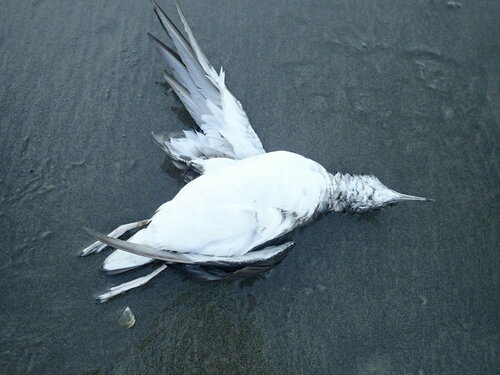 Fluttering Shearwater
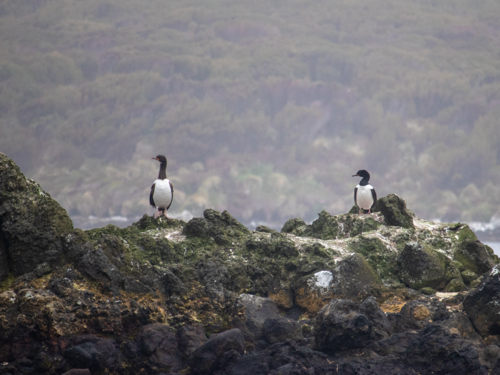 Campbell Islands Shag
In short
The most reliable field mark to separate Fluttering Shearwater from Campbell Islands Shag is overall structure and size: the shag is a much larger, heavier-bodied bird with a long neck and distinctive cormorant-like posture, while the shearwater is a compact, narrow-winged seabird with a low, fast flight. In flight, Fluttering Shearwater shows a dark upperwing and white underwing with a dark thigh patch, while Campbell Islands Shag has broad wings with obvious white wing patches and a contrasting white belly and chin. Juvenile and non-breeding shags can appear browner, but always retain the heavy, long-necked shape. Both species may be seen in coastal waters, but context and structure are usually decisive.
Identification tips
- Size and structure: Campbell Islands Shag is much larger, bulkier, and longer-necked than Fluttering Shearwater. Even at a distance, the shag's cormorant-like shape is obvious; the shearwater is compact and streamlined. This is the most reliable mark in all conditions.
- Bill shape: The shag has a thick, hooked bill with a yellow base patch (breeding), while the shearwater's bill is long, thin, and dark. Bill shape is visible at moderate range, especially when perched or swimming.
- Neck and posture: Shags have a long, flexible neck and upright stance when perched; shearwaters have short necks and sit low to the water.
- Flight style: Fluttering Shearwater flies low over the sea with rapid wingbeats and short glides, often in loose lines. Campbell Islands Shag flies with its head below its body and heavier, deeper wingbeats; it rarely glides and often flies in tight flocks.
- Plumage – upperparts: Shearwater is uniformly dark brown above; shag is glossy black (breeding) or brownish (immature/non-breeding) with a metallic sheen. The shag's upperparts are never as plain as the shearwater's.
- Plumage – underparts: Shearwater is white below from chin to undertail, with a dark thigh patch visible in flight; shag is also white below, but with a sharply contrasting black neck and head, and bold white wing patches. The shag's white is more extensive and cleaner-edged.
- Plumage – underwing: Shearwater shows white underwings with a dark thigh patch; shag has broad white wing patches visible from below and above, especially in adults.
- Tail: Shearwater's tail is short and fan-shaped in flight; shag's tail is longer and more wedge-shaped, often fanned when perched.
- Feet projection: Shearwater's pinkish-brown feet extend beyond the tail in flight; shag's pink feet do not project past the tail.
- Bare parts color: Shag shows pink feet and, in breeding, colorful facial skin (yellow, purple, orange); shearwater's legs are pinkish-brown with dark webs, bill always dark.
- Crest: Breeding shags have a head crest; shearwaters never do. Immature/non-breeding shags lack the crest but retain the heavy structure.
- Voice: Shearwater gives a harsh, disjointed call in flight; shag is mostly silent at sea.
- Habitat context: Campbell Islands Shag is only found at Campbell Island and nearby; any similar bird elsewhere is a shearwater. Shearwater is widespread around New Zealand and migrates to Australia/Solomons.
- Behavior on water: Shags often sit upright on rocks or water, sometimes with wings spread; shearwaters sit low and rarely perch except at colonies.
- Flock behavior: Shags forage in tight, coordinated flocks with synchronized diving; shearwaters feed in looser groups, diving individually.
Size
Campbell Islands Shag is dramatically larger: about 63 cm in length, with a wingspan of 105 cm and weighing 1.6–2 kg [wikipedia]. Fluttering Shearwater is much smaller, with females averaging 302 g and males 243 g [wikipedia]. The shag's bulk, long neck, and heavy bill are obvious even at a distance, while the shearwater is slim, short-necked, and light-bodied. In mixed seabird flocks, the size gap is unmistakable.
Plumage
-
Juvenile/immature birds: Fluttering Shearwater juveniles look like adults but may have paler wing covert edges; there are no strong age-specific wing patterns, but the underwing is always mostly white with a dark thigh patch. Campbell Islands Shag juveniles and non-breeding adults are browner overall, with duller bare parts, but still show the white belly, chin, and wing patches. No distinctive 'W' or triangle marks are noted for either species' upperwing in flight.
-
Adults: Fluttering Shearwater is dark brown above and white below, with a white underwing and dark thigh patch; upperparts are uniform dark brown, with a short, fan-shaped tail. Campbell Islands Shag is black-and-white, with a white chin, underparts, and wing patches, black neck/head/back, and a metallic greenish-blue sheen to the black feathers. In breeding season, the shag shows a head crest and colorful facial skin, but even outside breeding, the white belly and wing patches are diagnostic. The shag's bill is thick and hooked; the shearwater's is long, thin, and dark. The shearwater's legs are pinkish-brown with dark webs, and feet extend beyond the tail in flight; the shag's feet are pink, but do not project past the tail.
Behaviour
Fluttering Shearwater flies low and fast over the water, with rapid wingbeats and short glides, often in loose flocks. It dives using its wings for pursuit underwater. Campbell Islands Shag flies with its head below its body, often in tight flocks, and forages by coordinated diving, sometimes with up to 100 birds. On the water or rocks, the shag sits upright, often drying its wings, while the shearwater rarely perches except at breeding colonies. The shag's foraging is more social and dramatic, with synchronized diving.
Habitat
Fluttering Shearwater is found around New Zealand, breeding on the main islands and migrating to Australia and the Solomon Islands; it uses open seas and rocky shores. Campbell Islands Shag is restricted to Campbell Island and nearby islets, never far from land, and breeds only there. Both use coastal waters, but the shag is a local specialty of subantarctic Campbell Island, while the shearwater is widespread and migratory.
Voice
Fluttering Shearwater has a distinctive, disjointed call: 'ka-hek-ka-hek-ka-hek', usually given in flight. Campbell Islands Shag is not described as vocal at sea; its courtship displays include vocalizing, but no specific call is noted for field separation.
Fluttering Shearwater · Campbell Islands Shag · My Tricky Birds