

Freckled Nightjar vs Square-tailed Nightjar
Caprimulgus tristigma versus Caprimulgus fossii
Play a quiz with Freckled Nightjar and Square-tailed Nightjar
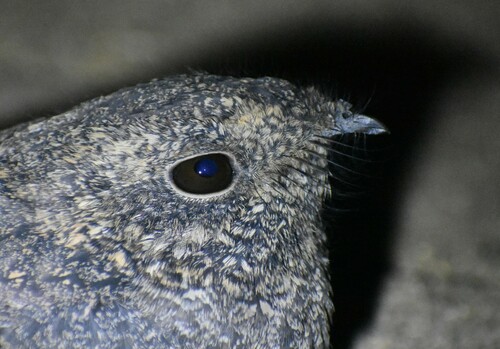 Freckled Nightjar
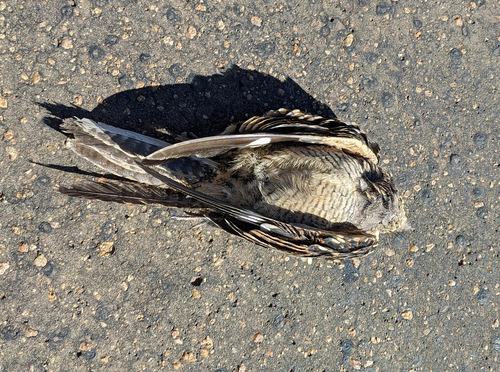 Square-tailed Nightjar
In short
The most reliable field mark to separate Freckled Nightjar from Square-tailed Nightjar is the combination of overall structure and tail shape: Freckled Nightjar is bulkier, with a relatively short, rounded tail, while Square-tailed Nightjar is slimmer with a noticeably squarer tail tip. In flight, adult male Freckled Nightjars show small white spots on the outer primaries and white tips to the outer tail feathers, while female Freckled Nightjars lack the tail white and have smaller wing spots; Square-tailed Nightjar does not show these patterns. Freckled Nightjar appears much darker and more heavily freckled, especially at rest, blending into rocky terrain, whereas Square-tailed Nightjar is paler and better suited to woodland ground. Size is also a strong clue: Freckled is substantially heavier and more robust. Habitat and jizz, especially when combined with tail shape and flight style, are key for field separation.
Identification tips
- Tail Shape: Freckled Nightjar has a relatively short, rounded tail; Square-tailed Nightjar's tail is more squared-off at the tip. This is most obvious in flight or when the tail is spread.
- White in Wing and Tail (Adult Males): In flight, adult male Freckled Nightjars show small white spots on the four outer primaries and white tips to the two outer tail feathers. Square-tailed Nightjar lacks both these features. Female Freckled Nightjars have smaller white wing spots and no tail white, but still more than Square-tailed.
- Overall Build: Freckled Nightjar is bulkier, heavier, and more powerfully built, with a broad chest and large head; Square-tailed Nightjar is slimmer and lighter, with a more delicate appearance.
- Plumage Tone: Freckled Nightjar appears much darker overall (dark gray to nearly black at a distance), with dense freckling and barring; Square-tailed Nightjar is paler and less heavily marked.
- Camouflage Context: Freckled Nightjar's plumage is perfectly matched to rocky or stony ground; Square-tailed Nightjar is better camouflaged on sandy or woodland floors.
- Perched Appearance: When perched, Freckled Nightjar looks chunkier and darker, often blending into rocks; Square-tailed Nightjar appears slimmer and paler, blending into woodland litter.
- Habitat: Freckled Nightjar is almost always found on or near rocks, boulders, or rocky banks; Square-tailed Nightjar is found in woodland, savanna, or sandy open ground, rarely on rocks.
- Flight Style: Freckled Nightjar's flight is strong and direct, often with short sallies from a perch; Square-tailed Nightjar may appear more buoyant and less powerful in flight.
- Sexual Dimorphism: Only male Freckled Nightjars show white tips to the outer tail feathers; both sexes of Square-tailed Nightjar lack this feature.
- White Spots Visibility: The white wing and tail spots of Freckled Nightjar are only visible in flight, not when perched with wings folded—do not rely on these marks unless you see the bird flying.
- Vocalization: If heard, Square-tailed Nightjar's alternating fast-slow churr is distinctive; Freckled Nightjar's call is not described here, so use voice only if confident with Square-tailed's song.
- Size in Hand or at Close Range: If you have a direct comparison or a good look, Freckled Nightjar's larger size and heavier build are clear; Square-tailed Nightjar is noticeably smaller.
- Potential Pitfall: In poor light or at a distance, both species can look similar—focus on tail shape, habitat, and any white in the wing or tail in flight.
- Juvenile/Immature Birds: No specific notes on immature plumage, so rely on structure, tail shape, and habitat for young birds.
- Distribution Overlap: Both species occur in the Afrotropics, but Freckled Nightjar is more patchily distributed and tied to rocky areas, while Square-tailed Nightjar is widespread in woodland south of the equator.
Size
Freckled Nightjar is a much heavier and more powerfully built bird (79g vs 58g [wikidata]), with a broad-chested, thickset appearance and long wings but a relatively short tail. Square-tailed Nightjar is noticeably lighter and slimmer, with a more elongated, less bulky look. This difference is often apparent both in flight and when perched, especially if you see both species in the same region. The heavier build of Freckled Nightjar is accentuated by its large gape and robust head, while Square-tailed Nightjar looks more delicate overall.
Plumage
There are no detailed notes on juvenile or immature upperwing patterns for either species, so the main contrasts are in adult plumage. Freckled Nightjar adults appear dark gray to nearly black at a distance, with dense white, cinnamon, and buff freckling on the upperparts and strong barring below; this cryptic pattern is excellent camouflage on rocks. Males show small white spots on the four outer primaries and white tips to the two outer tail feathers in flight; females have 3–4 smaller white spots on the outer primaries but lack tail white. These white markings are not visible when the bird is perched with wings folded. Square-tailed Nightjar lacks these white primary and tail spots, and instead is paler overall, with a less densely freckled appearance and a tail that appears squarer at the tip. The tail shape is a key field mark: Freckled Nightjar's tail is relatively short and rounded, while Square-tailed Nightjar's is more squared-off, though not perfectly so. Both species are sexually dimorphic, but the contrast in white markings is more pronounced in Freckled Nightjar.
Behaviour
Freckled Nightjar typically forages by sallying from rocky perches, gliding out to catch insects and returning to the same spot, often on boulders or rocky banks. Its activity peaks at dusk and dawn, and it is well adapted to open, rocky landscapes. Square-tailed Nightjar prefers woodland ground, behaving more like other woodland nightjars, and is less closely tied to rocks. Both species are nocturnal insect hawkers, but Freckled Nightjar's larger gape allows it to take bigger prey. Freckled Nightjar is more likely to be seen motionless on rocks during the day, relying on its camouflage.
Habitat
Freckled Nightjar is strongly associated with rocky outcrops, boulder fields, and broken ground, where its plumage provides excellent camouflage. It is patchily distributed but locally common in suitable rocky habitats. Square-tailed Nightjar is a bird of tropical and subtropical woodlands, favoring sandy or open ground within woodland or savanna, and is not tied to rocky terrain. If you find a nightjar on a bare rock or boulder, especially in open country, Freckled Nightjar is far more likely; in woodland or savanna, especially on sandy soil, Square-tailed Nightjar is the default.
Voice
Square-tailed Nightjar has a distinctive call: a prolonged churring that alternates between fast and slow paces every second, which is different from the calls of other nightjars in the region. There is no specific vocal description for Freckled Nightjar in these notes, so voice is not a reliable separator unless you are familiar with Square-tailed's unique churring pattern.
Freckled Nightjar · Square-tailed Nightjar · My Tricky Birds