
Glossy Ibis vs African Spoonbill
Plegadis falcinellus versus Platalea alba
Play a quiz with Glossy Ibis and African Spoonbill
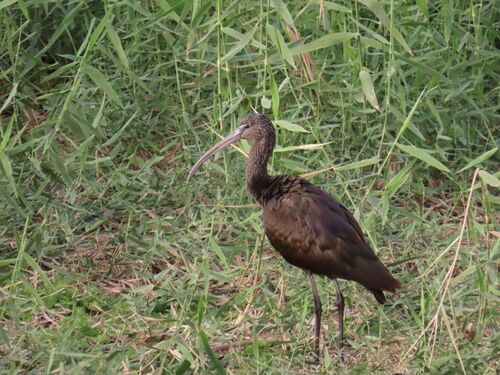 Glossy Ibis
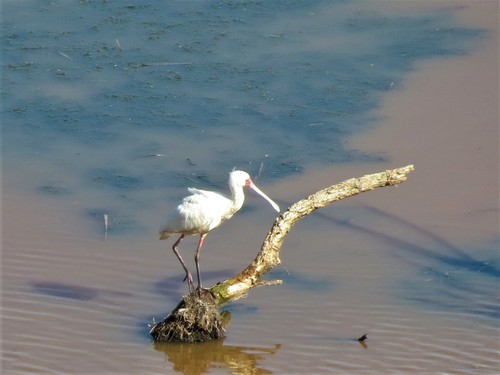 African Spoonbill
In short
The most reliable way to separate Glossy Ibis from African Spoonbill is by bill shape: Glossy Ibis has a long, slender, sickle-shaped bill, while African Spoonbill has a long, flat, spatula-tipped bill that is unmistakable at close range. Adult plumage is also diagnostic: Glossy Ibis shows dark, reddish-brown and iridescent green or purple tones, while African Spoonbill is all white with red legs and face in adults. Juveniles of both species are duller, but the bill shape remains a clear distinction at all ages. Both species fly with necks outstretched, but their overall jizz and feeding behavior differ. Confusion is most likely with distant or immature birds, but careful attention to bill and plumage will resolve most cases.
Identification tips
- Bill shape is the single most reliable field mark: Glossy Ibis always has a long, slender, decurved (sickle-shaped) bill; African Spoonbill always has a long, flat, wide-tipped (spoon-shaped) bill. This is diagnostic at all ages and distances where the bill is visible.
- Adult plumage: Glossy Ibis adults are dark reddish-brown with strong metallic green, bronze, or purple iridescence on the wings. African Spoonbill adults are pure white with no iridescence, and have red legs and a red face patch.
- Juvenile/immature plumage: Juvenile Glossy Ibis is dark brown with fine white streaks on the head and neck, lacking iridescence. Juvenile African Spoonbill is pale (mostly white), lacks red on the face, and has a yellowish bill. Even in dull light, the spoon-shaped bill stands out.
- Facial skin: Glossy Ibis has a narrow white facial band (subtle, best seen at close range in breeding adults), with blue-grey to cobalt blue facial skin depending on season. African Spoonbill has a bare red face in adults (not present in juveniles).
- Leg color: Glossy Ibis legs are red-brown; African Spoonbill legs are bright red in adults, duller in immatures.
- Flight silhouette: Both fly with necks outstretched, but African Spoonbill appears longer-necked and longer-legged, with a more angular, lanky look. Glossy Ibis is more compact.
- Feeding behavior: Glossy Ibis probes in mud or shallow water, often methodically walking. African Spoonbill sweeps its bill side-to-side, a unique feeding motion not seen in ibis.
- Group structure: Glossy Ibis often forages in small to large flocks and may roost communally, sometimes with other species. African Spoonbill is more often seen singly or in small groups, and does not usually nest with storks or herons.
- Habitat preference: Glossy Ibis is more likely to be found in a wider range of wetland types, including disturbed or artificial habitats. African Spoonbill prefers marshy wetlands with open water and is less tolerant of human disturbance.
- Seasonal changes: Glossy Ibis shows more pronounced seasonal movements and may appear in unexpected places during migration or dispersal. African Spoonbill is more sedentary within its range.
- Voice: Not diagnostic for separation; both are generally silent or give harsh croaks when disturbed.
- Pitfalls: At great distance or in poor light, a white bird is almost certainly African Spoonbill; a dark, iridescent bird is Glossy Ibis. Juvenile spoonbills may appear less striking, but the bill shape remains diagnostic. Beware of mud-stained spoonbills, but even then, the bill shape is unique.
- Sex differences: Not useful for field separation; both species show little sexual dimorphism in plumage.
- Context: In mixed flocks, bill shape and overall color are the quickest checks. If only a silhouette is visible, look for the spoonbill's larger, flatter bill and longer legs.
Size
Glossy Ibis is a medium-sized ibis, averaging about 633 g in body mass and 48–66 cm in length. African Spoonbill is similar in overall length but is generally bulkier and longer-legged, though precise mass data are lacking. In the field, African Spoonbill often appears taller and more elongated due to its long legs and neck. Both species are noticeably smaller than storks or herons, but African Spoonbill may look more imposing when standing.
Plumage
- Juveniles/Immatures: Both species are duller than adults, but Glossy Ibis juveniles have dark brown bodies with fine white streaking on the head and neck and lack strong iridescence. African Spoonbill juveniles are pale, mostly white, but lack the red face and have a yellowish bill. The bill shape is still diagnostic: sickle-shaped in ibis, spatulate in spoonbill.
- Adults (breeding): Glossy Ibis shows rich reddish-brown body plumage with strong green, bronze, or purple iridescence on the wings, and a narrow white facial band (much less obvious than in White-faced Ibis). African Spoonbill adults are pure white except for red legs and face and a long, grey, spoon-shaped bill. No iridescence or dark coloration is present in spoonbill.
- Adults (non-breeding): Glossy Ibis is duller overall but still dark with some iridescence; facial skin is blue-grey. African Spoonbill remains white but with less intense red on the face and legs.
Behaviour
Glossy Ibis feeds by probing in shallow water or mud, often in small flocks, and is more likely to be seen walking with a steady, deliberate gait. African Spoonbill feeds by sweeping its bill side-to-side in shallow water, a very distinctive motion. Spoonbills are often seen wading in deeper water due to their longer legs. Both species fly with necks outstretched, but the spoonbill's longer neck and legs give it a lankier appearance in flight. Glossy Ibis often forms V-shaped flocks when flying, while spoonbills are more likely to be seen singly or in loose groups.
Habitat
Both species favor wetlands, marshes, and shallow water, but Glossy Ibis is more flexible, using a range of freshwater and brackish habitats, including wet meadows, rice paddies, and even sewage ponds. African Spoonbill is more restricted to marshy wetlands with open shallow water and is less likely to be found in highly disturbed or urbanized sites. Glossy Ibis may roost in trees, sometimes far from water, while African Spoonbill nests and roosts in trees or reedbeds over water.