
Motmot

Great White Pelican vs Pink-backed Pelican

Pelecanus onocrotalus versus Pelecanus rufescens

Play a quiz with Great White Pelican and Pink-backed Pelican
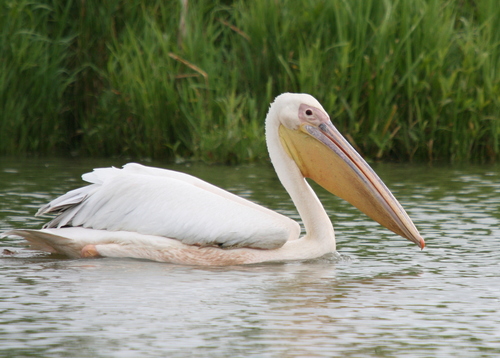
Great White Pelican (Pelecanus onocrotalus) Great White Pelican
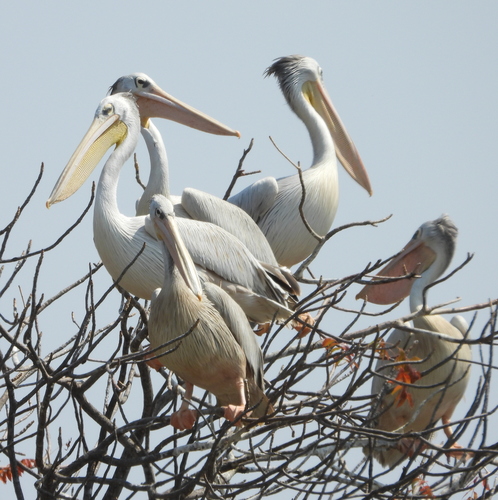
Pink-backed Pelican (Pelecanus rufescens) Pink-backed Pelican

Media

Loading…

In short

The most reliable field mark to separate Great White Pelican from Pink-backed Pelican is overall size and bulk: Great White is much larger and heavier, with a massive bill and broad wings, while Pink-backed is noticeably smaller and slimmer. In flight, adult Great White Pelicans show striking black primaries and secondaries contrasting with white coverts, whereas Pink-backed Pelicans appear greyer with only a faint pinkish wash on the back and lack the bold wing contrast. Juvenile Great White Pelicans have darker, brownish underparts and a dark bar on the underwing, which is not matched by Pink-backed. Bill and leg color also differ, especially in breeding season. Both species can occur together at African lakes, but size and plumage contrast are decisive at any distance.

Identification tips

  1. Size is decisive: Great White Pelican is much larger and bulkier than Pink-backed. If you see both together, the size gap is obvious. If alone, compare to nearby birds or recall that Great White is one of the heaviest flying birds.
  2. Bill length and shape: Great White's bill is longer and more massive (up to 47 cm), with a downward bend in males and a bluish-grey base with red and yellow accents. Pink-backed's bill is shorter (up to 38 cm), more slender, yellowish on top, and the pouch is greyish.
  3. Adult wing pattern in flight: Great White shows a dramatic contrast between white coverts and solid black primaries/secondaries, creating a bold black-and-white wing. Pink-backed's wings are much greyer overall, lacking the sharp contrast; any pink is subtle and restricted to the back.
  4. Juvenile underparts and underwing: Juvenile Great White Pelicans have brownish underparts and a dark bar across the underwing greater coverts, which Pink-backed never shows. Juvenile Pink-backed are greyer and lack strong underwing pattern.
  5. Plumage tone: Great White is white overall with a faint pink or yellowish tinge in breeding season; Pink-backed is greyish-white with a pale pinkish wash only on the back, never deep pink or overall rosy.
  6. Leg color: Great White has yellow-flesh to pinkish-orange legs; Pink-backed's leg color is less distinctive but does not show the same bright tones.
  7. Head plumes: Both species have head plumes in breeding season, but Great White's are shaggier and more obvious.
  8. Facial skin in breeding: Great White males show pinkish facial skin, females orangey; Pink-backed does not show such strong facial skin color changes.
  9. Jizz in flight: Great White appears massive, with broad wings and slow, heavy wingbeats. Pink-backed is slimmer, with proportionally narrower wings and a lighter flight.
  10. Perched posture: Great White often looks hulking and heavy-chested when at rest; Pink-backed is more slender and upright, especially when perched in trees.
  11. Habitat context: If seen nesting or roosting in trees, especially mangroves, Pink-backed is more likely. Great White usually nests on the ground or low islands.
  12. Group behavior: Great White often forms large, conspicuous feeding flocks; Pink-backed's groups are smaller and less boisterous.
  13. Bill pouch color: Great White's gular pouch is cream-yellow to yolk-yellow; Pink-backed's is usually greyish.
  14. Sexual dimorphism: Great White shows strong size difference between sexes; Pink-backed less so, but this is hard to judge in the field without direct comparison.
  15. Overlap and confusion: Both can occur together on African lakes, so do not rely on location alone. Always check size, wing pattern, and bill structure for confirmation.

Size

Great White Pelican is among the largest flying birds, averaging 9520 g (males often over 11 kg), with a length of 140–180 cm and a wingspan up to 360 cm. Pink-backed Pelican is much smaller, averaging 5445 g (rarely above 7 kg), with a length of 125–155 cm and a wingspan up to 290 cm. The bill of Great White is also longer and bulkier (up to 47 cm) compared to Pink-backed (up to 38 cm). In the field, Great White appears huge and heavy-bodied, while Pink-backed is more modest in size and less imposing.

Plumage

Juvenile Great White Pelicans have brownish underparts, palest at the rump and belly center, and a dark brownish bar across the underwing greater coverts—this is not seen in Pink-backed of any age. Adult Great White Pelicans are predominantly white with a faint pink tinge, and in flight show a sharp contrast between white upperwing coverts and solid black primaries and secondaries. Pink-backed Pelicans are greyish-white overall, with a subtle pinkish wash on the back (never deep pink), and lack the bold black-and-white wing pattern; their wings appear more uniformly greyish. Breeding adults of both species have head plumes, but Great White's are shaggier and the body can appear more rosy-yellowish in peak season. Bill and pouch color differ: Great White has a bluish-grey bill with red and yellow tones, while Pink-backed shows a yellow-topped bill and greyish pouch.

Behaviour

Both species are gregarious and often fish cooperatively, but Great White Pelicans tend to dominate mixed flocks due to their size. Great White often forages in larger, more conspicuous groups and may be seen soaring on thermals with heavy, slow wingbeats. Pink-backed is more likely to roost and nest in trees and can appear more agile when perched or in flight. Both species plunge their heads into the water to feed, but Great White's feeding groups are more obvious and boisterous.

Habitat

Both species share swamps, shallow lakes, and slow-moving rivers in Africa, sometimes side by side. Great White Pelican has a broader range, extending into southeastern Europe and Asia, while Pink-backed is restricted to Africa and southern Arabia. Pink-backed prefers quieter backwaters, often with trees for roosting and nesting, and is more likely to be found in mangroves or flooded woodland. Great White is more likely on open water and large lakes, rarely nesting in trees.

Submit a better description

Use the same sections as the comparison. Your text is published immediately.

The most reliable field mark to separate Great White Pelican from Pink-backed Pelican is overall size and bulk: Great White is much larger and heavier, with a massive bill and broad wings, while Pink-backed is noticeably smaller and slimmer. In flight, adult Great White Pelicans show striking black primaries and secondaries contrasting with white coverts, whereas Pink-backed Pelicans appear greyer with only a faint pinkish wash on the back and lack the bold wing contrast. Juvenile Great White Pelicans have darker, brownish underparts and a dark bar on the underwing, which is not matched by Pink-backed. Bill and leg color also differ, especially in breeding season. Both species can occur together at African lakes, but size and plumage contrast are decisive at any distance.

  1. Size is decisive: Great White Pelican is much larger and bulkier than Pink-backed. If you see both together, the size gap is obvious. If alone, compare to nearby birds or recall that Great White is one of the heaviest flying birds.
  2. Bill length and shape: Great White's bill is longer and more massive (up to 47 cm), with a downward bend in males and a bluish-grey base with red and yellow accents. Pink-backed's bill is shorter (up to 38 cm), more slender, yellowish on top, and the pouch is greyish.
  3. Adult wing pattern in flight: Great White shows a dramatic contrast between white coverts and solid black primaries/secondaries, creating a bold black-and-white wing. Pink-backed's wings are much greyer overall, lacking the sharp contrast; any pink is subtle and restricted to the back.
  4. Juvenile underparts and underwing: Juvenile Great White Pelicans have brownish underparts and a dark bar across the underwing greater coverts, which Pink-backed never shows. Juvenile Pink-backed are greyer and lack strong underwing pattern.
  5. Plumage tone: Great White is white overall with a faint pink or yellowish tinge in breeding season; Pink-backed is greyish-white with a pale pinkish wash only on the back, never deep pink or overall rosy.
  6. Leg color: Great White has yellow-flesh to pinkish-orange legs; Pink-backed's leg color is less distinctive but does not show the same bright tones.
  7. Head plumes: Both species have head plumes in breeding season, but Great White's are shaggier and more obvious.
  8. Facial skin in breeding: Great White males show pinkish facial skin, females orangey; Pink-backed does not show such strong facial skin color changes.
  9. Jizz in flight: Great White appears massive, with broad wings and slow, heavy wingbeats. Pink-backed is slimmer, with proportionally narrower wings and a lighter flight.
  10. Perched posture: Great White often looks hulking and heavy-chested when at rest; Pink-backed is more slender and upright, especially when perched in trees.
  11. Habitat context: If seen nesting or roosting in trees, especially mangroves, Pink-backed is more likely. Great White usually nests on the ground or low islands.
  12. Group behavior: Great White often forms large, conspicuous feeding flocks; Pink-backed's groups are smaller and less boisterous.
  13. Bill pouch color: Great White's gular pouch is cream-yellow to yolk-yellow; Pink-backed's is usually greyish.
  14. Sexual dimorphism: Great White shows strong size difference between sexes; Pink-backed less so, but this is hard to judge in the field without direct comparison.
  15. Overlap and confusion: Both can occur together on African lakes, so do not rely on location alone. Always check size, wing pattern, and bill structure for confirmation.

Great White Pelican is among the largest flying birds, averaging 9520 g (males often over 11 kg), with a length of 140–180 cm and a wingspan up to 360 cm. Pink-backed Pelican is much smaller, averaging 5445 g (rarely above 7 kg), with a length of 125–155 cm and a wingspan up to 290 cm. The bill of Great White is also longer and bulkier (up to 47 cm) compared to Pink-backed (up to 38 cm). In the field, Great White appears huge and heavy-bodied, while Pink-backed is more modest in size and less imposing.

Juvenile Great White Pelicans have brownish underparts, palest at the rump and belly center, and a dark brownish bar across the underwing greater coverts—this is not seen in Pink-backed of any age. Adult Great White Pelicans are predominantly white with a faint pink tinge, and in flight show a sharp contrast between white upperwing coverts and solid black primaries and secondaries. Pink-backed Pelicans are greyish-white overall, with a subtle pinkish wash on the back (never deep pink), and lack the bold black-and-white wing pattern; their wings appear more uniformly greyish. Breeding adults of both species have head plumes, but Great White's are shaggier and the body can appear more rosy-yellowish in peak season. Bill and pouch color differ: Great White has a bluish-grey bill with red and yellow tones, while Pink-backed shows a yellow-topped bill and greyish pouch.

Both species are gregarious and often fish cooperatively, but Great White Pelicans tend to dominate mixed flocks due to their size. Great White often forages in larger, more conspicuous groups and may be seen soaring on thermals with heavy, slow wingbeats. Pink-backed is more likely to roost and nest in trees and can appear more agile when perched or in flight. Both species plunge their heads into the water to feed, but Great White's feeding groups are more obvious and boisterous.

Both species share swamps, shallow lakes, and slow-moving rivers in Africa, sometimes side by side. Great White Pelican has a broader range, extending into southeastern Europe and Asia, while Pink-backed is restricted to Africa and southern Arabia. Pink-backed prefers quieter backwaters, often with trees for roosting and nesting, and is more likely to be found in mangroves or flooded woodland. Great White is more likely on open water and large lakes, rarely nesting in trees.

Discard your changes?

You have unsaved edits. If you leave now, those changes will be lost.

Great White Pelican · Pink-backed Pelican · My Tricky Birds