

Green-capped Eremomela vs Green-backed Camaroptera
Eremomela scotops versus Camaroptera brachyura
Play a quiz with Green-capped Eremomela and Green-backed Camaroptera
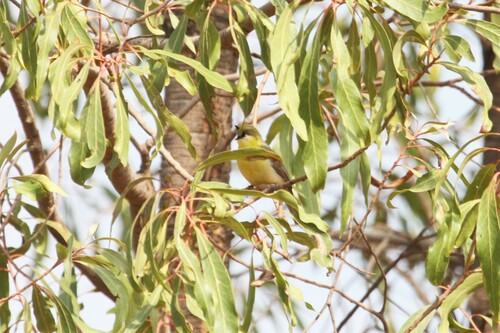 Green-capped Eremomela
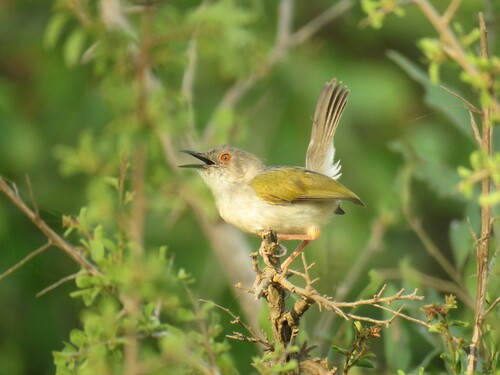 Green-backed Camaroptera
In short
The most reliable field mark between Green-capped Eremomela and Green-backed Camaroptera is the overall plumage pattern: Green-backed Camaroptera shows green upperparts with olive wings and whitish-grey underparts, while Green-capped Eremomela lacks this combination. Juvenile Camaroptera are paler yellow on the breast, which can cause confusion, but the Eremomela does not show this. Both are small, active birds in the Cisticolidae family, but Camaroptera is slightly heavier and typically stays low in dense cover. Watch for subtle differences in underpart color, wing tone, and behavior to separate these species in the field.
Identification tips
- Juvenile underparts: Juvenile Green-backed Camaroptera have a paler yellow breast, which is not shown by Green-capped Eremomela at any age. If you see a yellowish-breasted young bird, suspect Camaroptera.
- Adult upperparts: Camaroptera adults have green upperparts and olive wings, while Eremomela lacks this exact combination. Look for the green back and olive wing contrast in perched or foraging birds.
- Underparts color: Camaroptera shows whitish-grey underparts in adults, contrasting with its green upperparts. Eremomela's underpart color is not specified, but the absence of a sharp green/white contrast may point toward Eremomela.
- Wing color: Olive-toned wings are a feature of Camaroptera; if the wings appear more neutral or less olive, consider Eremomela.
- Sex differences: Both species have similar sexes, so do not rely on sex for identification.
- Flight vs perched views: No distinctive flight marks or upperwing patterns are described for either species, so focus on perched views and overall color.
- Behavior: Camaroptera is a skulker, usually staying low in dense cover and often hidden. If the bird is moving through thick brush or near the ground, Camaroptera is more likely. Eremomela may be more visible and active in the open.
- Habitat: Dense, bushy cover and leaf-binding behavior are strong clues for Camaroptera. Eremomela is less tied to dense undergrowth.
- Size: Both species are very similar in size, with Camaroptera just slightly heavier, but this is not a reliable field mark.
- Nest location: If you observe a nest bound within leaves low in a bush, it is likely Camaroptera.
- Pitfalls with juveniles: The paler yellow breast of juvenile Camaroptera can be mistaken for other species; check for green upperparts and olive wings to confirm.
- No strong seasonal variation: Both species have little seasonal or sexual dimorphism, so plumage marks apply year-round.
- Voice: No vocal differences are described in the notes, so do not rely on song or call for separation.
- Context: If you are birding in dense, low vegetation and see a small, greenish bird, Camaroptera is more likely; in more open or mixed habitat, consider Eremomela.
- Combined marks: The best separation comes from a combination of green upperparts, olive wings, whitish-grey underparts, and skulking behavior for Camaroptera versus a lack of this combination for Eremomela.
Size
Green-capped Eremomela averages 9.0 g in body mass, while Green-backed Camaroptera is slightly heavier at 10.0 g [wikidata]. Both are small passerines, but this difference is negligible in the field. Camaroptera is described as about 11.5 cm long; no length is given for Eremomela, but both are similar in size and structure, so size alone is not a reliable separator.
Plumage
Juvenile Green-backed Camaroptera can be separated from Green-capped Eremomela by their paler yellow breast, a feature not shown by Eremomela at any age. Adult Camaroptera have green upperparts, olive wings, and whitish-grey underparts, while Eremomela lacks this specific combination. Both sexes of Camaroptera are similar, so sex is not a useful separator. No distinctive age-specific upperwing patterns or flight marks are described for either species, so focus on underpart and upperpart coloration. The Eremomela's plumage is not detailed here, but the Camaroptera's green back and olive wings are key contrasts.
Behaviour
Green-backed Camaroptera is described as a skulking species, typically found low in dense cover and often binding leaves together to nest. This behavior is distinctive and can help separate it from Green-capped Eremomela, which is not described as particularly skulking or leaf-binding. Camaroptera's tendency to stay low and hidden contrasts with the more typical foraging behavior of Eremomela, which may be more visible in the open.
Habitat
Green-backed Camaroptera is strongly associated with dense, low vegetation and bushy cover, where it nests and forages. Green-capped Eremomela's habitat is not specified in the notes, but the Camaroptera's preference for dense undergrowth is a useful context clue. If you see a small greenish bird low in thick cover, Camaroptera is more likely; a more exposed bird may be Eremomela.
Green-capped Eremomela · Green-backed Camaroptera · My Tricky Birds