
Motmot

Lesser Antillean Swift vs Lesser Antillean Bullfinch

Chaetura martinica versus Loxigilla noctis

Play a quiz with Lesser Antillean Swift and Lesser Antillean Bullfinch
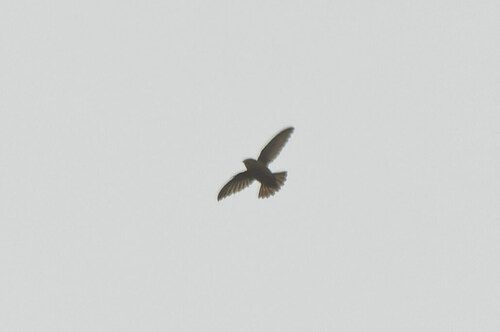
Lesser Antillean Swift (Chaetura martinica) Lesser Antillean Swift
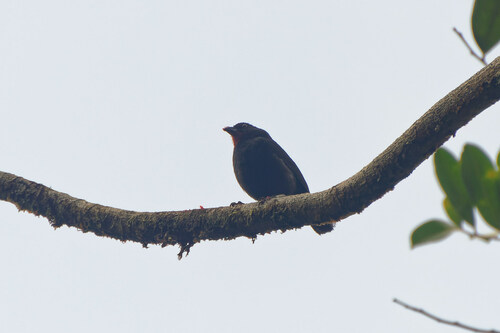
Lesser Antillean Bullfinch (Loxigilla noctis) Lesser Antillean Bullfinch

Media

Loading…

In short

The most reliable way to separate Lesser Antillean Swift from Lesser Antillean Bullfinch is by overall structure and flight style: the swift is a fast-flying, sickle-winged aerialist with a square tail, while the bullfinch is a perching songbird with a thick bill and more deliberate movements. Juvenile swifts can show white tips on some wing feathers, a mark never seen on bullfinch. Adult bullfinches are sexually dimorphic, with males showing black plumage and red or rufous accents, while swifts are uniformly dark brown above with a gray rump band and lack any red or rufous. If seen perched, the bullfinch’s heavy bill and upright stance are unmistakable; swifts are almost never seen perched in the open. Size overlap is minimal, but bullfinch is bulkier and longer. Both species occur on the same islands, so context alone is not enough.

Identification tips

  1. Juvenile swift wing tips: Look for white tips on some wing feathers in juvenile Lesser Antillean Swifts; this is never present in bullfinch of any age.
  2. Flight style: Swifts are almost always seen in rapid, agile flight with stiff, sickle-shaped wings and a square tail; bullfinches fly in short, undulating bursts and perch frequently.
  3. Bill shape: Swifts have a tiny, inconspicuous bill; bullfinches have a thick, conical bill that is obvious even at a distance when perched.
  4. Tail shape: Swifts have a short, square tail that does not extend far beyond the body; bullfinch tails are longer and more rounded.
  5. Sexual dimorphism: Bullfinches are sexually dimorphic—males are mostly black with red or rufous accents, females are warm brown with rusty and gray tones; swifts show no sex differences.
  6. Plumage color: Swifts are uniform black-brown above with a narrow gray rump band and brown underparts; bullfinches show warm brown or black plumage with rufous or red accents depending on sex and subspecies.
  7. Rump band: The swift’s narrow gray rump band is unique and visible in good light; bullfinches never show a contrasting rump.
  8. Perched posture: Swifts are rarely seen perched in the open; if you see a bird sitting upright on a branch, especially with a thick bill, it is almost certainly a bullfinch.
  9. Wing shape: Swifts have long, bulging wings that hook at the end; bullfinch wings are shorter and more rounded.
  10. Group size: Swifts often forage in large flocks, sometimes with swallows; bullfinches are usually solitary or in pairs.
  11. Underparts: Swift underparts are brown with a paler throat; bullfinch underparts are grayish (female) or black (male), with rusty undertail coverts in many subspecies.
  12. Supercilium and throat patch: Male bullfinches may show a red or rufous supercilium and throat patch, absent in swifts.
  13. Leg color: Both have dark legs, not a strong field mark for separation.
  14. Habitat context: Swifts are seen in open airspace, bullfinches in shrubs and trees; context can help but is not foolproof.
  15. Size impression: Bullfinches are bulkier and longer-bodied than swifts, which appear slender and streamlined in flight.

Size

Lesser Antillean Bullfinch is noticeably larger and heavier than the swift: bullfinch averages 14–15.5 cm in length and 18.4 g in mass, while the swift is 10.5–11 cm and averages 12.7 g. The bullfinch appears stockier and more robust, especially when perched. Swifts look slender and streamlined in flight, with proportionally longer wings compared to body size. While there is some overlap in weight, the difference in body shape and length is usually clear in the field.

Plumage

Juvenile Lesser Antillean Swifts can be told by white tips on some wing feathers, a feature never present in bullfinch of any age. Adult swifts are uniform black-brown above with a narrow gray rump band, brown underparts, and a paler throat; sexes are alike. In contrast, adult bullfinches are sexually dimorphic: males are mostly black with a red or orangish throat and supercilium (varying by subspecies), while females are warm brown with rusty tones on the lores, wings, and undertail. Bullfinch wings are brown with rusty edges on the greater coverts, and their underparts are grayish with rusty undertail coverts. No swift shows any rufous, rusty, or red coloration. The swift’s tail is short and square, while the bullfinch’s tail is proportionally longer and more rounded. Swifts lack the heavy, conical bill of bullfinch.

Behaviour

Lesser Antillean Swifts are almost always seen in flight, often in flocks of 20–40 birds, sometimes mixed with swallows. They feed exclusively on insects on the wing and rarely perch in the open. Their flight is rapid, with stiff, sickle-shaped wings and a distinctive, erratic jizz. Bullfinches, by contrast, are typically seen perched or moving through vegetation, feeding on seeds, fruit, or insects. Their flight is short and undulating, and they rarely join large aerial flocks. The bullfinch’s behavior is more typical of a perching songbird, often foraging alone or in pairs.

Habitat

Both species are found on the same islands in the Lesser Antilles, so range is not diagnostic. Swifts are most often seen in open airspace above forests, fields, or towns, while bullfinches prefer shrubby areas, gardens, and forest edges where they can perch and forage. Swifts are rarely seen on the ground or in dense vegetation, unlike bullfinches.

Submit a better description

Use the same sections as the comparison. Your text is published immediately.

The most reliable way to separate Lesser Antillean Swift from Lesser Antillean Bullfinch is by overall structure and flight style: the swift is a fast-flying, sickle-winged aerialist with a square tail, while the bullfinch is a perching songbird with a thick bill and more deliberate movements. Juvenile swifts can show white tips on some wing feathers, a mark never seen on bullfinch. Adult bullfinches are sexually dimorphic, with males showing black plumage and red or rufous accents, while swifts are uniformly dark brown above with a gray rump band and lack any red or rufous. If seen perched, the bullfinch’s heavy bill and upright stance are unmistakable; swifts are almost never seen perched in the open. Size overlap is minimal, but bullfinch is bulkier and longer. Both species occur on the same islands, so context alone is not enough.

  1. Juvenile swift wing tips: Look for white tips on some wing feathers in juvenile Lesser Antillean Swifts; this is never present in bullfinch of any age.
  2. Flight style: Swifts are almost always seen in rapid, agile flight with stiff, sickle-shaped wings and a square tail; bullfinches fly in short, undulating bursts and perch frequently.
  3. Bill shape: Swifts have a tiny, inconspicuous bill; bullfinches have a thick, conical bill that is obvious even at a distance when perched.
  4. Tail shape: Swifts have a short, square tail that does not extend far beyond the body; bullfinch tails are longer and more rounded.
  5. Sexual dimorphism: Bullfinches are sexually dimorphic—males are mostly black with red or rufous accents, females are warm brown with rusty and gray tones; swifts show no sex differences.
  6. Plumage color: Swifts are uniform black-brown above with a narrow gray rump band and brown underparts; bullfinches show warm brown or black plumage with rufous or red accents depending on sex and subspecies.
  7. Rump band: The swift’s narrow gray rump band is unique and visible in good light; bullfinches never show a contrasting rump.
  8. Perched posture: Swifts are rarely seen perched in the open; if you see a bird sitting upright on a branch, especially with a thick bill, it is almost certainly a bullfinch.
  9. Wing shape: Swifts have long, bulging wings that hook at the end; bullfinch wings are shorter and more rounded.
  10. Group size: Swifts often forage in large flocks, sometimes with swallows; bullfinches are usually solitary or in pairs.
  11. Underparts: Swift underparts are brown with a paler throat; bullfinch underparts are grayish (female) or black (male), with rusty undertail coverts in many subspecies.
  12. Supercilium and throat patch: Male bullfinches may show a red or rufous supercilium and throat patch, absent in swifts.
  13. Leg color: Both have dark legs, not a strong field mark for separation.
  14. Habitat context: Swifts are seen in open airspace, bullfinches in shrubs and trees; context can help but is not foolproof.
  15. Size impression: Bullfinches are bulkier and longer-bodied than swifts, which appear slender and streamlined in flight.

Lesser Antillean Bullfinch is noticeably larger and heavier than the swift: bullfinch averages 14–15.5 cm in length and 18.4 g in mass, while the swift is 10.5–11 cm and averages 12.7 g. The bullfinch appears stockier and more robust, especially when perched. Swifts look slender and streamlined in flight, with proportionally longer wings compared to body size. While there is some overlap in weight, the difference in body shape and length is usually clear in the field.

Juvenile Lesser Antillean Swifts can be told by white tips on some wing feathers, a feature never present in bullfinch of any age. Adult swifts are uniform black-brown above with a narrow gray rump band, brown underparts, and a paler throat; sexes are alike. In contrast, adult bullfinches are sexually dimorphic: males are mostly black with a red or orangish throat and supercilium (varying by subspecies), while females are warm brown with rusty tones on the lores, wings, and undertail. Bullfinch wings are brown with rusty edges on the greater coverts, and their underparts are grayish with rusty undertail coverts. No swift shows any rufous, rusty, or red coloration. The swift’s tail is short and square, while the bullfinch’s tail is proportionally longer and more rounded. Swifts lack the heavy, conical bill of bullfinch.

Lesser Antillean Swifts are almost always seen in flight, often in flocks of 20–40 birds, sometimes mixed with swallows. They feed exclusively on insects on the wing and rarely perch in the open. Their flight is rapid, with stiff, sickle-shaped wings and a distinctive, erratic jizz. Bullfinches, by contrast, are typically seen perched or moving through vegetation, feeding on seeds, fruit, or insects. Their flight is short and undulating, and they rarely join large aerial flocks. The bullfinch’s behavior is more typical of a perching songbird, often foraging alone or in pairs.

Both species are found on the same islands in the Lesser Antilles, so range is not diagnostic. Swifts are most often seen in open airspace above forests, fields, or towns, while bullfinches prefer shrubby areas, gardens, and forest edges where they can perch and forage. Swifts are rarely seen on the ground or in dense vegetation, unlike bullfinches.

Discard your changes?

You have unsaved edits. If you leave now, those changes will be lost.

Lesser Antillean Swift · Lesser Antillean Bullfinch · My Tricky Birds