
Motmot

Lesser Whistling-Duck vs Blue-rumped Parrot

Dendrocygna javanica versus Psittinus cyanurus

Play a quiz with Lesser Whistling-Duck and Blue-rumped Parrot
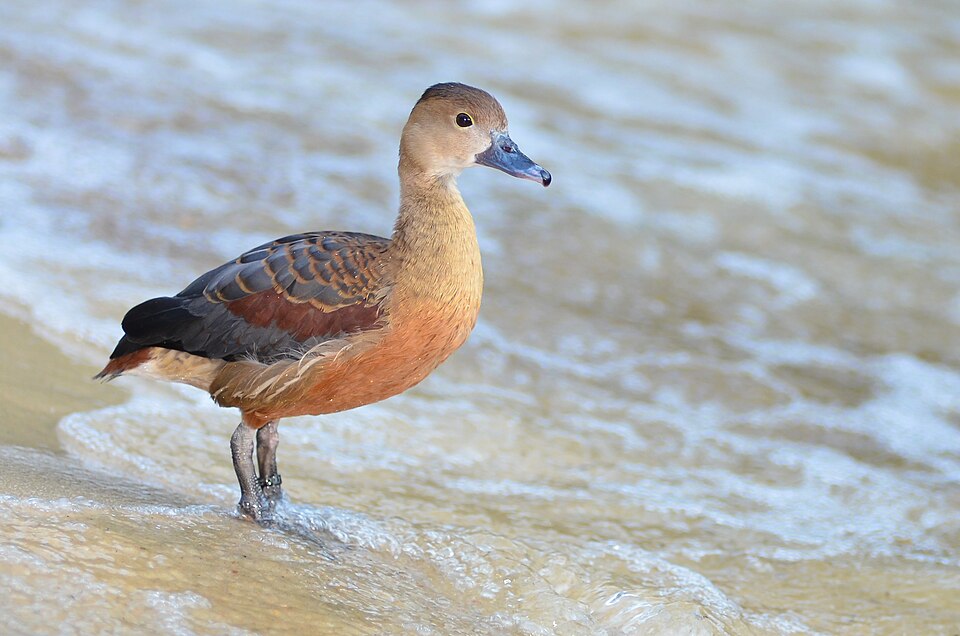
Lesser Whistling-Duck (Dendrocygna javanica) Lesser Whistling-Duck
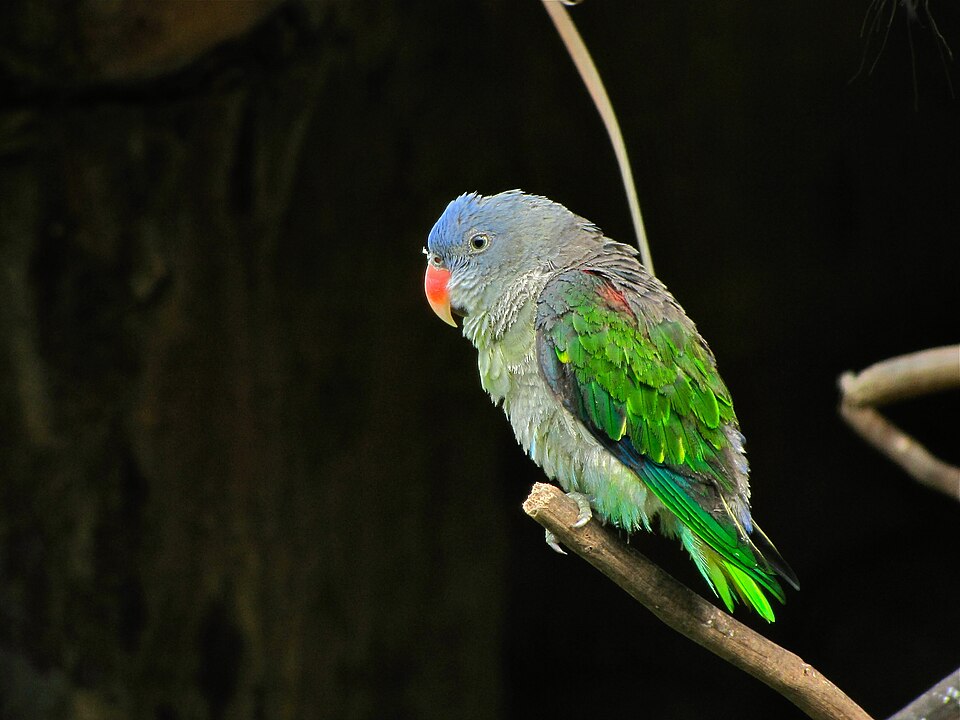
Blue-rumped Parrot (Psittinus cyanurus) Blue-rumped Parrot

Media

Loading…

In short

The most reliable way to separate Lesser Whistling-Duck from Blue-rumped Parrot is by overall shape and flight style: the duck is a large, long-necked, chestnut-brown waterbird with slow, whistling flight, while the parrot is a much smaller, short-tailed, bright green bird with a strong, direct flight and red underwings. In perched views, the duck’s chestnut body and yellow-orange eye-ring contrast with the parrot’s green plumage and, in males, blue head and rump. Only the parrot shows sexual dimorphism, with males and females differing in head color. Habitat and behavior also help: ducks are seen in flocks on water or banks, parrots in forested areas and often in pairs or small groups.

Identification tips

  1. Size and shape: The duck is much larger, with a long neck and legs; the parrot is small, compact, and short-tailed. Use size as your first check, especially in mixed-species flocks or distant views.
  2. Flight style: Lesser Whistling-Duck flies with slow, steady wingbeats and a straight, level body with the head held below the body; Blue-rumped Parrot has rapid, direct flight and a more upright posture in the air.
  3. Plumage color: The duck is chestnut-brown overall with a dark crown and chestnut upper-tail coverts; the parrot is bright green with red underwing coverts and a reddish shoulder patch, especially visible in flight or when stretching.
  4. Sexual dimorphism: Only the parrot shows clear sex differences: males have a blue head and rump, black mantle, and red upper mandible; females have a grey-brown head. The duck’s sexes are identical in plumage.
  5. Eye-ring: Lesser Whistling-Duck has a distinctive orange to yellow eye-ring, which is absent in the parrot.
  6. Bill: The duck has a broad, flat bill typical of waterfowl; the parrot has a short, strong, hooked bill suited for cracking seeds and fruit.
  7. Tail and upper-tail coverts: The duck’s upper-tail coverts are chestnut, while the parrot’s rump (especially in males) is blue. The duck’s tail is short and squared, the parrot’s is short but more rounded.
  8. Underwing pattern: Blue-rumped Parrot shows bright red underwing coverts and a reddish shoulder patch in flight, absent in the duck.
  9. Perching behavior: Ducks may perch in trees but are most often seen on water or banks; parrots are almost always perched in trees or flying between them.
  10. Habitat: Ducks are found in wetlands, lakes, and paddy fields; parrots are in forest edges, plantations, and secondary growth, never on open water.
  11. Flock size: Ducks are highly gregarious, often in large flocks; parrots are typically in pairs or small groups.
  12. Vocalization: Listen for the duck’s repetitive, wheezy whistling call, especially in flight; parrot calls are not described here but would be sharper and more screechy.
  13. Juvenile confusion: Ducklings are black with white patches and would not be mistaken for a parrot. Juvenile parrot plumage is not described, but no evidence suggests confusion at this age.
  14. Feeding behavior: Ducks dabble or dive for aquatic plants and small animals; parrots forage for fruit and seeds in trees.
  15. Geographic range: Both species overlap in parts of Southeast Asia, but the duck’s range extends further west into the Indian subcontinent. Use range as a secondary check if the location is ambiguous.

Size

Lesser Whistling-Duck is substantially larger and heavier, with a body mass around 525 g [wikidata], compared to the much smaller Blue-rumped Parrot (length 18 cm, mass not specified but much lighter). The duck has a bulkier body, longer neck, and longer legs, while the parrot is compact, short-necked, and short-tailed. In flight or at rest, the duck will always appear much larger and more elongated than the parrot.

Plumage

No age-specific upperwing pattern is described for either species, so focus is on adult and sex differences. Lesser Whistling-Duck is a uniform chestnut-brown above with chestnut upper-tail coverts and a yellow-orange eye-ring; sexes are alike. In flight, the duck shows a dark crown and chestnut upperparts, with no bright patches. Blue-rumped Parrot is primarily green with bright red underwing coverts and a reddish shoulder patch visible in flight or when wings are spread. Males have a blue head and rump, black mantle, and red upper mandible, while females have a grey-brown head. The parrot’s wing coverts have yellowish margins. Only the parrot shows sexual dimorphism; the duck does not. Juvenile plumages are not detailed for the parrot, but ducklings are black with white patches and would not be confused with the parrot.

Behaviour

Lesser Whistling-Duck is gregarious, often seen in large flocks on water, dabbling or diving for food, and sometimes perching in trees. They are mostly active at night and rest during the day. Blue-rumped Parrot is typically seen in pairs or small groups, foraging in trees and flying with rapid, direct wingbeats. The parrot is not associated with water and is much more arboreal. The duck may be seen waddling on land, while the parrot moves with agility among branches.

Habitat

Lesser Whistling-Duck is found in lowland wetlands, lakes, paddy fields, and sometimes on the open sea or urban wetlands, always near water. Blue-rumped Parrot inhabits forest edges, secondary growth, and plantations in the southern tip of Myanmar, Thailand, Malaysia, Borneo, and Sumatra, and is not found on open water. If the bird is seen on water or in a wetland, it is almost certainly the duck; if in a forested area or plantation, it is likely the parrot.

Voice

Lesser Whistling-Duck gives a prominent, repetitive, wheezy two-note whistling call, especially in flight or when circling overhead. The call is distinctive and often described as a 'seasick' whistle. Blue-rumped Parrot’s vocalizations are not described in the notes, but parrots typically give sharp, screechy calls, very different from the duck’s whistling. If you hear a whistling call, it is almost certainly the duck.

Submit a better description

Use the same sections as the comparison. Your text is published immediately.

The most reliable way to separate Lesser Whistling-Duck from Blue-rumped Parrot is by overall shape and flight style: the duck is a large, long-necked, chestnut-brown waterbird with slow, whistling flight, while the parrot is a much smaller, short-tailed, bright green bird with a strong, direct flight and red underwings. In perched views, the duck’s chestnut body and yellow-orange eye-ring contrast with the parrot’s green plumage and, in males, blue head and rump. Only the parrot shows sexual dimorphism, with males and females differing in head color. Habitat and behavior also help: ducks are seen in flocks on water or banks, parrots in forested areas and often in pairs or small groups.

  1. Size and shape: The duck is much larger, with a long neck and legs; the parrot is small, compact, and short-tailed. Use size as your first check, especially in mixed-species flocks or distant views.
  2. Flight style: Lesser Whistling-Duck flies with slow, steady wingbeats and a straight, level body with the head held below the body; Blue-rumped Parrot has rapid, direct flight and a more upright posture in the air.
  3. Plumage color: The duck is chestnut-brown overall with a dark crown and chestnut upper-tail coverts; the parrot is bright green with red underwing coverts and a reddish shoulder patch, especially visible in flight or when stretching.
  4. Sexual dimorphism: Only the parrot shows clear sex differences: males have a blue head and rump, black mantle, and red upper mandible; females have a grey-brown head. The duck’s sexes are identical in plumage.
  5. Eye-ring: Lesser Whistling-Duck has a distinctive orange to yellow eye-ring, which is absent in the parrot.
  6. Bill: The duck has a broad, flat bill typical of waterfowl; the parrot has a short, strong, hooked bill suited for cracking seeds and fruit.
  7. Tail and upper-tail coverts: The duck’s upper-tail coverts are chestnut, while the parrot’s rump (especially in males) is blue. The duck’s tail is short and squared, the parrot’s is short but more rounded.
  8. Underwing pattern: Blue-rumped Parrot shows bright red underwing coverts and a reddish shoulder patch in flight, absent in the duck.
  9. Perching behavior: Ducks may perch in trees but are most often seen on water or banks; parrots are almost always perched in trees or flying between them.
  10. Habitat: Ducks are found in wetlands, lakes, and paddy fields; parrots are in forest edges, plantations, and secondary growth, never on open water.
  11. Flock size: Ducks are highly gregarious, often in large flocks; parrots are typically in pairs or small groups.
  12. Vocalization: Listen for the duck’s repetitive, wheezy whistling call, especially in flight; parrot calls are not described here but would be sharper and more screechy.
  13. Juvenile confusion: Ducklings are black with white patches and would not be mistaken for a parrot. Juvenile parrot plumage is not described, but no evidence suggests confusion at this age.
  14. Feeding behavior: Ducks dabble or dive for aquatic plants and small animals; parrots forage for fruit and seeds in trees.
  15. Geographic range: Both species overlap in parts of Southeast Asia, but the duck’s range extends further west into the Indian subcontinent. Use range as a secondary check if the location is ambiguous.

Lesser Whistling-Duck is substantially larger and heavier, with a body mass around 525 g [wikidata], compared to the much smaller Blue-rumped Parrot (length 18 cm, mass not specified but much lighter). The duck has a bulkier body, longer neck, and longer legs, while the parrot is compact, short-necked, and short-tailed. In flight or at rest, the duck will always appear much larger and more elongated than the parrot.

No age-specific upperwing pattern is described for either species, so focus is on adult and sex differences. Lesser Whistling-Duck is a uniform chestnut-brown above with chestnut upper-tail coverts and a yellow-orange eye-ring; sexes are alike. In flight, the duck shows a dark crown and chestnut upperparts, with no bright patches. Blue-rumped Parrot is primarily green with bright red underwing coverts and a reddish shoulder patch visible in flight or when wings are spread. Males have a blue head and rump, black mantle, and red upper mandible, while females have a grey-brown head. The parrot’s wing coverts have yellowish margins. Only the parrot shows sexual dimorphism; the duck does not. Juvenile plumages are not detailed for the parrot, but ducklings are black with white patches and would not be confused with the parrot.

Lesser Whistling-Duck is gregarious, often seen in large flocks on water, dabbling or diving for food, and sometimes perching in trees. They are mostly active at night and rest during the day. Blue-rumped Parrot is typically seen in pairs or small groups, foraging in trees and flying with rapid, direct wingbeats. The parrot is not associated with water and is much more arboreal. The duck may be seen waddling on land, while the parrot moves with agility among branches.

Lesser Whistling-Duck is found in lowland wetlands, lakes, paddy fields, and sometimes on the open sea or urban wetlands, always near water. Blue-rumped Parrot inhabits forest edges, secondary growth, and plantations in the southern tip of Myanmar, Thailand, Malaysia, Borneo, and Sumatra, and is not found on open water. If the bird is seen on water or in a wetland, it is almost certainly the duck; if in a forested area or plantation, it is likely the parrot.

Lesser Whistling-Duck gives a prominent, repetitive, wheezy two-note whistling call, especially in flight or when circling overhead. The call is distinctive and often described as a 'seasick' whistle. Blue-rumped Parrot’s vocalizations are not described in the notes, but parrots typically give sharp, screechy calls, very different from the duck’s whistling. If you hear a whistling call, it is almost certainly the duck.

Discard your changes?

You have unsaved edits. If you leave now, those changes will be lost.

Lesser Whistling-Duck · Blue-rumped Parrot · My Tricky Birds