

Northern Beardless-Tyrannulet vs Yellow-bellied Elaenia
Camptostoma imberbe versus Elaenia flavogaster
Play a quiz with Northern Beardless-Tyrannulet and Yellow-bellied Elaenia
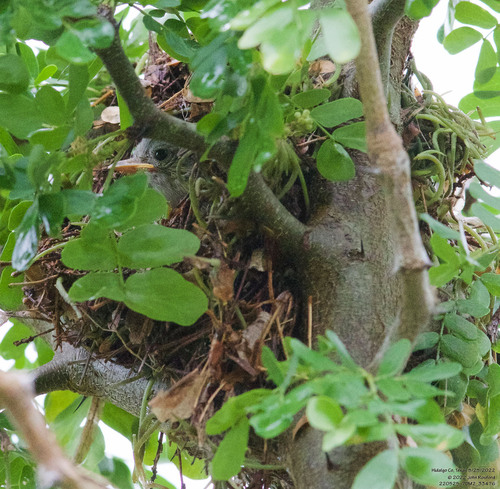 Northern Beardless-Tyrannulet
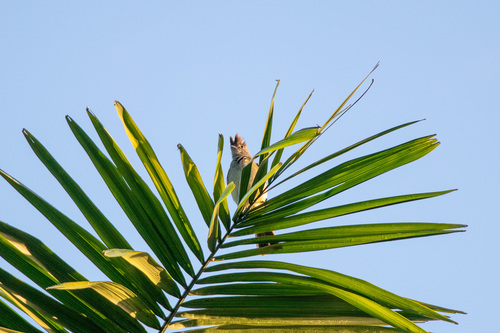 Yellow-bellied Elaenia
In short
The most reliable field mark to separate Northern Beardless-Tyrannulet from Yellow-bellied Elaenia is overall size and structure: the tyrannulet is much smaller and more delicate, with a shorter tail and a noticeably smaller, pink-based bill, while the elaenia is bulkier, longer, and has a bushier crest and a dark bill. Both species have yellowish underparts and two pale wing bars, but the tyrannulet is drabber and less contrasting overall, with subtler wing bars and a more compact, active jizz. In perched or flight views, look for the tyrannulet's small size, pale supercilium, and pinkish bill versus the elaenia's larger size, bushy crest, and black bill with pale base. Voice and habitat overlap, so rely on structure and plumage details for confident separation.
Identification tips
- Size is the first check: If the bird is tiny and delicate, think Northern Beardless-Tyrannulet; if noticeably larger and bulkier, it's likely Yellow-bellied Elaenia.
- Bill color and shape: Tyrannulet has a small, pinkish bill; elaenia has a stouter, black bill with a pale base to the mandible. Bill color is often visible in good light.
- Crest shape and use: Tyrannulet's crest is erectile but usually subtle; elaenia's crest is bushier and more prominent, often with a partially concealed white central stripe (especially when raised).
- Supercilium and facial pattern: Tyrannulet shows a pale supercilium (eyebrow) above a dark brown head, giving a more marked facial contrast; elaenia has whitish lores, a faint eyering, and a paler face overall, but lacks a strong supercilium.
- Wing bars: Both have two pale wing bars, but the tyrannulet's are whitish and less bright, while the elaenia's are yellowish-white and usually more obvious.
- Upperparts color: Tyrannulet is grey-green above, paler on the rump; elaenia is brownish olive above, sometimes with a greener or grayer cast depending on subspecies.
- Underparts: Tyrannulet's throat is grey, breast yellowish, and belly yellow but not bright; elaenia's throat is pale gray, breast olive-gray, and belly a brighter yellow to pale yellow or whitish, especially in some subspecies.
- Tail: Tyrannulet's tail is short and brown; elaenia's tail is longer and slightly duskier than the back.
- Jizz and behavior: Tyrannulet is quick, active, and often flicks its tail and raises its crest when excited; elaenia is more upright, bulkier, and less frenetic.
- Voice: If you hear a loud, whistled 'Fleeeeeerrr' or repeated 'flee-flee-flee-flee', it's the tyrannulet. Elaenia's calls are not detailed here.
- Habitat: Both can occur in similar edge and garden habitats, but elaenia is more likely in open or brushy areas, especially outside the tyrannulet's limited range.
- Sex and age: Both species are sexually monomorphic (sexes look alike), and no age-specific upperwing patterns are noted for either, so use adult field marks for all ages.
- Pitfalls: Do not rely solely on yellow underparts or wing bars—both species show these. Focus on size, bill, facial pattern, and overall brightness.
- Range: If outside the tyrannulet's range (southwestern US to NW Costa Rica), it's almost certainly elaenia. Where both occur, use structural and plumage marks.
- Flock association: Tyrannulet may join mixed flocks and behave like a vireo or warbler; elaenia is often seen singly or in pairs, more conspicuous due to size and voice.
Size
Yellow-bellied Elaenia is substantially larger and heavier (15–17 cm, 21–29 g [wikidata]) compared to the tiny Northern Beardless-Tyrannulet (10.2 cm, 7.5 g [wikipedia]). In the field, the elaenia appears medium-sized for a flycatcher, with a bulkier body and longer tail, while the tyrannulet is notably petite, almost warbler-like in size and proportions. This size difference is usually obvious when seen side-by-side or with familiar species for scale.
Plumage
Both species have two pale wing bars and yellowish underparts, but the details differ. The Northern Beardless-Tyrannulet (all ages) is overall drabber: its wing bars are whitish but less bright and less sharply defined than those of the elaenia, and its yellow feather-edging on the wings is subtle. The tyrannulet's upperparts are grey-green, becoming paler on the rump, with a dark brown head featuring a pale supercilium and an erectile crest (usually not as bushy as the elaenia's). The bill is pinkish. The throat is grey, breast yellowish, and belly yellow. In contrast, Yellow-bellied Elaenia (adults and immatures) is brownish olive above, with a bushy crest that can show a partially concealed white central stripe, a faint whitish eyering, and a black bill with a pale base to the mandible. Its wing bars are yellowish-white and typically more prominent, and its underparts are brighter yellow to pale yellow, especially on the belly. The elaenia's face is paler, with whitish lores and a faint eyering, and the overall impression is of a more contrasting, brighter bird. No distinctive juvenile or immature upperwing pattern is noted for either species, so these contrasts apply to all ages.
Behaviour
Northern Beardless-Tyrannulet is very active, feeding in a vireo- or warbler-like manner, often flicking its tail and raising its crest when excited. It tends to move quickly and restlessly through foliage. Yellow-bellied Elaenia is also active but appears bulkier and less delicate, often perching more upright and showing off its bushy crest. The elaenia's movements are less frenetic, and it may appear more deliberate when foraging.
Habitat
Both species occur in lightly wooded habitats, gardens, and edges, and both can be found in cultivated areas with trees. The tyrannulet is more restricted in range (southwestern US to NW Costa Rica), while the elaenia is much more widespread (Mexico to South America and many islands). Elaenia tends to avoid dense forest, favoring savanna, scrub, secondary woodland, and suburban parks, and is found at higher elevations in some regions. Habitat alone is not diagnostic where ranges overlap, but the elaenia is more likely in open, brushy, or park-like settings.
Voice
Both species are vocal, but their calls differ. Northern Beardless-Tyrannulet gives a loud, whistled 'Fleeeeeerrr' or broken 'fleeer-it' and repeated 'flee-flee-flee-flee' notes, often with raised crest and tail flicking. Yellow-bellied Elaenia's vocalizations are not detailed in these notes, so voice is not a reliable separator here unless the tyrannulet's distinctive whistled calls are heard.
Northern Beardless-Tyrannulet · Yellow-bellied Elaenia · My Tricky Birds