
Motmot

Northern Giant-Petrel vs Southern Fulmar

Macronectes halli versus Fulmarus glacialoides

Play a quiz with Northern Giant-Petrel and Southern Fulmar
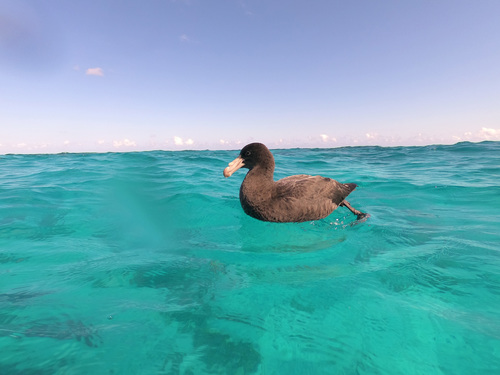
Northern Giant-Petrel (Macronectes halli) Northern Giant-Petrel
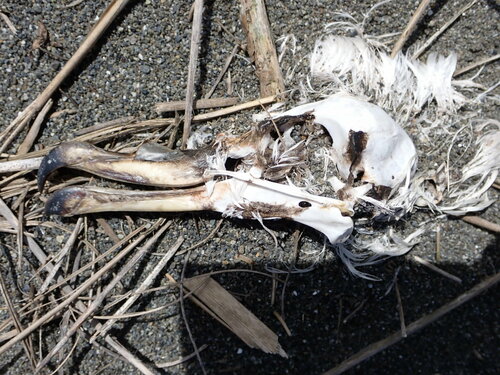
Southern Fulmar (Fulmarus glacialoides) Southern Fulmar

Media

Loading…

In short

The most reliable field mark between Northern Giant-Petrel and Southern Fulmar is overall size and bulk: the giant-petrel is vastly larger and heavier, with a massive, long, hooked bill, while the fulmar is a much smaller, stockier seabird with a short, stubbier bill. In flight, Southern Fulmar shows pale silvery-grey upperparts with a distinctive white wing patch and dark trailing edge, whereas Northern Giant-Petrel is uniformly dark brown as a juvenile and more mottled grey-brown as an adult, lacking any white wing patch. Bill color is also diagnostic at close range: Northern Giant-Petrel has a pinkish-yellow bill with a brown tip, while Southern Fulmar's bill is pink with a black tip and bluish naricorns. These differences are visible even at a distance with binoculars, especially if you catch both perched and in flight.

Identification tips

  1. Size is the most immediate clue: Northern Giant-Petrel is enormous—nearly twice the length and several times the mass of Southern Fulmar. If you see a bird that looks 'albatross-sized,' it's the petrel; if it's more gull-sized, it's the fulmar.
  2. Bill structure: Giant-Petrel has a massive, long, hooked bill (90–110 mm), much longer and heavier than the short, stubby bill of the fulmar (about 44 mm). This is visible even at a distance if the bird is close to the observer or to other species for scale.
  3. Bill color: Northern Giant-Petrel has a pinkish-yellow bill with a brown tip; Southern Fulmar's bill is pink with a black tip and dark bluish naricorns. This is best seen at close range or in good light.
  4. Juvenile plumage: Young Northern Giant-Petrels are entirely dark brown, lacking any pale or white in the wing or body. Southern Fulmar juveniles are already pale grey above and white below, with the white wing patch present.
  5. Adult plumage: Adult Northern Giant-Petrel is mottled grey-brown with a paler face and chin, but never shows a white wing patch or silvery upperparts. Southern Fulmar adults are pale silvery-grey above, white below, with a white head and a distinctive white wing patch bordered by a dark trailing edge and blackish tips.
  6. Wing pattern in flight: Southern Fulmar shows a strong contrast between the white wing patch and the dark trailing edge and tips. Northern Giant-Petrel is uniformly dark (juvenile) or mottled (adult) with no such contrast.
  7. Flight style: Giant-Petrel flies with heavy, deep wingbeats and long, powerful glides, often appearing lumbering. Fulmar is more buoyant, with stiff, shallow wingbeats and long glides, often holding the wings flat and scanning the surface.
  8. Feeding behavior: If observed feeding, Northern Giant-Petrel is often on carrion or scavenging from ships, sometimes aggressively displacing other birds. Southern Fulmar is more likely to be seen picking small prey from the surface or feeding in flocks.
  9. Habitat context: Giant-Petrels are often near penguin or seal colonies or following ships for waste; fulmars are more likely in open water or breeding on cliffs.
  10. Leg color: Southern Fulmar has pale blue legs and feet, which may be visible when perched or on the water. Giant-Petrel's leg color is not diagnostic in the field.
  11. Relative abundance: Both species can be locally common, but check eBird for local abundance if in doubt; in some areas, one may greatly outnumber the other.
  12. Voice: Only helpful at colonies—Southern Fulmar is noisy and cackling, while Giant-Petrel is generally silent.
  13. Sex and age effects: Female Northern Giant-Petrels are smaller than males but still much larger than any fulmar. Bill and plumage differences hold across sexes and ages.
  14. Pitfalls: Do not confuse a distant, dark-mantled fulmar with a juvenile giant-petrel; check for size, bill, and wing pattern. In poor light, the white wing patch of the fulmar may be less obvious, but the size and bill differences remain clear.
  15. When in doubt: If you cannot judge size, look for the white wing patch (fulmar) versus uniform or mottled brown (giant-petrel), and check bill length and color if possible.

Size

Northern Giant-Petrel is a true giant among seabirds, averaging about 4185 g in body mass (with some males exceeding 4900 g), and measuring 80–95 cm in length with a wingspan of 150–210 cm. In contrast, Southern Fulmar is much smaller and lighter, averaging 795 g (males) and 740 g (females), with a length of 45–50 cm and a wingspan of 110–120 cm. The difference is dramatic: a Northern Giant-Petrel dwarfs a Southern Fulmar both on the water and in the air, appearing almost twice as long and several times as heavy.

Plumage

Juvenile Northern Giant-Petrel is entirely dark brown, gradually lightening with age to a mottled grey-brown adult plumage with a paler forehead, sides of face, and chin. There is no white in the wing or body plumage at any age. In contrast, Southern Fulmar of all ages is much paler: adults are pale silvery-grey above and white below, with a white head and pale grey crown. The wings are broad and rounded, showing a distinctive white patch at the base of the primaries and a dark trailing edge, with blackish wingtips. Juvenile fulmars (first-year) have a more slender bill but retain the pale upperparts and white wing patch. These wing pattern differences are most obvious in flight, especially when seen from above or at a distance. Bill color also differs: Northern Giant-Petrel's bill is pinkish-yellow with a brown tip, while Southern Fulmar's is pink with a black tip and dark bluish naricorns.

Behaviour

Northern Giant-Petrel is aggressive and often seen feeding on carrion, including dead penguins and seals, and will also kill other seabirds. It frequently follows ships and scavenges waste. Its flight is powerful and direct, with long, heavy glides and deep wingbeats, befitting its size. Southern Fulmar is more buoyant and agile in flight, with a mixture of shallow flaps and long, stiff-winged glides, often scanning the water below. Fulmars are less likely to be seen feeding on large carcasses and are more often observed picking krill, fish, or squid from the surface. At colonies, fulmars are noisy and social, while giant-petrels are more solitary and dominant.

Habitat

Both species occur in the Southern Ocean, but Northern Giant-Petrel tends to be found slightly further north than the Southern Giant-Petrel, with broad overlap in range with Southern Fulmar. Fulmars breed on Antarctic and subantarctic cliffs, often in large colonies, and are more likely to be seen in open water away from land outside the breeding season. Northern Giant-Petrel breeds on subantarctic islands and is often seen near penguin or seal colonies, especially where carrion is available. Both can be seen from ships, but the giant-petrel is more likely to approach closely to scavenge.

Voice

Southern Fulmar is usually silent at sea but can be very vocal at colonies or in feeding flocks, producing loud cackling calls, soft droning, and guttural croaks. Northern Giant-Petrel is not described as particularly vocal in the sources provided, and voice is not a reliable field mark for separation at sea.

Submit a better description

Use the same sections as the comparison. Your text is published immediately.

The most reliable field mark between Northern Giant-Petrel and Southern Fulmar is overall size and bulk: the giant-petrel is vastly larger and heavier, with a massive, long, hooked bill, while the fulmar is a much smaller, stockier seabird with a short, stubbier bill. In flight, Southern Fulmar shows pale silvery-grey upperparts with a distinctive white wing patch and dark trailing edge, whereas Northern Giant-Petrel is uniformly dark brown as a juvenile and more mottled grey-brown as an adult, lacking any white wing patch. Bill color is also diagnostic at close range: Northern Giant-Petrel has a pinkish-yellow bill with a brown tip, while Southern Fulmar's bill is pink with a black tip and bluish naricorns. These differences are visible even at a distance with binoculars, especially if you catch both perched and in flight.

  1. Size is the most immediate clue: Northern Giant-Petrel is enormous—nearly twice the length and several times the mass of Southern Fulmar. If you see a bird that looks 'albatross-sized,' it's the petrel; if it's more gull-sized, it's the fulmar.
  2. Bill structure: Giant-Petrel has a massive, long, hooked bill (90–110 mm), much longer and heavier than the short, stubby bill of the fulmar (about 44 mm). This is visible even at a distance if the bird is close to the observer or to other species for scale.
  3. Bill color: Northern Giant-Petrel has a pinkish-yellow bill with a brown tip; Southern Fulmar's bill is pink with a black tip and dark bluish naricorns. This is best seen at close range or in good light.
  4. Juvenile plumage: Young Northern Giant-Petrels are entirely dark brown, lacking any pale or white in the wing or body. Southern Fulmar juveniles are already pale grey above and white below, with the white wing patch present.
  5. Adult plumage: Adult Northern Giant-Petrel is mottled grey-brown with a paler face and chin, but never shows a white wing patch or silvery upperparts. Southern Fulmar adults are pale silvery-grey above, white below, with a white head and a distinctive white wing patch bordered by a dark trailing edge and blackish tips.
  6. Wing pattern in flight: Southern Fulmar shows a strong contrast between the white wing patch and the dark trailing edge and tips. Northern Giant-Petrel is uniformly dark (juvenile) or mottled (adult) with no such contrast.
  7. Flight style: Giant-Petrel flies with heavy, deep wingbeats and long, powerful glides, often appearing lumbering. Fulmar is more buoyant, with stiff, shallow wingbeats and long glides, often holding the wings flat and scanning the surface.
  8. Feeding behavior: If observed feeding, Northern Giant-Petrel is often on carrion or scavenging from ships, sometimes aggressively displacing other birds. Southern Fulmar is more likely to be seen picking small prey from the surface or feeding in flocks.
  9. Habitat context: Giant-Petrels are often near penguin or seal colonies or following ships for waste; fulmars are more likely in open water or breeding on cliffs.
  10. Leg color: Southern Fulmar has pale blue legs and feet, which may be visible when perched or on the water. Giant-Petrel's leg color is not diagnostic in the field.
  11. Relative abundance: Both species can be locally common, but check eBird for local abundance if in doubt; in some areas, one may greatly outnumber the other.
  12. Voice: Only helpful at colonies—Southern Fulmar is noisy and cackling, while Giant-Petrel is generally silent.
  13. Sex and age effects: Female Northern Giant-Petrels are smaller than males but still much larger than any fulmar. Bill and plumage differences hold across sexes and ages.
  14. Pitfalls: Do not confuse a distant, dark-mantled fulmar with a juvenile giant-petrel; check for size, bill, and wing pattern. In poor light, the white wing patch of the fulmar may be less obvious, but the size and bill differences remain clear.
  15. When in doubt: If you cannot judge size, look for the white wing patch (fulmar) versus uniform or mottled brown (giant-petrel), and check bill length and color if possible.

Northern Giant-Petrel is a true giant among seabirds, averaging about 4185 g in body mass (with some males exceeding 4900 g), and measuring 80–95 cm in length with a wingspan of 150–210 cm. In contrast, Southern Fulmar is much smaller and lighter, averaging 795 g (males) and 740 g (females), with a length of 45–50 cm and a wingspan of 110–120 cm. The difference is dramatic: a Northern Giant-Petrel dwarfs a Southern Fulmar both on the water and in the air, appearing almost twice as long and several times as heavy.

Juvenile Northern Giant-Petrel is entirely dark brown, gradually lightening with age to a mottled grey-brown adult plumage with a paler forehead, sides of face, and chin. There is no white in the wing or body plumage at any age. In contrast, Southern Fulmar of all ages is much paler: adults are pale silvery-grey above and white below, with a white head and pale grey crown. The wings are broad and rounded, showing a distinctive white patch at the base of the primaries and a dark trailing edge, with blackish wingtips. Juvenile fulmars (first-year) have a more slender bill but retain the pale upperparts and white wing patch. These wing pattern differences are most obvious in flight, especially when seen from above or at a distance. Bill color also differs: Northern Giant-Petrel's bill is pinkish-yellow with a brown tip, while Southern Fulmar's is pink with a black tip and dark bluish naricorns.

Northern Giant-Petrel is aggressive and often seen feeding on carrion, including dead penguins and seals, and will also kill other seabirds. It frequently follows ships and scavenges waste. Its flight is powerful and direct, with long, heavy glides and deep wingbeats, befitting its size. Southern Fulmar is more buoyant and agile in flight, with a mixture of shallow flaps and long, stiff-winged glides, often scanning the water below. Fulmars are less likely to be seen feeding on large carcasses and are more often observed picking krill, fish, or squid from the surface. At colonies, fulmars are noisy and social, while giant-petrels are more solitary and dominant.

Both species occur in the Southern Ocean, but Northern Giant-Petrel tends to be found slightly further north than the Southern Giant-Petrel, with broad overlap in range with Southern Fulmar. Fulmars breed on Antarctic and subantarctic cliffs, often in large colonies, and are more likely to be seen in open water away from land outside the breeding season. Northern Giant-Petrel breeds on subantarctic islands and is often seen near penguin or seal colonies, especially where carrion is available. Both can be seen from ships, but the giant-petrel is more likely to approach closely to scavenge.

Southern Fulmar is usually silent at sea but can be very vocal at colonies or in feeding flocks, producing loud cackling calls, soft droning, and guttural croaks. Northern Giant-Petrel is not described as particularly vocal in the sources provided, and voice is not a reliable field mark for separation at sea.

Discard your changes?

You have unsaved edits. If you leave now, those changes will be lost.

Northern Giant-Petrel · Southern Fulmar · My Tricky Birds