
Motmot

Northern Shoveler vs American Barn Owl

Spatula clypeata versus Tyto furcata

Play a quiz with Northern Shoveler and American Barn Owl
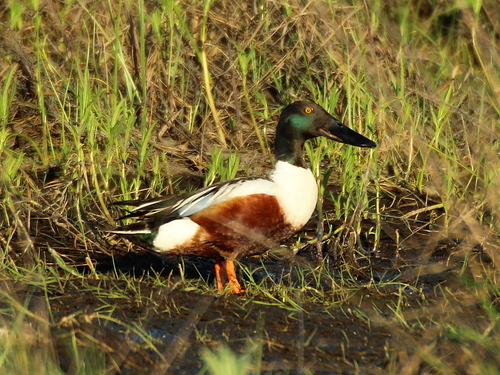
Northern Shoveler (Spatula clypeata) Northern Shoveler
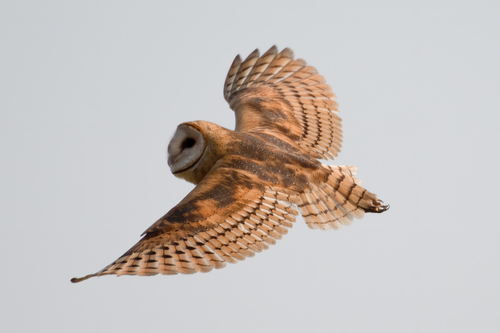
American Barn Owl (Tyto furcata) American Barn Owl

Media

Loading…

In short

The most immediate separation between Northern Shoveler and American Barn Owl is structural: the shoveler’s long, broad, spatulate bill is unique among ducks and utterly unlike the short, hooked bill of the barn owl. In flight, the shoveler shows a pale blue forewing (especially in males and eclipse-plumaged birds), while the barn owl’s upperwing is pale brown with darker bands and lacks any blue or green. Barn owls have a distinctive heart-shaped white face and long, rounded wings with a short, squarish tail, giving them a buoyant, undulating flight, unlike the steady, direct flight of a duck. Even at a distance or in poor light, the shoveler’s feeding behavior and habitat (dabbling in open water) contrast sharply with the barn owl’s nocturnal, rodent-hunting habits over fields or open country. Size overlaps somewhat, but field marks and jizz are unmistakably different.

Identification tips

  1. Bill shape is diagnostic: Northern Shoveler has a long, broad, spatulate bill (even in juveniles and females), while American Barn Owl has a short, hooked bill typical of owls. This is the most reliable field mark at any distance or age.
  2. Face pattern: Barn Owl always shows a heart-shaped, bright white or buff facial disk with black eyes, visible even in poor light. Shoveler has a typical duck face, lacking any facial disk.
  3. Wing pattern in flight: Adult male and eclipse male shovelers show a pale blue forewing with a green speculum bordered by white; females and juveniles have a grey forewing. Barn Owls have pale brown upperwings with darker bands and no blue or green panels.
  4. Leg color: Shoveler legs are bright orange-red and visible when perched or walking; barn owl legs are feathered, pink to grey, and usually hidden in flight.
  5. Body shape and jizz: Shovelers are stocky, horizontal ducks, often low in the water. Barn Owls are slim, long-winged, and fly with a buoyant, undulating motion, often with legs dangling.
  6. Tail shape: Barn Owl has a short, squarish tail, while the shoveler’s tail is longer and more pointed for a duck.
  7. Plumage color: Male shovelers in breeding plumage have a dark green head, white breast, and chestnut flanks; females are mottled brown. Barn Owls are pale golden-buff to grey above, white or buff below, with fine speckling (especially in females).
  8. Habitat context: Shovelers are almost always on water; barn owls are in open fields, grasslands, or buildings, rarely near water.
  9. Feeding behavior: Shovelers dabble and filter-feed at the water’s surface; barn owls hunt by flying low over land, searching for rodents.
  10. Flight style: Shovelers fly directly and steadily, often in small flocks; barn owls have a silent, buoyant, undulating flight, usually alone or in pairs.
  11. Perching: Shovelers rarely perch except on the ground or in shallow water; barn owls perch on posts, in barns, or in trees.
  12. Sex and age differences: Female and juvenile shovelers can be confused with other dabbling ducks but not with barn owls due to bill and jizz. Barn owl sexes differ mainly in spotting and color intensity; neither sex resembles any duck.
  13. Size impression: Both are medium-sized, but shoveler is heavier and more robust; barn owl is lankier with a larger head and longer wings relative to body.
  14. Seasonal confusion: Shoveler males in eclipse look more like females but always retain the spatulate bill and blue forewing; barn owls do not change plumage seasonally in a way that could cause confusion.
  15. Pitfalls: At extreme distance or in poor light, a flying barn owl might be mistaken for a pale duck, but the flight style, face, and lack of blue/green wing panels will always separate them.

Size

Northern Shoveler is a medium-sized duck, measuring 44–52 cm in length with a wingspan of 70–84 cm and weighing 500–800 g [wikipedia][avonet]. American Barn Owl is also medium-sized for an owl, but generally lighter, with females of large subspecies weighing over 550 g and males about 10% less [wikipedia]. Both are similar in length, but the shoveler is typically heavier and more robust, with a duck’s compact, horizontal body, while the barn owl is slimmer, with a large head and long wings relative to its body. In the field, the shoveler appears stocky and low-slung, while the barn owl is lanky and buoyant.

Plumage

Juvenile and female Northern Shovelers are mottled brown above with a grey forewing, but even in these ages, the bill is long and broad, and the legs are bright orange-red. Adult males in breeding plumage have a dark green head, white breast, and chestnut flanks, with a distinctive pale blue forewing and green speculum bordered by white in flight. In eclipse (nonbreeding) plumage, males resemble females but retain the pale blue forewing. Barn Owls of all ages have pale, golden-buff to grey upperparts with fine speckling, a bright white or buff heart-shaped face, and underparts ranging from white to reddish buff, sometimes with small blackish speckles (especially in females). Their upperwing is pale brown with darker bands, and the facial disk is always prominent. No age or sex of barn owl ever shows the blue or green wing panels of a shoveler, nor the spatulate bill. Barn owl juveniles are covered in white down but quickly develop the heart-shaped face. In flight, the barn owl’s wings are long and rounded, lacking any duck-like patterning.

Behaviour

Northern Shovelers are diurnal, feeding by dabbling and swinging their bills side to side to filter small invertebrates and plant matter from shallow water. They are often seen swimming or tipping up in marshes and ponds, rarely perching. Barn Owls are primarily nocturnal or crepuscular, hunting rodents by flying low over open fields with a buoyant, silent, undulating flight; they may be seen perched on posts or in barns during the day, but rarely on open water. Shovelers are gregarious in migration and winter, forming small flocks, while barn owls are solitary or in pairs. The shoveler’s feeding technique and aquatic setting are never matched by a barn owl.

Habitat

Northern Shovelers are found in shallow, mud-bottomed marshes, ponds, and lakes, especially those rich in aquatic invertebrates. They are almost always seen on or near water. American Barn Owls prefer open country, grasslands, agricultural fields, and the edges of woodlands, often roosting in barns or tree cavities. They rarely approach water except to drink. Thus, a shoveler in a field or a barn owl on a pond would be highly unusual.

Voice

No comparative vocalizations are provided in the notes. Both species are generally quiet in the field; shovelers may give soft quacks or whistles, while barn owls are known for their eerie screeches, but these are not detailed in the provided sources.

Submit a better description

Use the same sections as the comparison. Your text is published immediately.

The most immediate separation between Northern Shoveler and American Barn Owl is structural: the shoveler’s long, broad, spatulate bill is unique among ducks and utterly unlike the short, hooked bill of the barn owl. In flight, the shoveler shows a pale blue forewing (especially in males and eclipse-plumaged birds), while the barn owl’s upperwing is pale brown with darker bands and lacks any blue or green. Barn owls have a distinctive heart-shaped white face and long, rounded wings with a short, squarish tail, giving them a buoyant, undulating flight, unlike the steady, direct flight of a duck. Even at a distance or in poor light, the shoveler’s feeding behavior and habitat (dabbling in open water) contrast sharply with the barn owl’s nocturnal, rodent-hunting habits over fields or open country. Size overlaps somewhat, but field marks and jizz are unmistakably different.

  1. Bill shape is diagnostic: Northern Shoveler has a long, broad, spatulate bill (even in juveniles and females), while American Barn Owl has a short, hooked bill typical of owls. This is the most reliable field mark at any distance or age.
  2. Face pattern: Barn Owl always shows a heart-shaped, bright white or buff facial disk with black eyes, visible even in poor light. Shoveler has a typical duck face, lacking any facial disk.
  3. Wing pattern in flight: Adult male and eclipse male shovelers show a pale blue forewing with a green speculum bordered by white; females and juveniles have a grey forewing. Barn Owls have pale brown upperwings with darker bands and no blue or green panels.
  4. Leg color: Shoveler legs are bright orange-red and visible when perched or walking; barn owl legs are feathered, pink to grey, and usually hidden in flight.
  5. Body shape and jizz: Shovelers are stocky, horizontal ducks, often low in the water. Barn Owls are slim, long-winged, and fly with a buoyant, undulating motion, often with legs dangling.
  6. Tail shape: Barn Owl has a short, squarish tail, while the shoveler’s tail is longer and more pointed for a duck.
  7. Plumage color: Male shovelers in breeding plumage have a dark green head, white breast, and chestnut flanks; females are mottled brown. Barn Owls are pale golden-buff to grey above, white or buff below, with fine speckling (especially in females).
  8. Habitat context: Shovelers are almost always on water; barn owls are in open fields, grasslands, or buildings, rarely near water.
  9. Feeding behavior: Shovelers dabble and filter-feed at the water’s surface; barn owls hunt by flying low over land, searching for rodents.
  10. Flight style: Shovelers fly directly and steadily, often in small flocks; barn owls have a silent, buoyant, undulating flight, usually alone or in pairs.
  11. Perching: Shovelers rarely perch except on the ground or in shallow water; barn owls perch on posts, in barns, or in trees.
  12. Sex and age differences: Female and juvenile shovelers can be confused with other dabbling ducks but not with barn owls due to bill and jizz. Barn owl sexes differ mainly in spotting and color intensity; neither sex resembles any duck.
  13. Size impression: Both are medium-sized, but shoveler is heavier and more robust; barn owl is lankier with a larger head and longer wings relative to body.
  14. Seasonal confusion: Shoveler males in eclipse look more like females but always retain the spatulate bill and blue forewing; barn owls do not change plumage seasonally in a way that could cause confusion.
  15. Pitfalls: At extreme distance or in poor light, a flying barn owl might be mistaken for a pale duck, but the flight style, face, and lack of blue/green wing panels will always separate them.

Northern Shoveler is a medium-sized duck, measuring 44–52 cm in length with a wingspan of 70–84 cm and weighing 500–800 g [wikipedia][avonet]. American Barn Owl is also medium-sized for an owl, but generally lighter, with females of large subspecies weighing over 550 g and males about 10% less [wikipedia]. Both are similar in length, but the shoveler is typically heavier and more robust, with a duck’s compact, horizontal body, while the barn owl is slimmer, with a large head and long wings relative to its body. In the field, the shoveler appears stocky and low-slung, while the barn owl is lanky and buoyant.

Juvenile and female Northern Shovelers are mottled brown above with a grey forewing, but even in these ages, the bill is long and broad, and the legs are bright orange-red. Adult males in breeding plumage have a dark green head, white breast, and chestnut flanks, with a distinctive pale blue forewing and green speculum bordered by white in flight. In eclipse (nonbreeding) plumage, males resemble females but retain the pale blue forewing. Barn Owls of all ages have pale, golden-buff to grey upperparts with fine speckling, a bright white or buff heart-shaped face, and underparts ranging from white to reddish buff, sometimes with small blackish speckles (especially in females). Their upperwing is pale brown with darker bands, and the facial disk is always prominent. No age or sex of barn owl ever shows the blue or green wing panels of a shoveler, nor the spatulate bill. Barn owl juveniles are covered in white down but quickly develop the heart-shaped face. In flight, the barn owl’s wings are long and rounded, lacking any duck-like patterning.

Northern Shovelers are diurnal, feeding by dabbling and swinging their bills side to side to filter small invertebrates and plant matter from shallow water. They are often seen swimming or tipping up in marshes and ponds, rarely perching. Barn Owls are primarily nocturnal or crepuscular, hunting rodents by flying low over open fields with a buoyant, silent, undulating flight; they may be seen perched on posts or in barns during the day, but rarely on open water. Shovelers are gregarious in migration and winter, forming small flocks, while barn owls are solitary or in pairs. The shoveler’s feeding technique and aquatic setting are never matched by a barn owl.

Northern Shovelers are found in shallow, mud-bottomed marshes, ponds, and lakes, especially those rich in aquatic invertebrates. They are almost always seen on or near water. American Barn Owls prefer open country, grasslands, agricultural fields, and the edges of woodlands, often roosting in barns or tree cavities. They rarely approach water except to drink. Thus, a shoveler in a field or a barn owl on a pond would be highly unusual.

No comparative vocalizations are provided in the notes. Both species are generally quiet in the field; shovelers may give soft quacks or whistles, while barn owls are known for their eerie screeches, but these are not detailed in the provided sources.

Discard your changes?

You have unsaved edits. If you leave now, those changes will be lost.

Northern Shoveler · American Barn Owl · My Tricky Birds