

Ruddy Quail-Dove vs Bridled Quail-Dove
Geotrygon montana versus Geotrygon mystacea
Play a quiz with Ruddy Quail-Dove and Bridled Quail-Dove
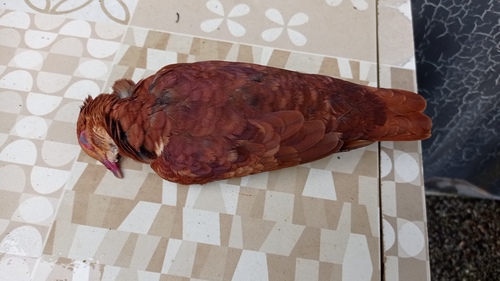 Ruddy Quail-Dove
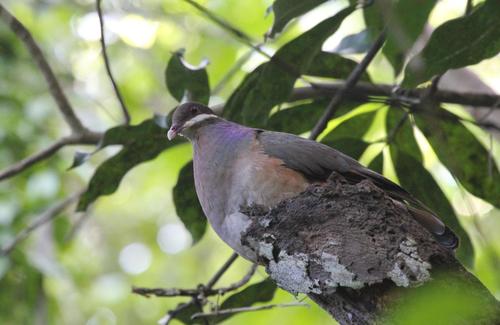 Bridled Quail-Dove
In short
The most reliable field mark between Ruddy Quail-Dove and Bridled Quail-Dove is the bold white facial stripe and throat patch of the Bridled Quail-Dove, which are never shown by Ruddy. Ruddy Quail-Dove is overall a rich rust color on the back and wings, while Bridled is mostly brown with iridescent greens and blues (especially on males) and cinnamon on the folded wing. Both are ground-dwelling doves of the Caribbean region, but their ranges only overlap in the West Indies. Juvenile and flight marks are not described in the sources, so focus on facial and upperpart coloration in perched birds. Size is not a strong field mark in binocular views, but Bridled is heavier-bodied.
Identification tips
- White facial stripe and throat patch: Bridled Quail-Dove always shows a bold white stripe below the eye and a small white patch on the throat; Ruddy Quail-Dove never shows these marks. This is the single most reliable field mark for all ages and sexes.
- Overall coloration: Ruddy Quail-Dove is rich rust or rufous on the back, wings, and face, with lighter brown underparts; Bridled is mostly brown with less rufous overall, and the belly is cream.
- Iridescence: Adult male Bridled Quail-Dove has iridescent green on the head and nape, shifting to blue/violet on the lower neck and upper back. Females are less iridescent but may still show some sheen. Ruddy Quail-Dove lacks this iridescence and is more uniform in color.
- Folded wing pattern: Bridled Quail-Dove shows cinnamon markings on the folded wing, which can be seen when perched. Ruddy Quail-Dove's wings are rust-colored but do not show distinct cinnamon patches.
- Tail and belly: Bridled has a dark brownish gray tail and a cream belly, while Ruddy's underparts are lighter brown but not distinctly cream.
- Facial mask: Ruddy Quail-Dove has a rust-colored facial mask, but it is not sharply defined or white like Bridled's stripe.
- Undereye stripe: Ruddy Quail-Dove has a lighter brown undereye stripe, but it is subtle and does not stand out like the white stripe of Bridled.
- Size and structure: Bridled is heavier and bulkier, but this is subtle and often hard to judge unless both are seen together.
- Sex differences: Only Bridled Quail-Dove shows strong sexual dimorphism in iridescence; females are duller but still have the white facial stripe.
- Range: If outside the Lesser Antilles and Puerto Rico, a quail-dove is more likely Ruddy; if on those islands, check for the white facial marks.
- Flight views: No distinctive upperwing or flight patterns are described for either species, so rely on plumage and facial marks even in brief flight views.
- Juvenile/immature birds: No specific juvenile or immature patterns are described, so use adult field marks for all ages.
- Habitat: Both species use similar forested habitats; habitat is not a reliable separator within the overlap zone.
- Vocalizations: No vocal differences are described in the sources.
- Pitfalls: Beware of poor light or partial views obscuring the white facial stripe of Bridled; always try to confirm this mark before making an identification.
Size
Bridled Quail-Dove is significantly heavier, with adults averaging around 211 g, while no mass is given for Ruddy Quail-Dove, but it is generally considered smaller and more compact. In the field, this may translate to Bridled appearing bulkier and more robust, but both are medium-sized ground doves and size alone is not always reliable at a distance.
Plumage
No age-specific juvenile or flight upperwing patterns are described for either species, so focus is on adult plumage. Ruddy Quail-Dove is characterized by a uniform rust or rufous coloration on the back, wings, and facial mask, with lighter brown on the breast, rump, and an undereye stripe. In contrast, Bridled Quail-Dove is mostly brown but has a striking white stripe below the eye and a small white throat patch. Males show iridescent green on the head and nape, shifting to blue and violet on the lower neck and upper back, while females are less iridescent. The folded wing of Bridled shows cinnamon markings, and the tail is dark brownish gray with a cream belly. Ruddy never shows the bold white facial marks or iridescence of Bridled.
Behaviour
Both species are ground-dwelling and tend to walk rather than fly when disturbed. No behavioral differences are described in the sources that would reliably separate them in the field.
Habitat
Both species occur in forested habitats in the Caribbean, but their ranges only overlap in the West Indies. Ruddy Quail-Dove has a broader range, including Central and South America, while Bridled is restricted to the Lesser Antilles and Puerto Rico. In areas where both might occur, habitat is not a strong separator, but outside the overlap zone, range can be a useful clue.