
Motmot

Siberian Sand Plover vs Greater Sand Plover

Anarhynchus mongolus versus Anarhynchus leschenaultii

Play a quiz with Siberian Sand Plover and Greater Sand Plover
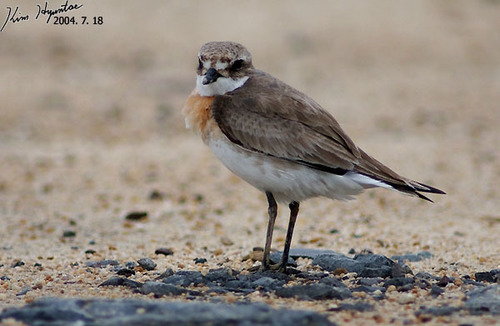
Siberian Sand Plover (Anarhynchus mongolus) Siberian Sand Plover
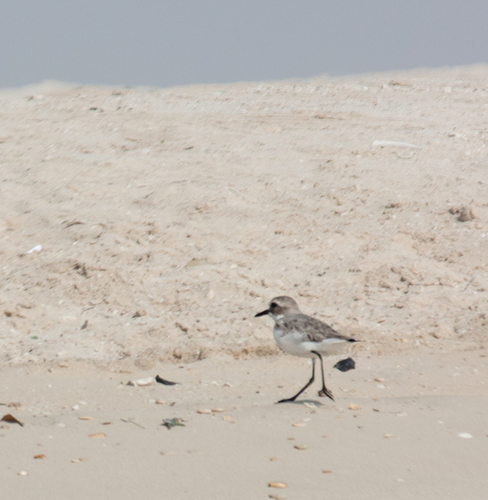
Greater Sand Plover (Anarhynchus leschenaultii) Greater Sand Plover

Media

Loading…

In short

The most reliable field mark between Siberian Sand Plover and Greater Sand Plover is leg color: Siberian usually shows dark (black to grey) legs, while Greater typically has paler (greenish-yellow to yellowish) legs. Bill length and structure also differ, with Greater Sand Plover generally having a longer, thicker bill. Breeding males can be separated by the color of the upperparts and breast band: Siberian has a grey back and chestnut breast, while Greater shows a sandy buff back and an orange-toned breast. However, non-breeding and juvenile plumages are extremely similar, making lone birds very challenging to separate without direct comparison. Size is only useful in mixed flocks, as the difference is subtle and unreliable on single birds.

Identification tips

  1. Leg color is the most consistent field mark: Siberian Sand Plover shows black to grey legs in all plumages and ages; Greater Sand Plover usually has greenish-yellow to yellowish legs. This is most useful on birds standing in good light.
  2. Bill length and thickness: Greater Sand Plover has a noticeably longer and thicker bill, especially obvious in profile. Siberian's bill is shorter and more slender. This is best judged with experience or in direct comparison.
  3. Breeding male plumage: Siberian males show a grey back and a chestnut (deep reddish) breast band, forehead, and nape. Greater males have a sandy buff back and an orange (less reddish) breast, forehead, and nape. Both have a black eye mask.
  4. Non-breeding and juvenile plumage: Both species become duller, with only a hint of rufous on the head and otherwise brownish or greyish upperparts. The breast band disappears. In these plumages, leg color and bill structure are the main clues.
  5. Females: Duller versions of males, with less intense breast and head coloration. Separation relies on leg color and bill structure.
  6. Size: Greater Sand Plover is slightly larger and bulkier, but this is only useful in mixed flocks. Do not rely on size for lone birds.
  7. Feeding behavior: Siberian Sand Plover tends to take fewer steps and shorter pauses while feeding, but this is subtle and not reliable for quick field separation.
  8. Flight views: No distinctive wing pattern differences are described for immatures or adults; rely on leg color and structure if seen well.
  9. Primary projection and tail: No diagnostic differences are noted in the sources.
  10. Voice: Siberian Sand Plover gives a hard trill in flight, but Greater's call is not described here; voice is not a reliable separator in most field situations.
  11. Context: In mixed wintering flocks, differences in size and structure are more apparent. In vagrant situations (e.g., Europe), identification is much more challenging and may not be possible without close, prolonged views.
  12. Subspecies confusion: The Middle Eastern (SW Asian) subspecies of Greater Sand Plover is smaller-billed and most similar to Siberian, making separation even more difficult.
  13. Bill color: Both species have black bills in all plumages; do not use bill color for separation.
  14. Forehead color: Siberian often shows a whiter forehead, especially in breeding plumage, but this is subtle and variable.
  15. When in doubt: If leg color and bill structure cannot be seen clearly, and the bird is not in full breeding plumage, identification may not be possible to species level in the field.

Size

Greater Sand Plover is slightly larger overall, measuring 19–22 cm in length, while Siberian Sand Plover is marginally smaller, but the exact measurement for Siberian is not given here. In the field, this size difference is only obvious when both species are side by side. Structure-wise, Greater Sand Plover tends to look more robust, with a longer, thicker bill and slightly longer legs. However, these differences are subtle and easily misjudged without direct comparison or experience.

Plumage

In breeding plumage, Siberian Sand Plover males show a grey back, white underparts, and a chestnut breast, forehead, and nape, with a black eye mask. Greater Sand Plover males have a sandy buff back, white underparts, and a variably orange (not chestnut) breast, forehead, and nape, also with a black eye mask. Females of both species are duller and greyer, and in non-breeding and juvenile plumages, both species lose the strong breast color, retaining only a hint of rufous on the head. The legs of Siberian remain dark (black to grey) in all plumages, while Greater's legs are paler (greenish-yellow to yellowish). The bill is always black in both, but Greater's is thicker and longer. No distinctive juvenile or first-winter upperwing pattern is described for either species, so flight views of immature birds rely on structure and leg color. Both species are very similar in all non-breeding and immature plumages, with only subtle differences.

Behaviour

Both species use a run-and-pause technique to feed, but Siberian Sand Plover takes fewer steps and shorter pauses compared to Greater Sand Plover. This difference is subtle and may only be apparent with prolonged observation of feeding birds. Both are chunky, long-legged plovers with similar foraging styles, so behavior alone is not usually diagnostic.

Habitat

Both species winter on sandy beaches and coastal mudflats, often together in mixed flocks in South and Southeast Asia. Siberian Sand Plover breeds in northeastern Siberia and occasionally Alaska, while Greater Sand Plover breeds across Central Asia and into Mongolia and NW China. In vagrancy contexts (e.g., Western Europe), both are rare and can occur in similar habitats, so habitat is not a reliable separator.

Voice

Siberian Sand Plover's flight call is described as a hard trill. No distinctive vocal difference is described for Greater Sand Plover in the provided notes. Voice is unlikely to be diagnostic in most field situations.

Submit a better description

Use the same sections as the comparison. Your text is published immediately.

The most reliable field mark between Siberian Sand Plover and Greater Sand Plover is leg color: Siberian usually shows dark (black to grey) legs, while Greater typically has paler (greenish-yellow to yellowish) legs. Bill length and structure also differ, with Greater Sand Plover generally having a longer, thicker bill. Breeding males can be separated by the color of the upperparts and breast band: Siberian has a grey back and chestnut breast, while Greater shows a sandy buff back and an orange-toned breast. However, non-breeding and juvenile plumages are extremely similar, making lone birds very challenging to separate without direct comparison. Size is only useful in mixed flocks, as the difference is subtle and unreliable on single birds.

  1. Leg color is the most consistent field mark: Siberian Sand Plover shows black to grey legs in all plumages and ages; Greater Sand Plover usually has greenish-yellow to yellowish legs. This is most useful on birds standing in good light.
  2. Bill length and thickness: Greater Sand Plover has a noticeably longer and thicker bill, especially obvious in profile. Siberian's bill is shorter and more slender. This is best judged with experience or in direct comparison.
  3. Breeding male plumage: Siberian males show a grey back and a chestnut (deep reddish) breast band, forehead, and nape. Greater males have a sandy buff back and an orange (less reddish) breast, forehead, and nape. Both have a black eye mask.
  4. Non-breeding and juvenile plumage: Both species become duller, with only a hint of rufous on the head and otherwise brownish or greyish upperparts. The breast band disappears. In these plumages, leg color and bill structure are the main clues.
  5. Females: Duller versions of males, with less intense breast and head coloration. Separation relies on leg color and bill structure.
  6. Size: Greater Sand Plover is slightly larger and bulkier, but this is only useful in mixed flocks. Do not rely on size for lone birds.
  7. Feeding behavior: Siberian Sand Plover tends to take fewer steps and shorter pauses while feeding, but this is subtle and not reliable for quick field separation.
  8. Flight views: No distinctive wing pattern differences are described for immatures or adults; rely on leg color and structure if seen well.
  9. Primary projection and tail: No diagnostic differences are noted in the sources.
  10. Voice: Siberian Sand Plover gives a hard trill in flight, but Greater's call is not described here; voice is not a reliable separator in most field situations.
  11. Context: In mixed wintering flocks, differences in size and structure are more apparent. In vagrant situations (e.g., Europe), identification is much more challenging and may not be possible without close, prolonged views.
  12. Subspecies confusion: The Middle Eastern (SW Asian) subspecies of Greater Sand Plover is smaller-billed and most similar to Siberian, making separation even more difficult.
  13. Bill color: Both species have black bills in all plumages; do not use bill color for separation.
  14. Forehead color: Siberian often shows a whiter forehead, especially in breeding plumage, but this is subtle and variable.
  15. When in doubt: If leg color and bill structure cannot be seen clearly, and the bird is not in full breeding plumage, identification may not be possible to species level in the field.

Greater Sand Plover is slightly larger overall, measuring 19–22 cm in length, while Siberian Sand Plover is marginally smaller, but the exact measurement for Siberian is not given here. In the field, this size difference is only obvious when both species are side by side. Structure-wise, Greater Sand Plover tends to look more robust, with a longer, thicker bill and slightly longer legs. However, these differences are subtle and easily misjudged without direct comparison or experience.

In breeding plumage, Siberian Sand Plover males show a grey back, white underparts, and a chestnut breast, forehead, and nape, with a black eye mask. Greater Sand Plover males have a sandy buff back, white underparts, and a variably orange (not chestnut) breast, forehead, and nape, also with a black eye mask. Females of both species are duller and greyer, and in non-breeding and juvenile plumages, both species lose the strong breast color, retaining only a hint of rufous on the head. The legs of Siberian remain dark (black to grey) in all plumages, while Greater's legs are paler (greenish-yellow to yellowish). The bill is always black in both, but Greater's is thicker and longer. No distinctive juvenile or first-winter upperwing pattern is described for either species, so flight views of immature birds rely on structure and leg color. Both species are very similar in all non-breeding and immature plumages, with only subtle differences.

Both species use a run-and-pause technique to feed, but Siberian Sand Plover takes fewer steps and shorter pauses compared to Greater Sand Plover. This difference is subtle and may only be apparent with prolonged observation of feeding birds. Both are chunky, long-legged plovers with similar foraging styles, so behavior alone is not usually diagnostic.

Both species winter on sandy beaches and coastal mudflats, often together in mixed flocks in South and Southeast Asia. Siberian Sand Plover breeds in northeastern Siberia and occasionally Alaska, while Greater Sand Plover breeds across Central Asia and into Mongolia and NW China. In vagrancy contexts (e.g., Western Europe), both are rare and can occur in similar habitats, so habitat is not a reliable separator.

Siberian Sand Plover's flight call is described as a hard trill. No distinctive vocal difference is described for Greater Sand Plover in the provided notes. Voice is unlikely to be diagnostic in most field situations.

Discard your changes?

You have unsaved edits. If you leave now, those changes will be lost.

Siberian Sand Plover · Greater Sand Plover · My Tricky Birds