

Swamp Nightjar vs Freckled Nightjar
Caprimulgus natalensis versus Caprimulgus tristigma
Play a quiz with Swamp Nightjar and Freckled Nightjar
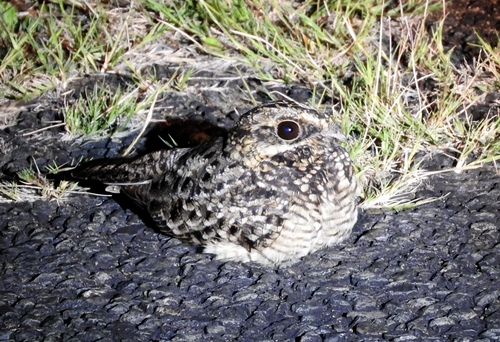 Swamp Nightjar
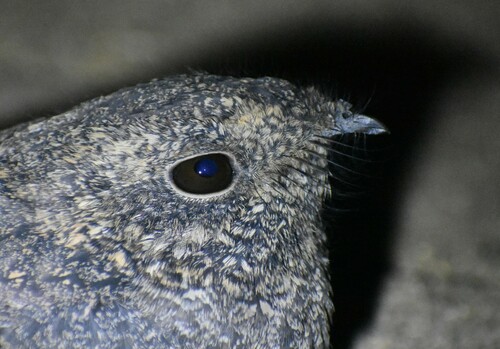 Freckled Nightjar
In short
The most reliable field mark to separate Freckled Nightjar from Swamp Nightjar is the presence of small white spots on the outer primaries and white tips on the outer tail feathers in adult male Freckled Nightjars, visible in flight; females have fewer white spots and lack white tail tips. Swamp Nightjar lacks these white wing and tail markings entirely. Freckled Nightjar appears larger, bulkier, and darker overall, with a distinctive freckled pattern and strong camouflage for rocky habitats, while Swamp Nightjar is less robust and is typically associated with wetter, grassy, or marshy areas. In perched birds, the Freckled Nightjar’s dark, freckled upperparts and short tail contrast with the more subdued and less patterned Swamp Nightjar. Both species are nocturnal and crepuscular, but their preferred habitats and subtle plumage details are key for confident identification.
Identification tips
- White wing and tail markings in flight: Adult male Freckled Nightjars show small white spots on the four outer primaries and white tips on the two outer tail feathers; females have 3–4 smaller white spots on the primaries but lack white tail tips. Swamp Nightjar never shows these marks. Look for these especially at dusk or dawn when birds are active.
- Freckled upperparts: Freckled Nightjar has a distinctive pattern of white, cinnamon, and pale buff freckling on otherwise dark gray to black upperparts, visible at close range. Swamp Nightjar is plainer and lacks this heavy freckling.
- Underparts barring: Freckled Nightjar’s underparts are dark brown with whitish and cinnamon barring, while Swamp Nightjar’s underparts are less boldly patterned.
- Overall darkness: At a distance, Freckled Nightjar appears much darker (almost blackish) than Swamp Nightjar.
- Camouflage context: If the bird is blending perfectly with rocks or boulders, Freckled Nightjar is much more likely; Swamp Nightjar is adapted for grassy or marshy cover.
- Size and build: Freckled Nightjar is larger, bulkier, and more powerfully built, with long wings and a relatively short tail. Swamp Nightjar is slimmer and lighter.
- Tail shape: Freckled Nightjar’s tail is relatively short for its size, with white tips (in males) on the outer feathers. Swamp Nightjar’s tail is more typical for nightjars and lacks white tips.
- Sexual dimorphism: Only Freckled Nightjar shows clear sex differences in wing and tail markings; Swamp Nightjar does not.
- Perched posture: Freckled Nightjar often perches on bare rocks or boulders, sometimes in exposed positions. Swamp Nightjar is more likely to be found on the ground among grass or at the edge of marshes.
- Foraging behavior: Freckled Nightjar often makes short flights out from its rocky perch to catch insects, then glides back. Swamp Nightjar’s foraging is less tied to rocky areas.
- Gape size: Freckled Nightjar has a notably large gape, able to swallow larger insects than Swamp Nightjar, but this is only visible at very close range or in photos.
- Habitat context: If you are birding in rocky outcrops, cliffs, or stony hills, prioritize Freckled Nightjar; in marshes, wet grasslands, or moist savanna, Swamp Nightjar is more likely.
- No white in wings or tail: Any nightjar lacking white spots on the outer primaries and tail tips (especially in flight) is unlikely to be a male Freckled Nightjar.
- Juvenile/immature marks: No specific juvenile or immature wing pattern differences are described for either species, so rely on adult marks unless more detail is available.
- Voice: No diagnostic vocal differences are described in the available notes; rely on visual and habitat clues.
Size
Freckled Nightjar is distinctly heavier and more powerfully built than Swamp Nightjar (adult mass ~79g for Freckled Nightjar; no mass data for Swamp Nightjar, but it is generally considered lighter and less robust). Freckled Nightjar has longer wings and a relatively short tail, contributing to a broad, strong appearance both at rest and in flight. Swamp Nightjar is slimmer and less bulky, with a more typical nightjar silhouette.
Plumage
- Adults in flight: Freckled Nightjar males show small white spots on the four outer primaries and white tips on the two outer tail feathers; females have 3–4 smaller white spots on the outer primaries but lack white tail tips. These white markings are absent in Swamp Nightjar of all ages and sexes.
- Perched birds: Freckled Nightjar appears dark gray to nearly black at a distance, with close-range white, cinnamon, and pale buff freckling on the upperparts, and dark brown underparts with whitish/cinnamon barring. Swamp Nightjar lacks this heavy freckling and is generally plainer and less contrasting.
- Camouflage: Freckled Nightjar’s plumage is highly adapted for rocky substrates, blending in with boulders and stony ground, while Swamp Nightjar is more adapted to grassy or marshy cover.
- Sexual dimorphism: Only Freckled Nightjar shows clear sex differences in wing and tail markings; Swamp Nightjar does not.
Behaviour
Both species are crepuscular and nocturnal, foraging at dusk and dawn. Freckled Nightjar frequently perches on rocks or boulders and uses short sallies to catch flying insects, gliding back to its perch. Its foraging is often over rocky landscapes and broken ground. Swamp Nightjar is more likely to be found in or near marshy or grassy areas, and its foraging behavior is less closely tied to rocky substrates. Freckled Nightjar has a notably large gape, allowing it to take larger prey than Swamp Nightjar.
Habitat
Freckled Nightjar is strongly associated with rocky habitats: boulders, rocky outcrops, and stony ground, often in open or sparsely vegetated areas. Its camouflage is specialized for these settings. Swamp Nightjar, as its name suggests, prefers wetter environments such as marshes, grassy wetlands, and moist savannas. While both are African nightjars, their habitat preferences rarely overlap closely, and context can be a strong clue if the bird is seen well.