
Motmot

Sykes's Warbler vs Upcher's Warbler

Iduna rama versus Hippolais languida

Play a quiz with Sykes's Warbler and Upcher's Warbler
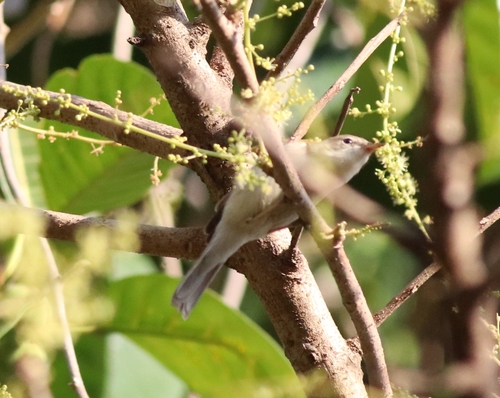
Sykes's Warbler (Iduna rama) Sykes's Warbler
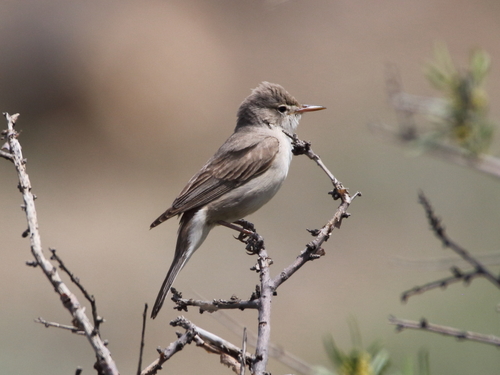
Upcher's Warbler (Hippolais languida) Upcher's Warbler

Media

Loading…

In short

The most reliable field mark between Sykes's Warbler and Upcher's Warbler is behavioral: Upcher's Warbler frequently flicks and fans its long tail, a trait not shown by Sykes's. Structurally, Upcher's is longer-tailed and longer-billed, with a greyer overall tone, while Sykes's is smaller, paler, and more compact. Both can appear similar in plumage, but Sykes's is typically paler below with buff flanks and a short pale supercilium. In the field, focus on tail movement, overall structure, and subtle color differences to separate these two.

Identification tips

  1. Tail movement is diagnostic: Upcher's Warbler frequently flicks, fans, and moves its long tail, often in a chat-like manner. Sykes's Warbler does not show this behavior. If you see regular tail action, favor Upcher's.
  2. Tail length and shape: Upcher's has a noticeably longer tail than Sykes's, often looking more attenuated and pointed when perched or in flight. Sykes's tail is shorter and more squared-off.
  3. Bill structure: Upcher's has a longer, slightly heavier bill compared to the shorter, strong, and pointed bill of Sykes's. This is subtle but can be seen in good views.
  4. Overall jizz: Upcher's appears longer, slimmer, and more angular due to its proportions, while Sykes's is more compact and rounded.
  5. Plumage color: Sykes's is pale brown above and whitish below, with buff flanks and a short pale supercilium. Upcher's is greyer overall, with less contrast and lacking the buff flanks.
  6. Supercilium: Sykes's shows a short, pale supercilium, which can be a useful mark at close range. Upcher's may have a less distinct or absent supercilium.
  7. Tail feather edges: Sykes's has pale edges to the outer tail feathers, which may be visible in good light or on spread tail; Upcher's tail is more uniformly colored.
  8. Behavior when foraging: Upcher's is more active, often seen moving through shrubs with frequent tail movement. Sykes's is more sedate, moving less and perching quietly.
  9. Comparison to Olivaceous Warbler: Both species can resemble Eastern Olivaceous Warbler, but Upcher's is the greyer and longer-tailed, while Sykes's is paler and more compact.
  10. Size in context: If seen with other warblers, Upcher's will stand out as larger and longer-tailed, while Sykes's will look smaller and more delicate.
  11. Flight impression: Upcher's may look more elongated in flight due to its longer tail and bill, while Sykes's appears more compact.
  12. Habitat overlap: Both can occur in similar shrubby habitats, so do not rely on habitat alone for identification.
  13. Vocalization: If you know Upcher's distinctive song, it is a clincher, but do not rely on song unless you are very familiar with both species' vocalizations.
  14. Seasonal context: Both are migrants and can occur together in some regions; use structural and behavioral marks rather than timing to separate them.
  15. Pitfalls: Beware of pale, worn Upcher's appearing paler than usual, or Sykes's looking greyer in poor light. Always prioritize tail movement and structure over subtle color differences.

Size

Upcher's Warbler is medium-sized for a Hippolais, similar to Icterine Warbler, and noticeably larger than Sykes's Warbler. Upcher's also has a longer tail and bill, and shorter wings relative to its body. Sykes's Warbler is smaller and more compact, with a proportionately shorter tail and a strong, pointed bill, but not as long as Upcher's. These size and proportion differences are most apparent when both species are seen side by side or with familiar warblers for scale.

Plumage

Neither species has a distinctive juvenile or immature upperwing pattern noted in the sources, so focus is on adult and general plumage. Sykes's Warbler is pale brown above and whitish below, with buff flanks and a short, pale supercilium. Its outer tail feathers show pale edges, and the overall impression is pale and slightly washed-out. Upcher's Warbler is generally greyer, with less contrast between upperparts and underparts, and lacks the warm buff flanks of Sykes's. Both can resemble Eastern Olivaceous Warbler, but Upcher's is the greyer of the two, and Sykes's is paler and more delicate in appearance. In all plumages, Upcher's longer tail and greyer tone are helpful, while Sykes's is more uniform and pale.

Behaviour

Upcher's Warbler is highly active, frequently flicking, fanning, and moving its long tail in a manner reminiscent of Sylvia warblers or chats. This tail action is a key behavioral field mark and is rarely, if ever, shown by Sykes's Warbler. Sykes's tends to be more deliberate and less animated, often perching quietly and moving less conspicuously. In flight, Upcher's may also appear longer and more slender due to its tail and bill.

Habitat

Both species breed in overlapping regions of the Middle East and Central Asia, but Upcher's Warbler's range extends further west into Turkey and east to Pakistan, while Sykes's is more eastern, from northeast Arabia to west China and Afghanistan. Both favor shrubby, open habitats, but habitat alone is not a reliable separator where their ranges overlap.

Voice

Upcher's Warbler has a song that is distinctive among Hippolais warblers and is entirely different from Olivaceous Warbler, but the notes do not specify how it compares directly to Sykes's. Sykes's song is not described in the sources. Thus, vocalization is not a primary field mark for separating these two unless the observer is already familiar with Upcher's unique song.

Submit a better description

Use the same sections as the comparison. Your text is published immediately.

The most reliable field mark between Sykes's Warbler and Upcher's Warbler is behavioral: Upcher's Warbler frequently flicks and fans its long tail, a trait not shown by Sykes's. Structurally, Upcher's is longer-tailed and longer-billed, with a greyer overall tone, while Sykes's is smaller, paler, and more compact. Both can appear similar in plumage, but Sykes's is typically paler below with buff flanks and a short pale supercilium. In the field, focus on tail movement, overall structure, and subtle color differences to separate these two.

  1. Tail movement is diagnostic: Upcher's Warbler frequently flicks, fans, and moves its long tail, often in a chat-like manner. Sykes's Warbler does not show this behavior. If you see regular tail action, favor Upcher's.
  2. Tail length and shape: Upcher's has a noticeably longer tail than Sykes's, often looking more attenuated and pointed when perched or in flight. Sykes's tail is shorter and more squared-off.
  3. Bill structure: Upcher's has a longer, slightly heavier bill compared to the shorter, strong, and pointed bill of Sykes's. This is subtle but can be seen in good views.
  4. Overall jizz: Upcher's appears longer, slimmer, and more angular due to its proportions, while Sykes's is more compact and rounded.
  5. Plumage color: Sykes's is pale brown above and whitish below, with buff flanks and a short pale supercilium. Upcher's is greyer overall, with less contrast and lacking the buff flanks.
  6. Supercilium: Sykes's shows a short, pale supercilium, which can be a useful mark at close range. Upcher's may have a less distinct or absent supercilium.
  7. Tail feather edges: Sykes's has pale edges to the outer tail feathers, which may be visible in good light or on spread tail; Upcher's tail is more uniformly colored.
  8. Behavior when foraging: Upcher's is more active, often seen moving through shrubs with frequent tail movement. Sykes's is more sedate, moving less and perching quietly.
  9. Comparison to Olivaceous Warbler: Both species can resemble Eastern Olivaceous Warbler, but Upcher's is the greyer and longer-tailed, while Sykes's is paler and more compact.
  10. Size in context: If seen with other warblers, Upcher's will stand out as larger and longer-tailed, while Sykes's will look smaller and more delicate.
  11. Flight impression: Upcher's may look more elongated in flight due to its longer tail and bill, while Sykes's appears more compact.
  12. Habitat overlap: Both can occur in similar shrubby habitats, so do not rely on habitat alone for identification.
  13. Vocalization: If you know Upcher's distinctive song, it is a clincher, but do not rely on song unless you are very familiar with both species' vocalizations.
  14. Seasonal context: Both are migrants and can occur together in some regions; use structural and behavioral marks rather than timing to separate them.
  15. Pitfalls: Beware of pale, worn Upcher's appearing paler than usual, or Sykes's looking greyer in poor light. Always prioritize tail movement and structure over subtle color differences.

Upcher's Warbler is medium-sized for a Hippolais, similar to Icterine Warbler, and noticeably larger than Sykes's Warbler. Upcher's also has a longer tail and bill, and shorter wings relative to its body. Sykes's Warbler is smaller and more compact, with a proportionately shorter tail and a strong, pointed bill, but not as long as Upcher's. These size and proportion differences are most apparent when both species are seen side by side or with familiar warblers for scale.

Neither species has a distinctive juvenile or immature upperwing pattern noted in the sources, so focus is on adult and general plumage. Sykes's Warbler is pale brown above and whitish below, with buff flanks and a short, pale supercilium. Its outer tail feathers show pale edges, and the overall impression is pale and slightly washed-out. Upcher's Warbler is generally greyer, with less contrast between upperparts and underparts, and lacks the warm buff flanks of Sykes's. Both can resemble Eastern Olivaceous Warbler, but Upcher's is the greyer of the two, and Sykes's is paler and more delicate in appearance. In all plumages, Upcher's longer tail and greyer tone are helpful, while Sykes's is more uniform and pale.

Upcher's Warbler is highly active, frequently flicking, fanning, and moving its long tail in a manner reminiscent of Sylvia warblers or chats. This tail action is a key behavioral field mark and is rarely, if ever, shown by Sykes's Warbler. Sykes's tends to be more deliberate and less animated, often perching quietly and moving less conspicuously. In flight, Upcher's may also appear longer and more slender due to its tail and bill.

Both species breed in overlapping regions of the Middle East and Central Asia, but Upcher's Warbler's range extends further west into Turkey and east to Pakistan, while Sykes's is more eastern, from northeast Arabia to west China and Afghanistan. Both favor shrubby, open habitats, but habitat alone is not a reliable separator where their ranges overlap.

Upcher's Warbler has a song that is distinctive among Hippolais warblers and is entirely different from Olivaceous Warbler, but the notes do not specify how it compares directly to Sykes's. Sykes's song is not described in the sources. Thus, vocalization is not a primary field mark for separating these two unless the observer is already familiar with Upcher's unique song.

Discard your changes?

You have unsaved edits. If you leave now, those changes will be lost.

Sykes's Warbler · Upcher's Warbler · My Tricky Birds